Key Takeaways
- Cannabis law and regulations:
- Medical cannabis is regulated in Oregon by Oregon Revised Statutes 475C and Oregon Administrative Rules Chapter 333, Division 7,8 and 64.
- Recreational cannabis is regulated in Oregon by Oregon Revised Statutes 475C and Oregon Administrative Rules Chapter 845, Division 25 and Division 26.
- Licenses available:
- Recreational: producer, processor, retailer, wholesaler, laboratory, sampling laboratory and research facility.
- Medical: grower, processor and dispensary.
- Products legal:
- Flower, concentrate, extracts, edibles, tinctures, topicals, inhalable cannabinoid products.
- Taxes:
- There is a 17% tax on the sales price of recreational cannabis. Cities and counties can decide whether or not to adopt an additional local tax of up to 3% on retail sales.
- Market:
- As of December 2025, there were 2,649 licensed recreational cannabis businesses in 2025, including 1,349 producers, 276 processors, 770 retailers, 243 wholesalers, 9 laboratories, 1 sampling laboratory and 1 research facility.
- Monthly cannabis sales peaked in April 2021, surpassing $110 million. In 2021 the combined sales reached the $1 billion mark in October and by December, totaled $1.184 billion for the whole year.
- In 2022 and 2023, cannabis sales fell slightly but in 2024 began to rise again, hitting $960 million.
- From January to November 2025, cannabis sales were $848 million.
- From October 2016 to November 2025, Oregon’s cannabis sales total $8 billion.
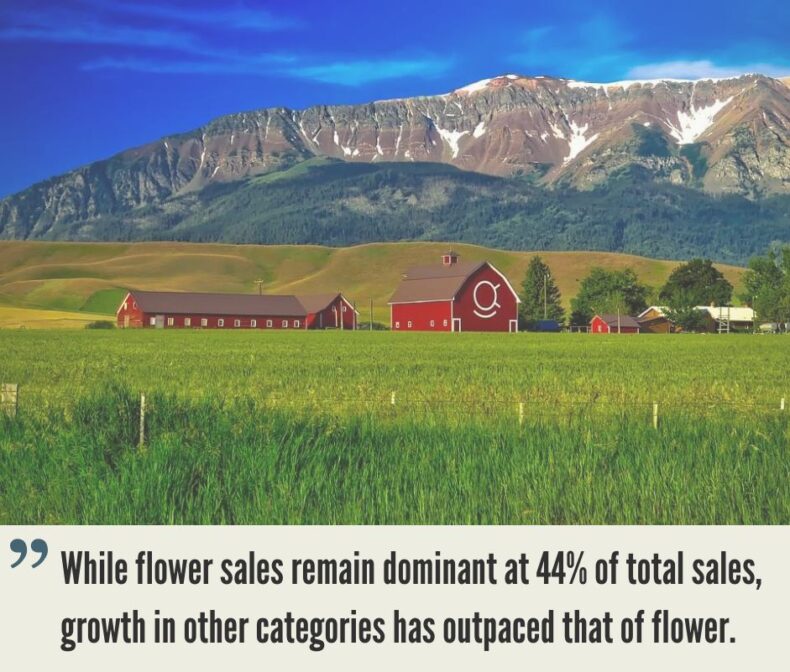
- While flower sales remain dominant in Oregon, with usable MJ accounting for about 44% (49% in 2023 and 56% in 2021) of sales in 2025, growth in other categories – including concentrates, edibles and topicals – all outpaced flower.
Oregon Cannabis Legalization
Oregon legalized medical cannabis in 1998 through a citizens’ initiative Measure 67 which allowed medically qualified patients to possess up to 3 mature cannabis plants or contract for someone to grow them on their behalf. In 2005, the Oregon Medical Marijuana Program (OMMP) was established to regulate and oversee the state’s medical cannabis system. It allowed patients to reimburse their growers for certain growing expenses, created the OMMP registry for grow sites, and increased possession and plant limits to 24 ounces of usable cannabis and 6 plants. In August 2013, Oregon voted to allow medical cannabis dispensaries. The OMMP is administered by the Oregon Health Authority (OHA). There are three license types: growers, processors, and dispensaries.
In November 2014, Oregon voters approved Measure 91, legalizing adult-use cannabis for individuals aged 21 and over, and allowing to grow up to 4 plants per household on their private property.
Retail recreational sales started on October 1, 2015, during an “early sales” period where licensed medical cannabis dispensaries could sell cannabis to recreational users. The first recreational cannabis dispensary licenses were issued in October 2016. The Oregon Liquor Control Commission (OLCC) was tasked with regulating the recreational cannabis industry and issuing the six available license types: producer, processor, wholesaler, retailer, laboratory, and research licenses.
Additional legislation signed into law by Governor Brown in March 2016 allowed the sale of medical and recreational cannabis from the same outlets. Effective January 1, 2017, recreational cannabis can only be sold by businesses that have obtained a “recreational license” from the OLCC.
After January 1, 2022, Oregon stopped issuing new cannabis licenses and this moratorium was in effect until March 31, 2024. On March 20, 2024, Governor Kotek signed House Bill 4121 into law, making the licensing moratorium in the state permanent which means that no new license application are being accepted by the OLCC unless the following thresholds are met:
- For production and retail licenses, there is less than one active license per 7,500 residents.
- For processor and wholesale permits, there is less than one active license per 12,500 residents.
The only way to obtain a cannabis license is to buy it from an existing licensee.
Oregon Cannabis Market
In 2023, license numbers fell for the first time since 2016, with a total of 2,804 licensees. Since that year, the downward trend in license numbers has continued with 2,723 licensees in 2024. As of December 2025, there were 2,649 licensed recreational cannabis businesses in Oregon, including 1,349 producers, 276 processors, 770 retailers, 243 wholesalers, 9 laboratories, 1 sampling laboratory and 1 research facility.
From 2016 to 2022, pounds of cannabis harvested in Oregon continuously increased. In October 2023, 24.6% less pounds of cannabis were harvested than in October 2022, but then began an upward trend again and hit a new high of 5.7 million pounds in October 2024.
In Oregon where concentrates and edibles were only allowed for the first time in the adult-use channel in July 2016, the transformation in category happened almost overnight.
Oregon had an established medical cannabis industry before the legalization of recreational cannabis, and early adult-use sales through existing dispensaries took place before the first recreational-only retailers were licensed, which explains the relatively quick turnaround time.
Retail sales grew from $643 million in 2018 to about $795 million in 2019 and reached about $1.1 billion in 2020. In January 2021, total sales reached $101 million, 45% higher than January of 2020. Cannabis sales peaked in April 2021, surpassing $110 million. In 2021 the combined sales reached the $1 billion mark in October and by December, totaled $1.184 billion for the whole year. From there, cannabis sales began to fall, reaching $994.2 million and $955.4 million in 2022 and 2023, respectively. However, in 2024 cannabis sales began to rise again, hitting $960 million, of which $915 million came from adult-use sales. The average annual sales per retailer that year were $1.36 million.
From January to November 2025, total sales stood at $848 million, with $811 million attributed to adult-use cannabis. Over this 11-month period, the average annualized sales per retailer were $1.05 million. Cumulative cannabis sales from the start of legal adult-use retail in Oregon in October 2016 through November 2025 have exceeded $8 billion.
While flower sales remain dominant in Oregon, with usable MJ accounting for about 44% (49% in 2023 and 56% in 2021) of sales in 2025, growth in other categories – including concentrates and edibles – outpaced flower. From January to May 2025, following usable MJ (43.9%), the most popular product forms were concentrate/extract (26.1%), edible/tincture (14.3%) and inhalable products with non-cannabis additives (10%).
Cannabis Taxes in Oregon
The permanent, 17% tax on the sales price of all recreational cannabis products will take effect once a facility is licensed. Cities and counties can decide whether or not to adopt an additional local tax of up to 3% on retail sales.
Oregon Cannabis Market Infographics
Cannabis Cultivation and Extraction Business Plan Sample, Oregon
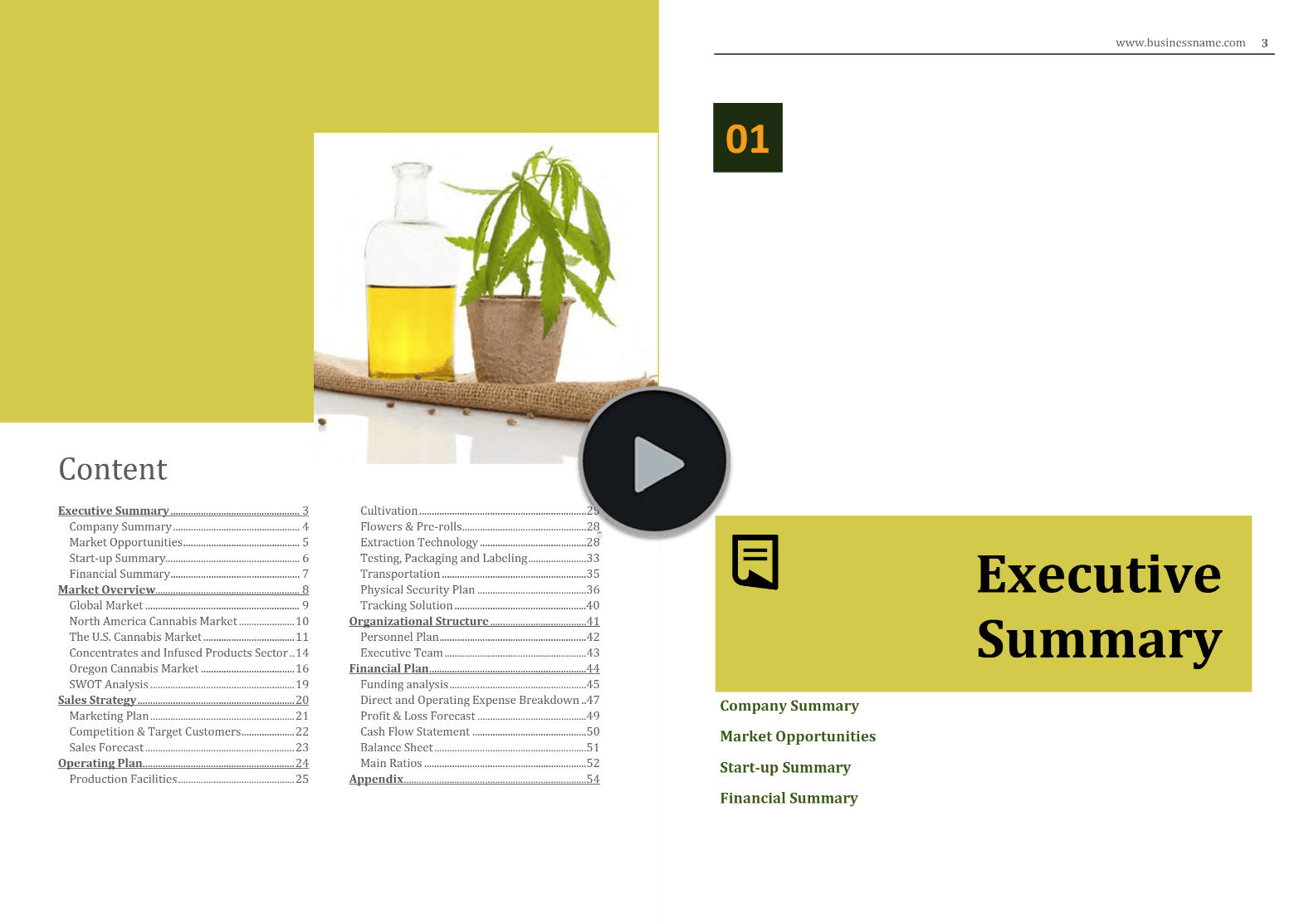
'70% ready to go' business plan templates
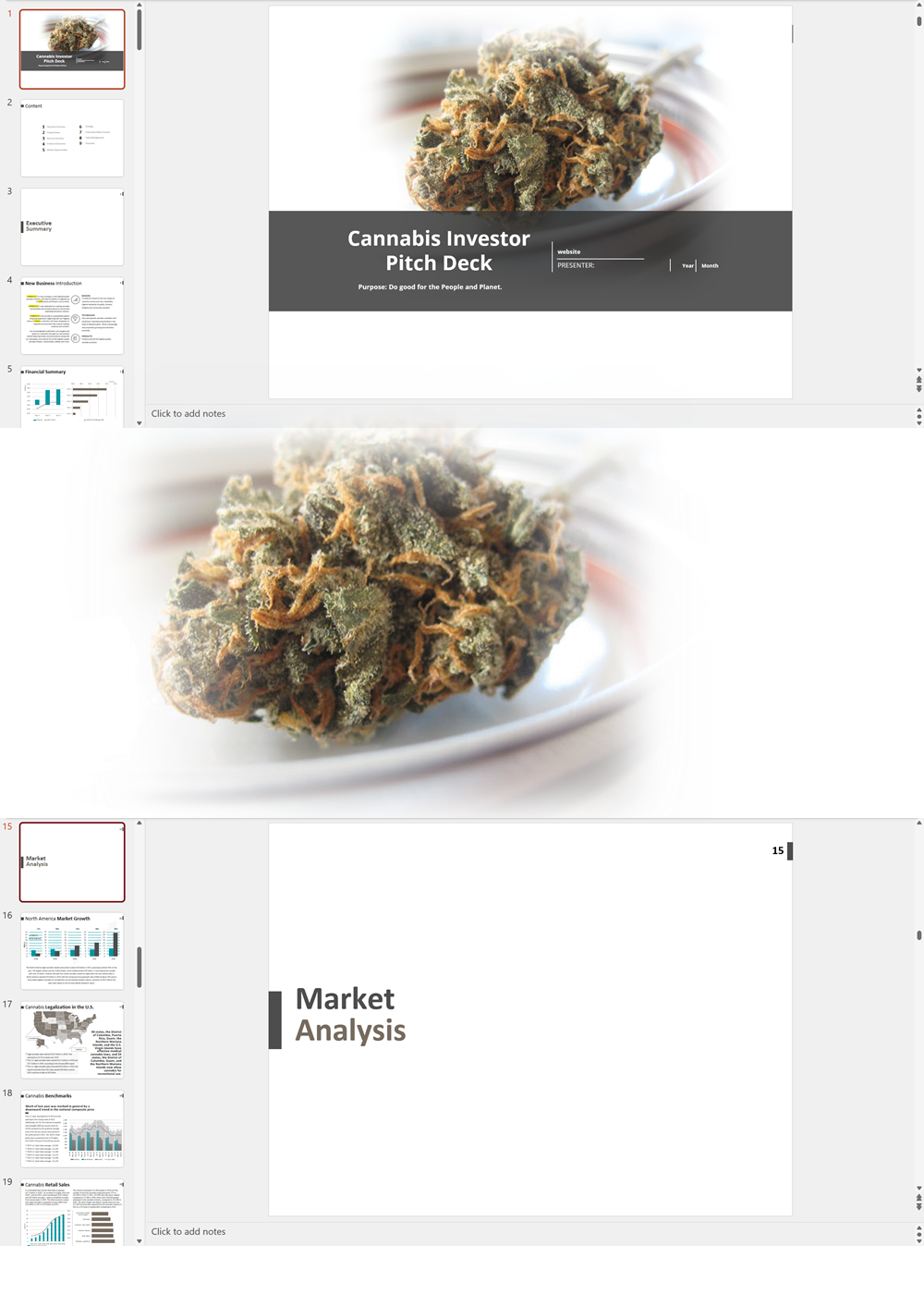
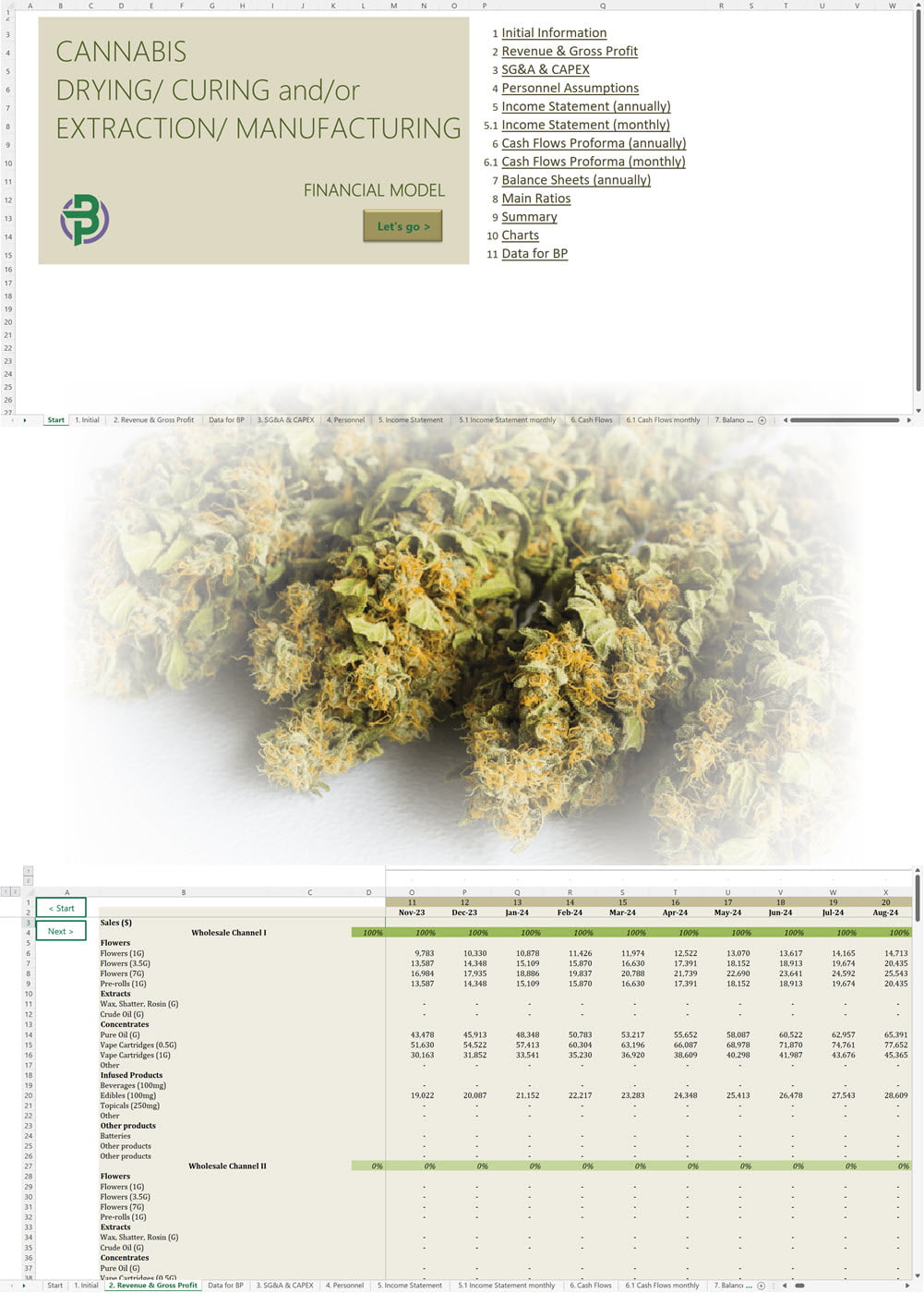
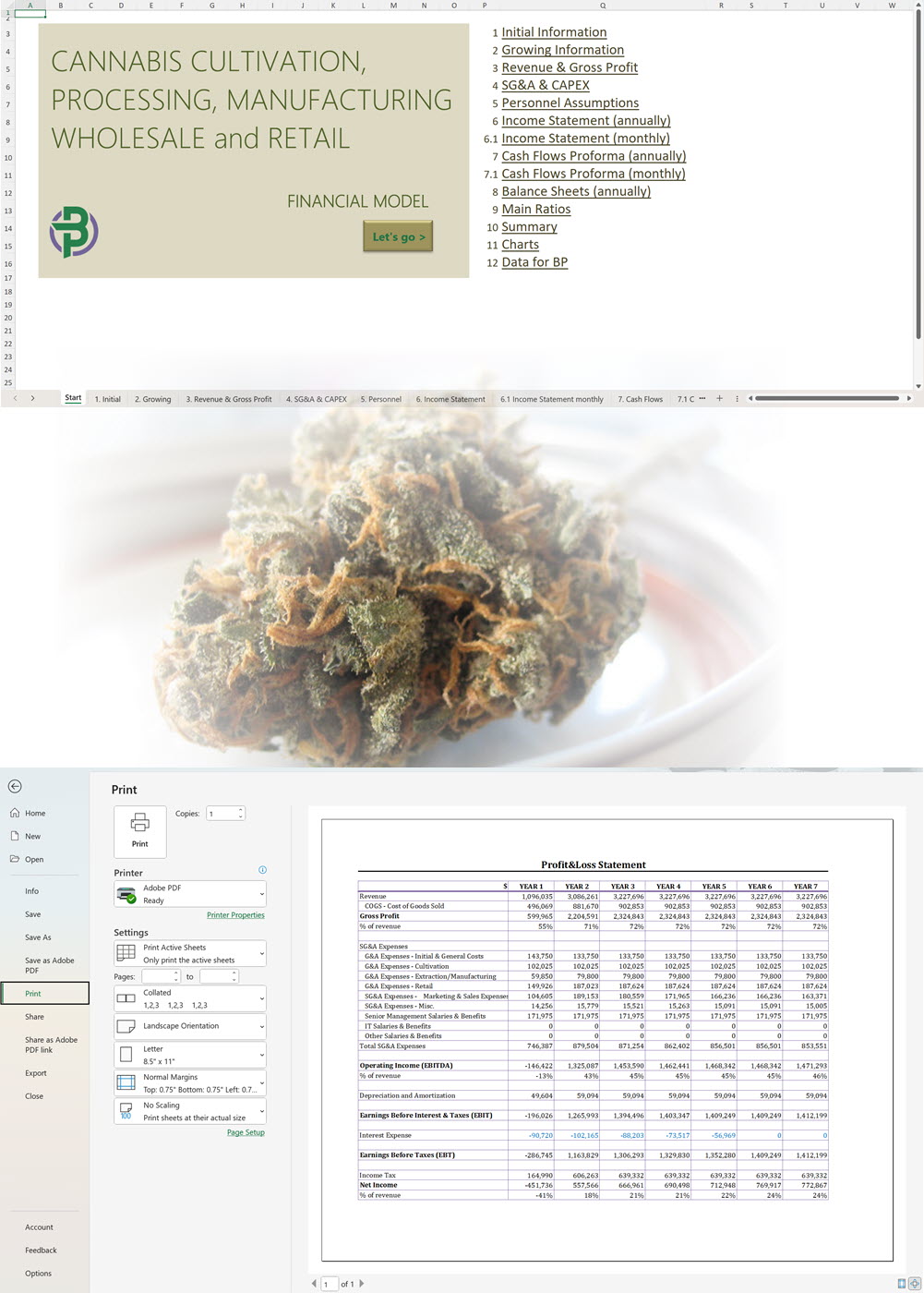
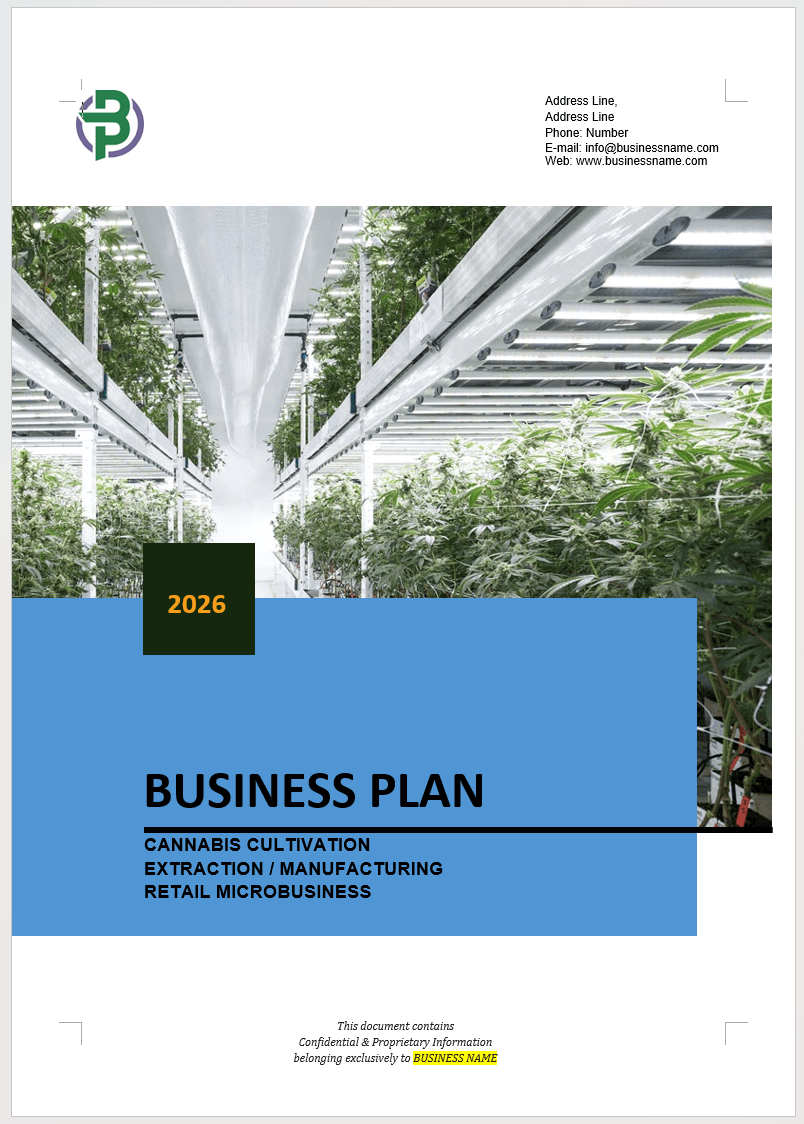
Our cannabis financial models and cannabis business plan templates will help you estimate how much it costs to start and operate your own cannabis business, to build all revenue and cost line-items monthly over a flexible seven year period, and then summarize the monthly results into quarters and years for an easy view into the various time periods. We also offer investor pitch deck templates.
Best Selling Templates
-

Cannabis Cultivation Business Plan Template
Price range: $75.00 through $350.00 Select options This product has multiple variants. The options may be chosen on the product page -

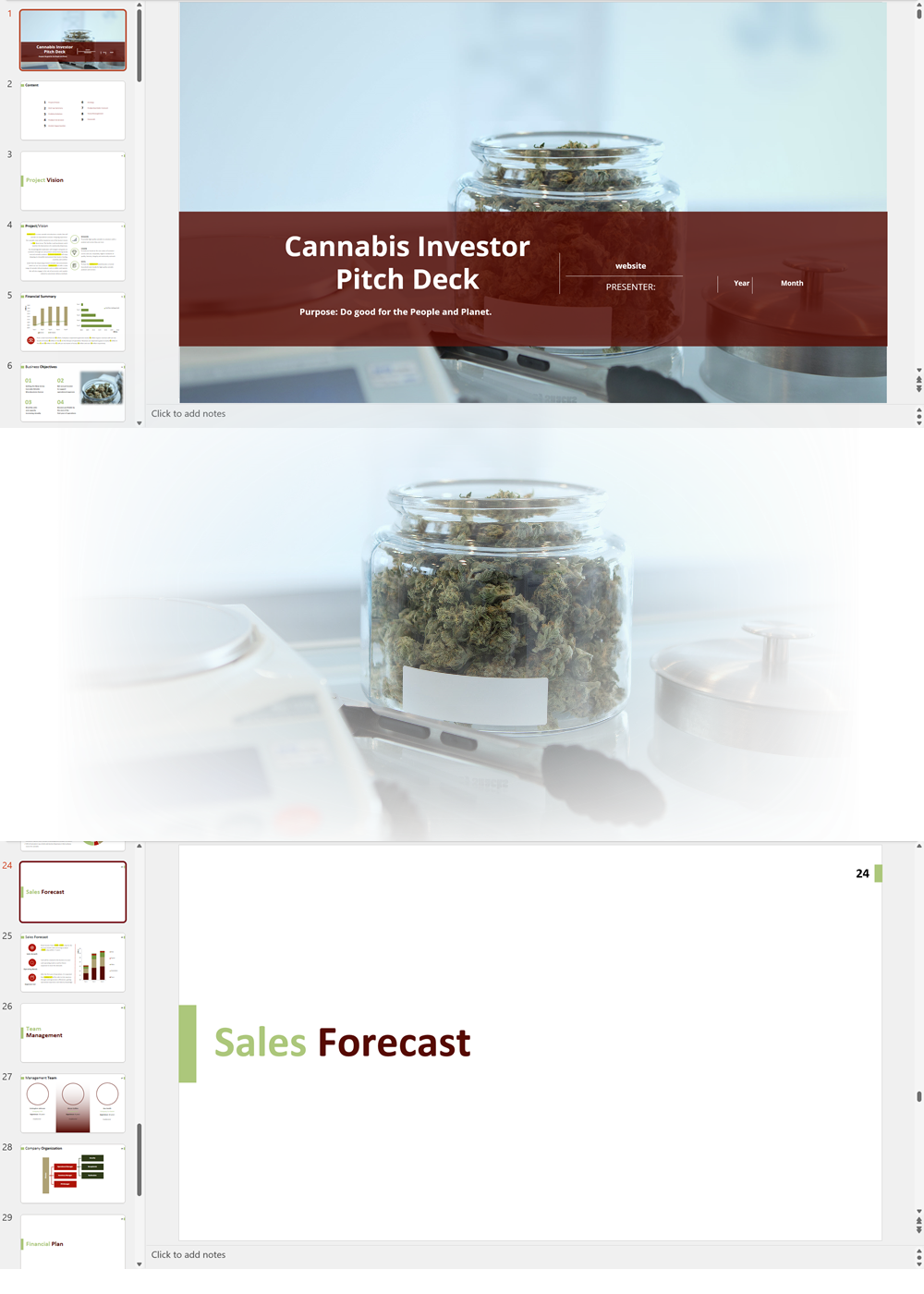
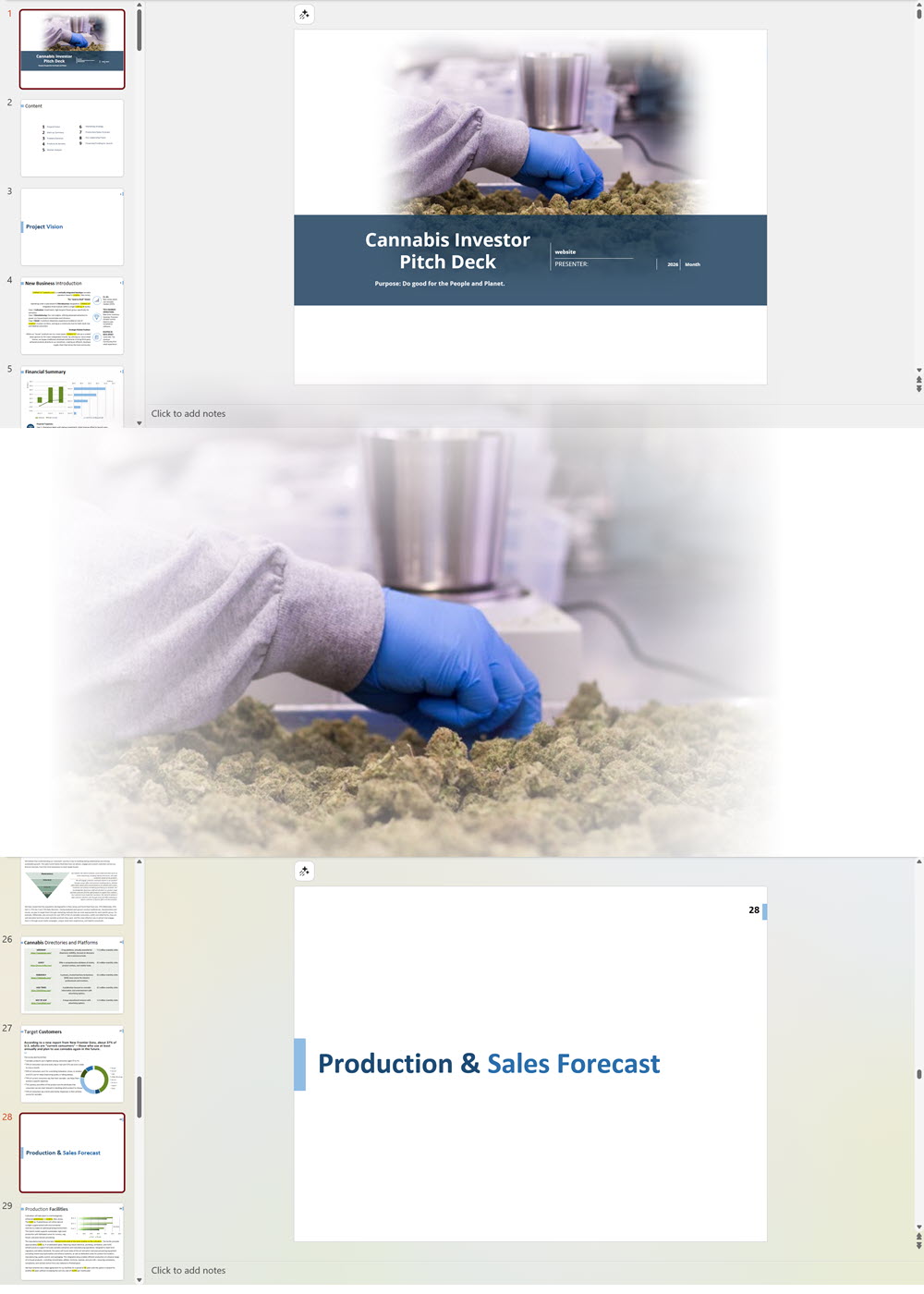
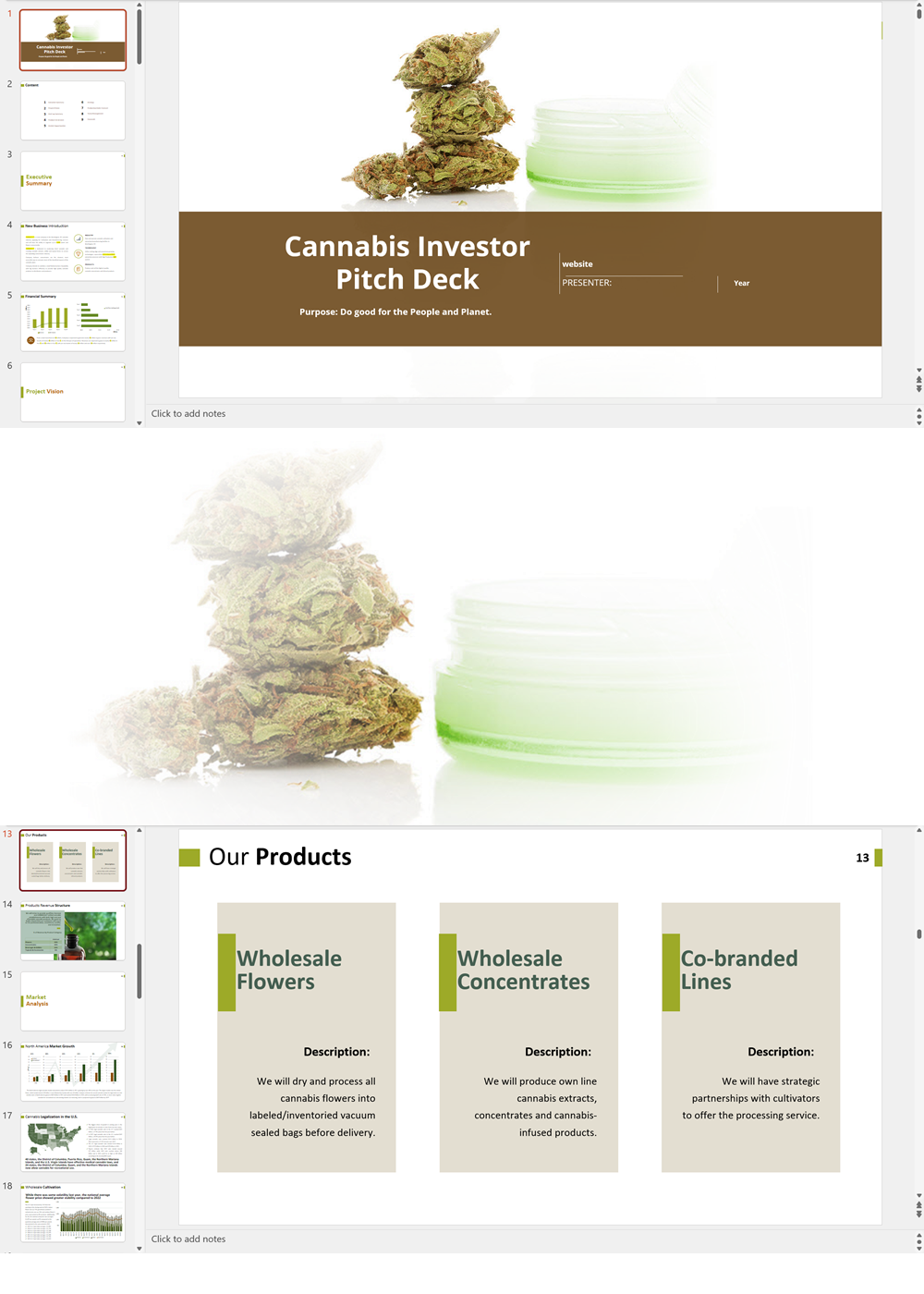
Cannabis Dispensary Investor Pitch Deck Template
$75.00 Select options This product has multiple variants. The options may be chosen on the product page -
Cannabis Financial Model All in One
$250.00 Select options This product has multiple variants. The options may be chosen on the product page
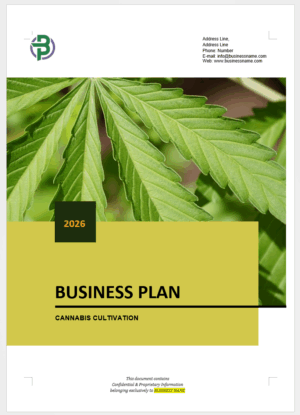
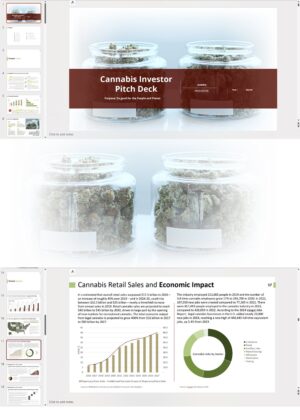
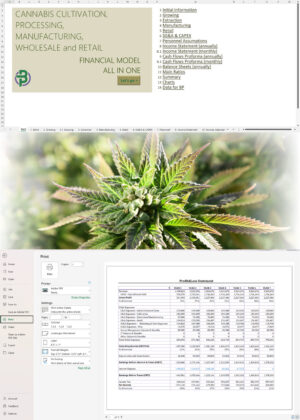
Hemp CBD business plan templates are available at hempcbdbusinessplans.com.
Our Templates
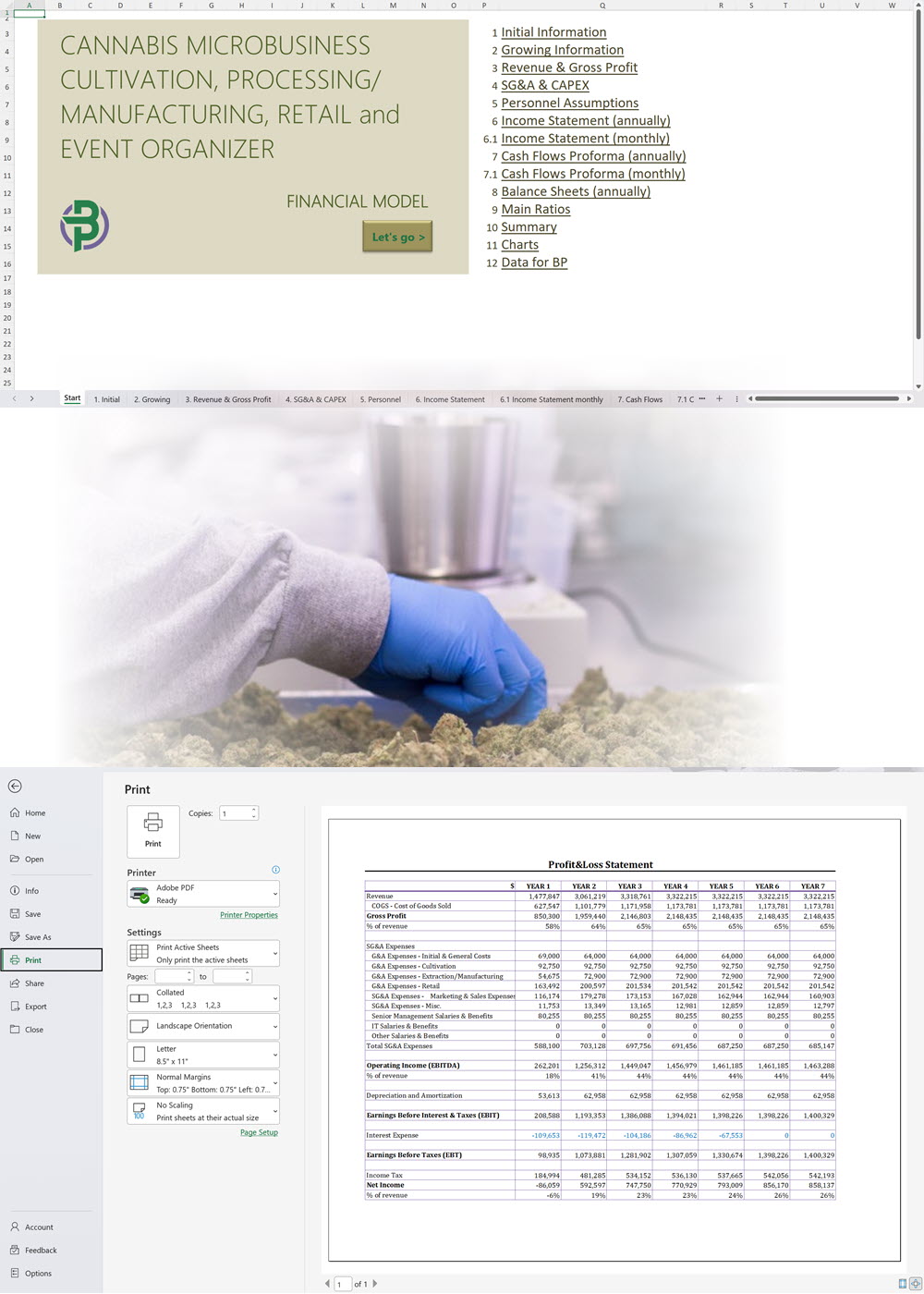
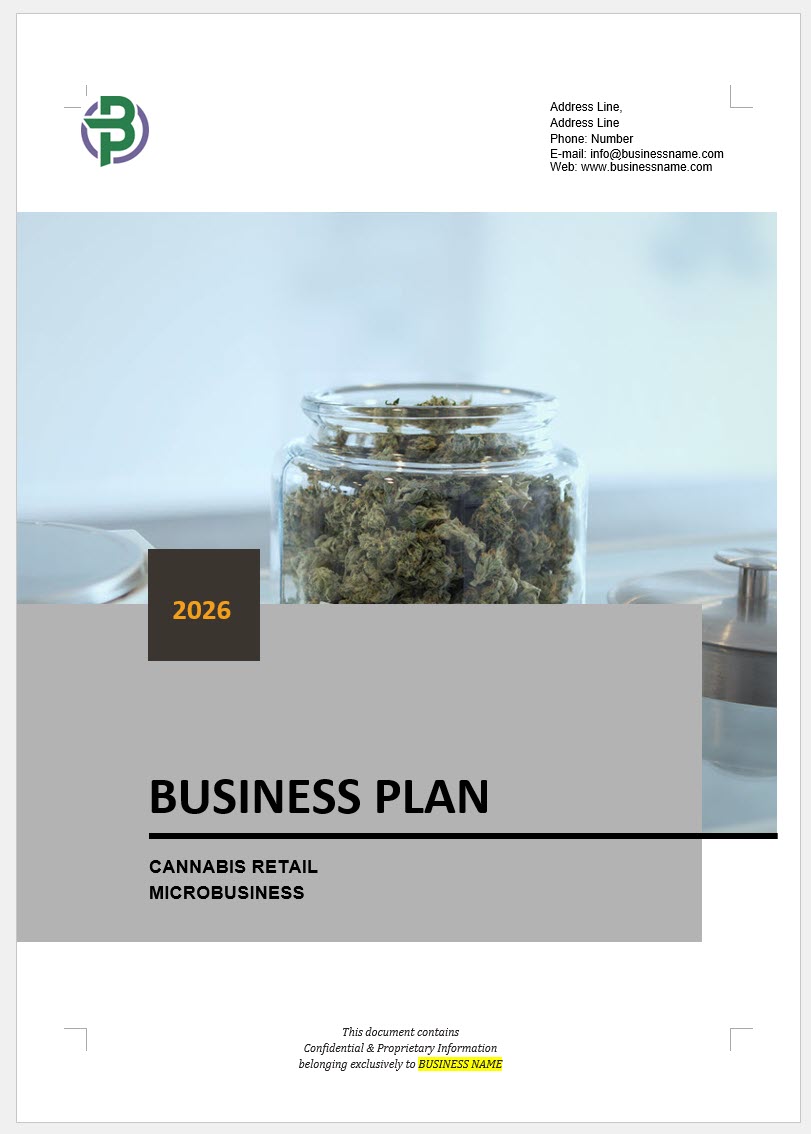
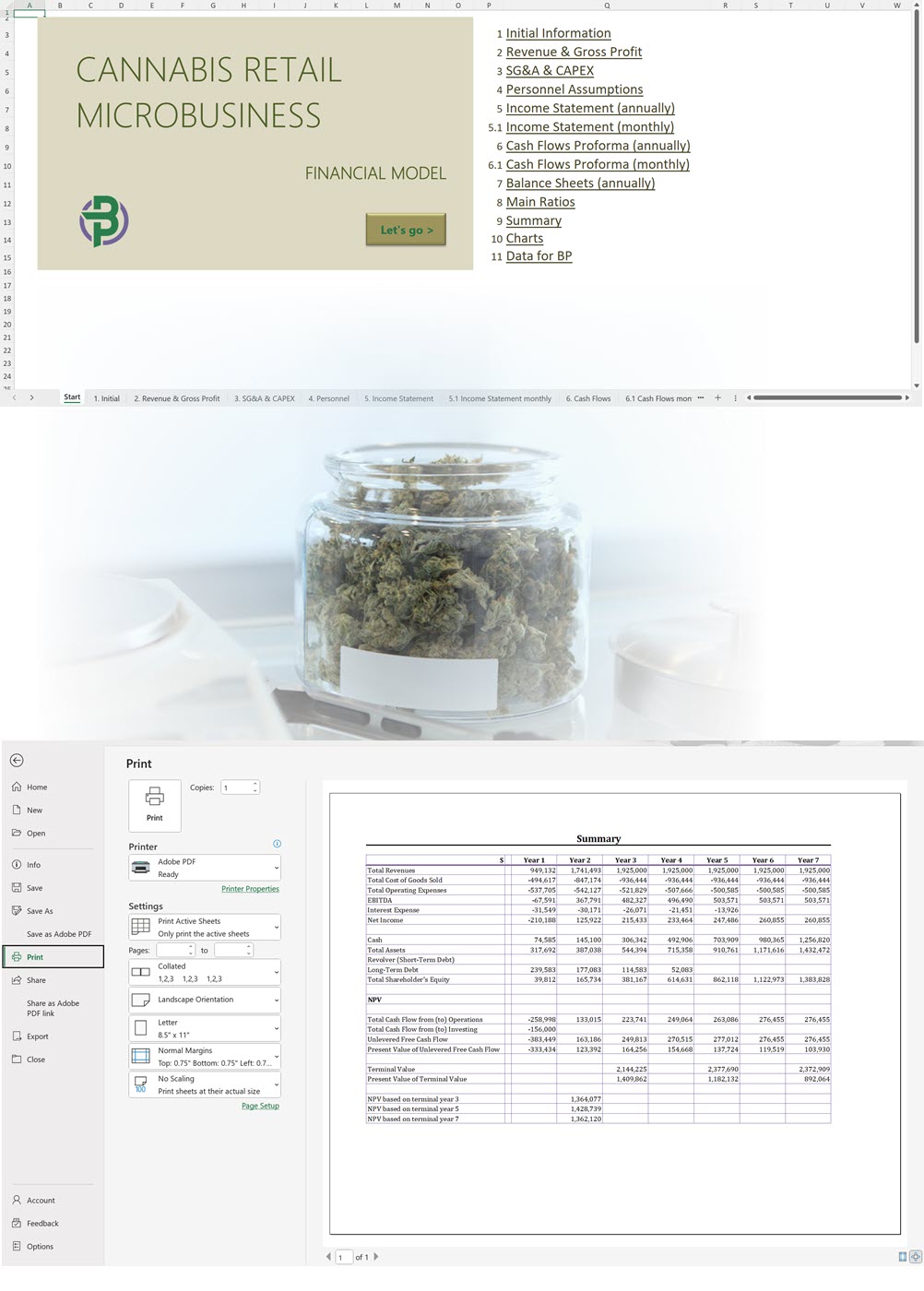
Cannabis Retail Microbusiness Business Plan Template
Price range: $75.00 through $275.00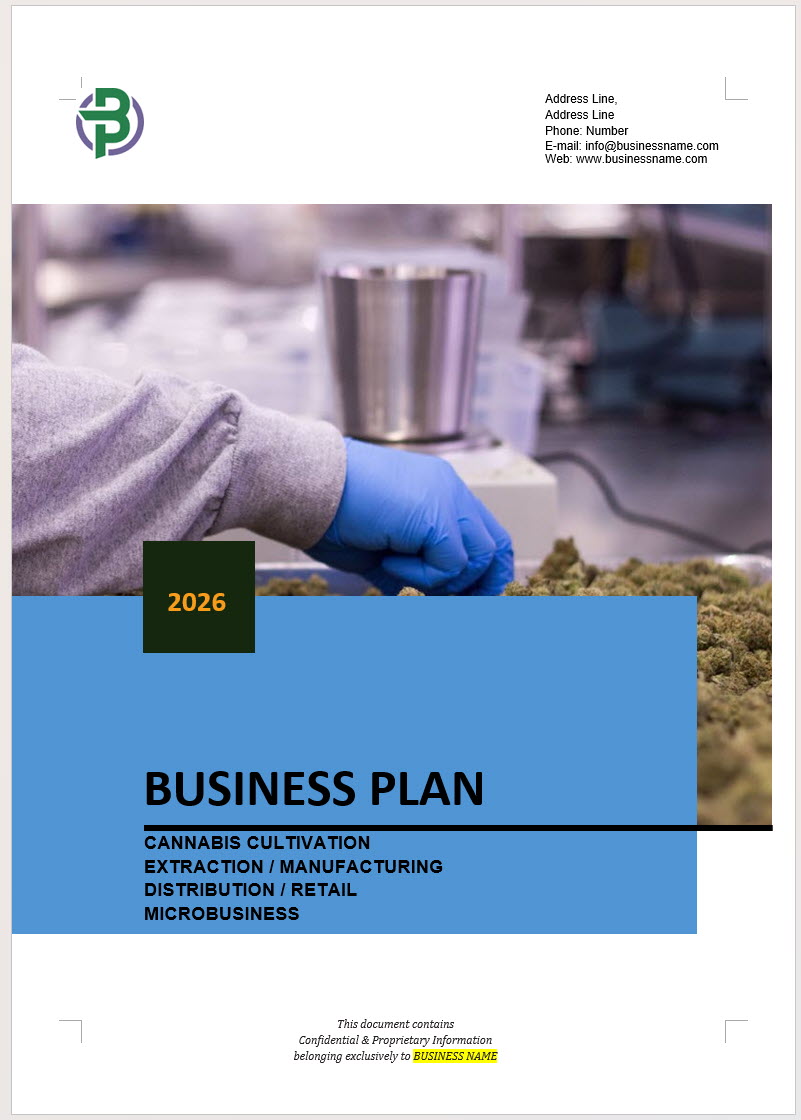
Cannabis Cultivation, Extraction, Manufacturing, Distribution, Retail and Microbusiness Business Plan Template
Price range: $75.00 through $500.00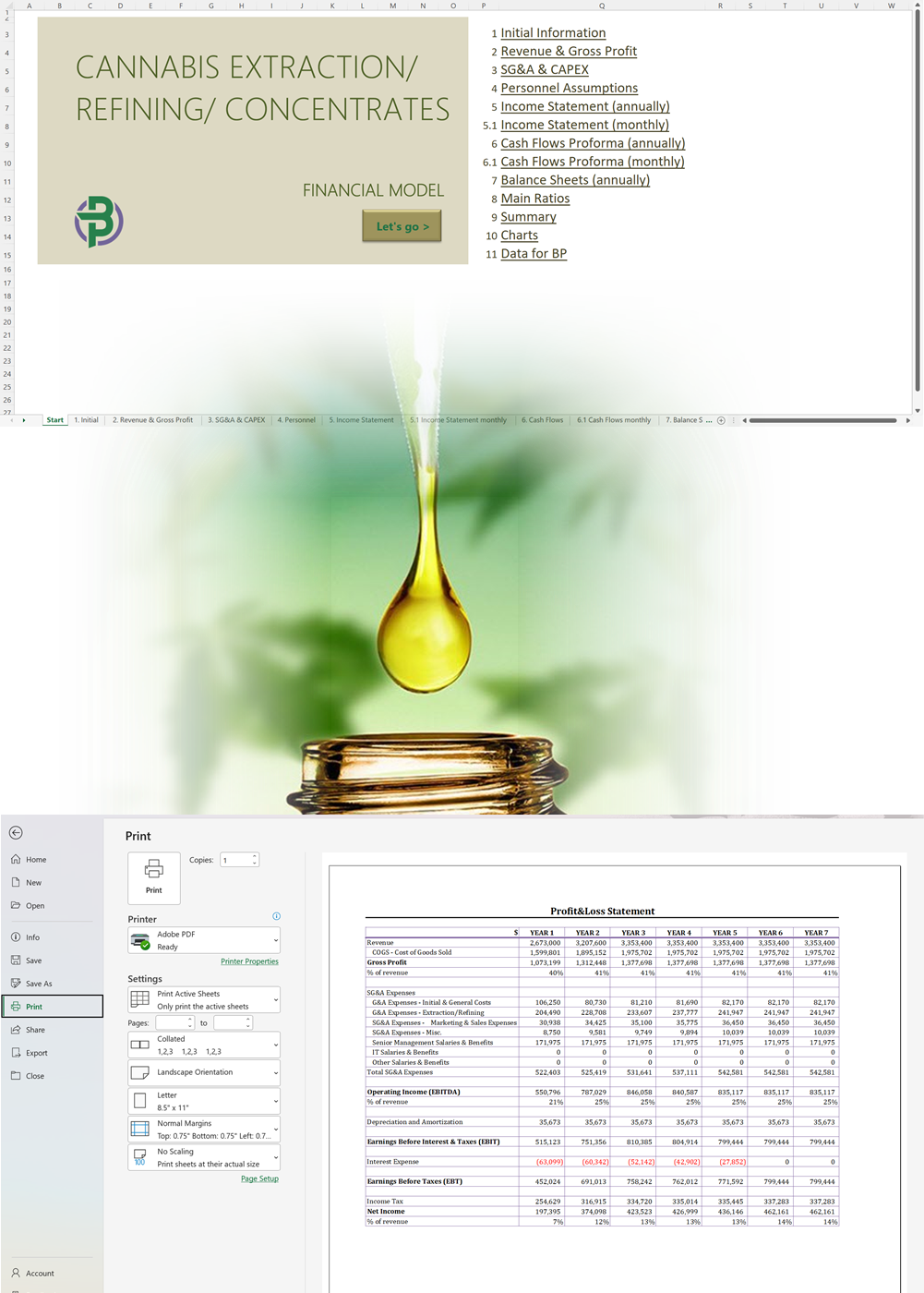

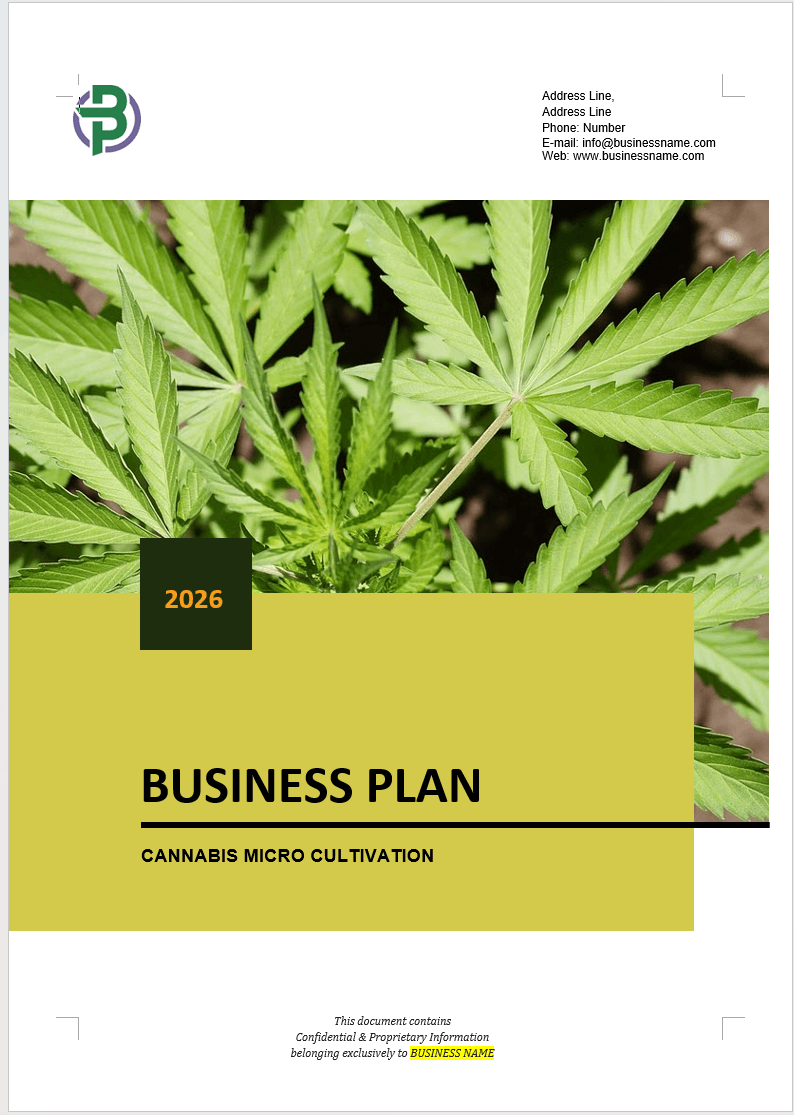
Cannabis Micro Cultivation Business Plan Template
Price range: $75.00 through $300.00
Cannabis Cultivation Business Plan Template
Price range: $75.00 through $350.00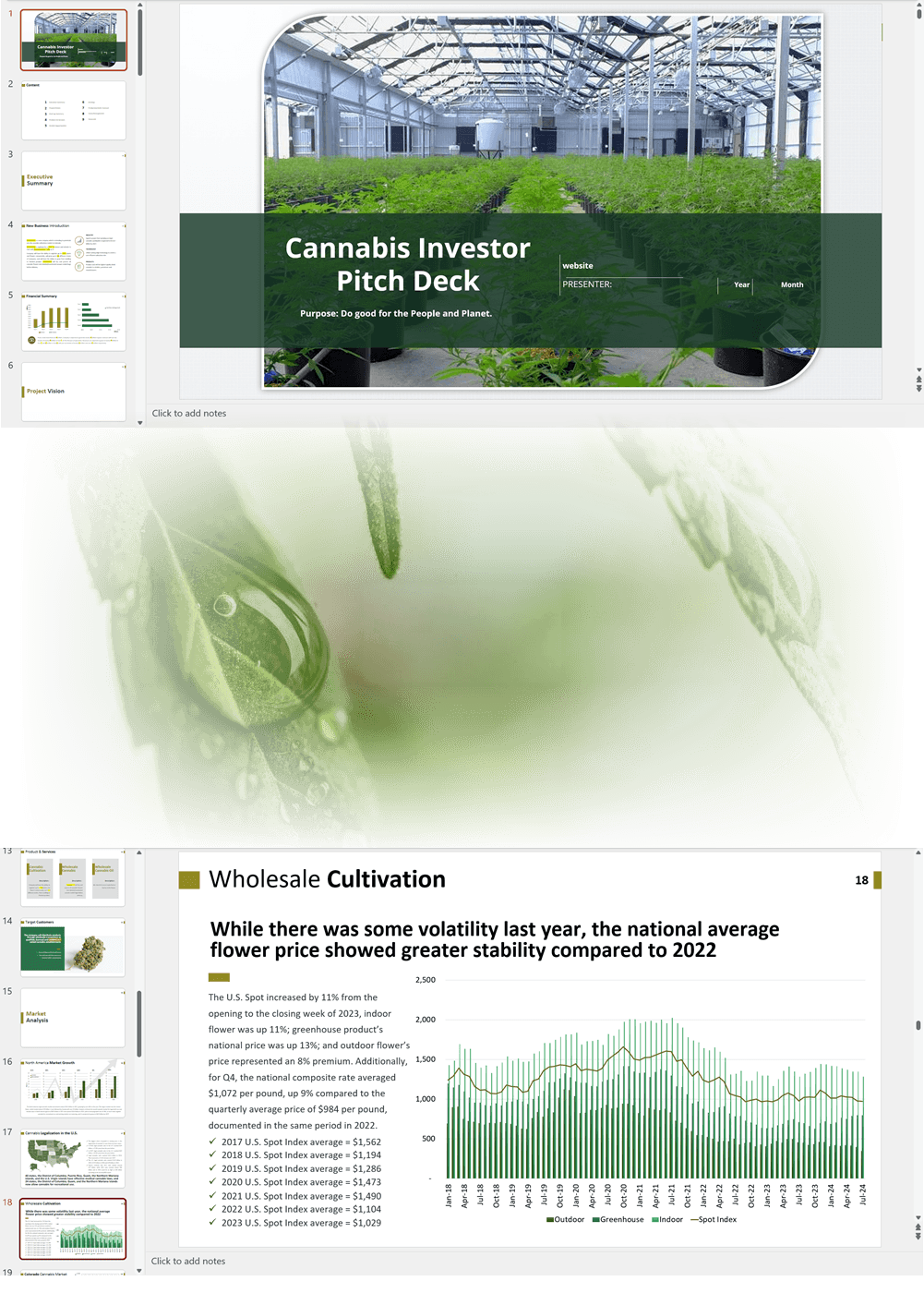
Cannabis Microbusiness Cultivation and Manufacturing Business Plan Template
Price range: $75.00 through $350.00
Vertically Integrated Cannabis Business Plan Template
Price range: $75.00 through $500.00


Cannabis Microbusiness Business Plan Template for Cultivation + Extraction + Manufacturing + Wholesale + Retail + Services
Price range: $75.00 through $500.00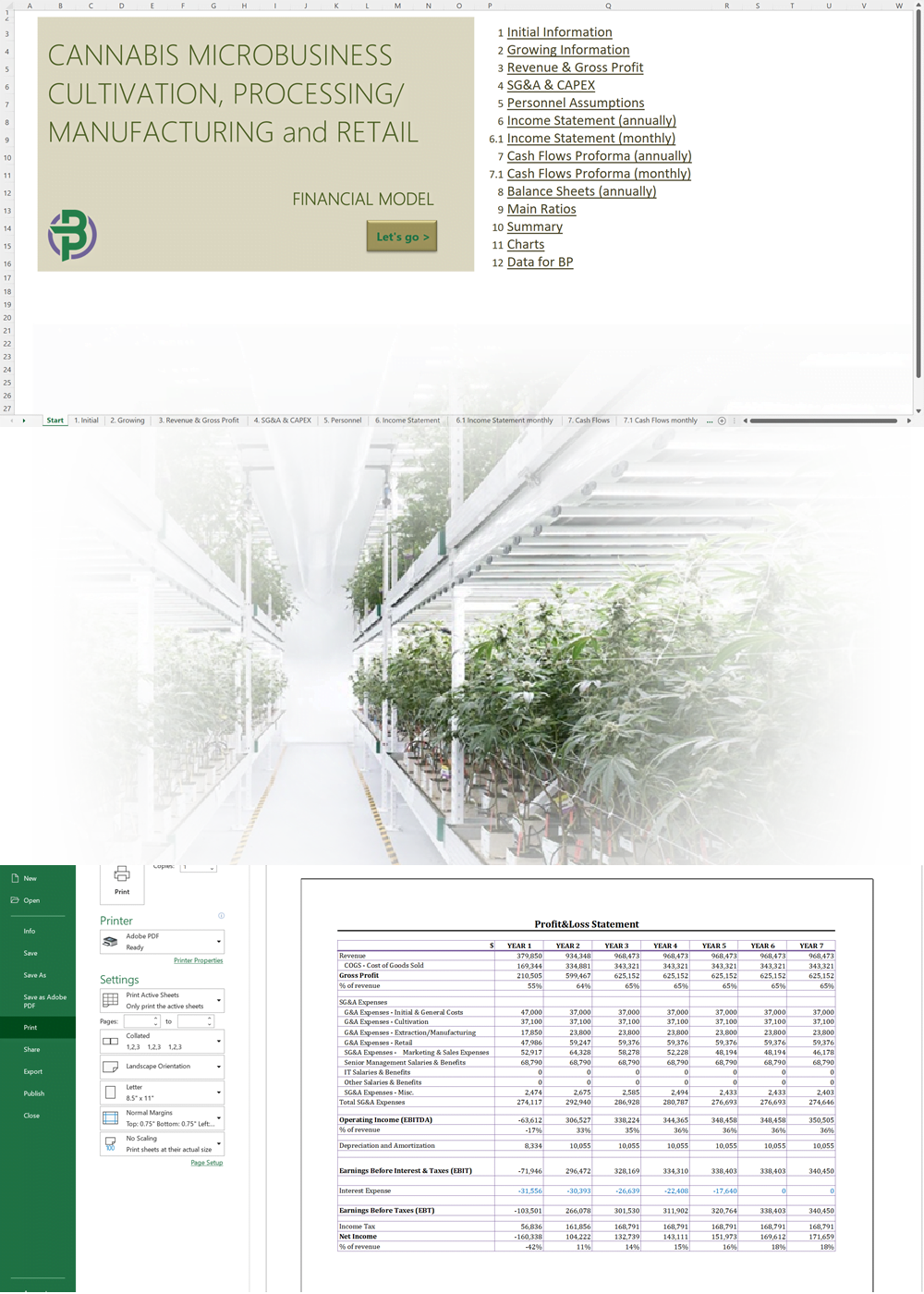

Cannabis Transportation Business Plan Template
Price range: $75.00 through $275.00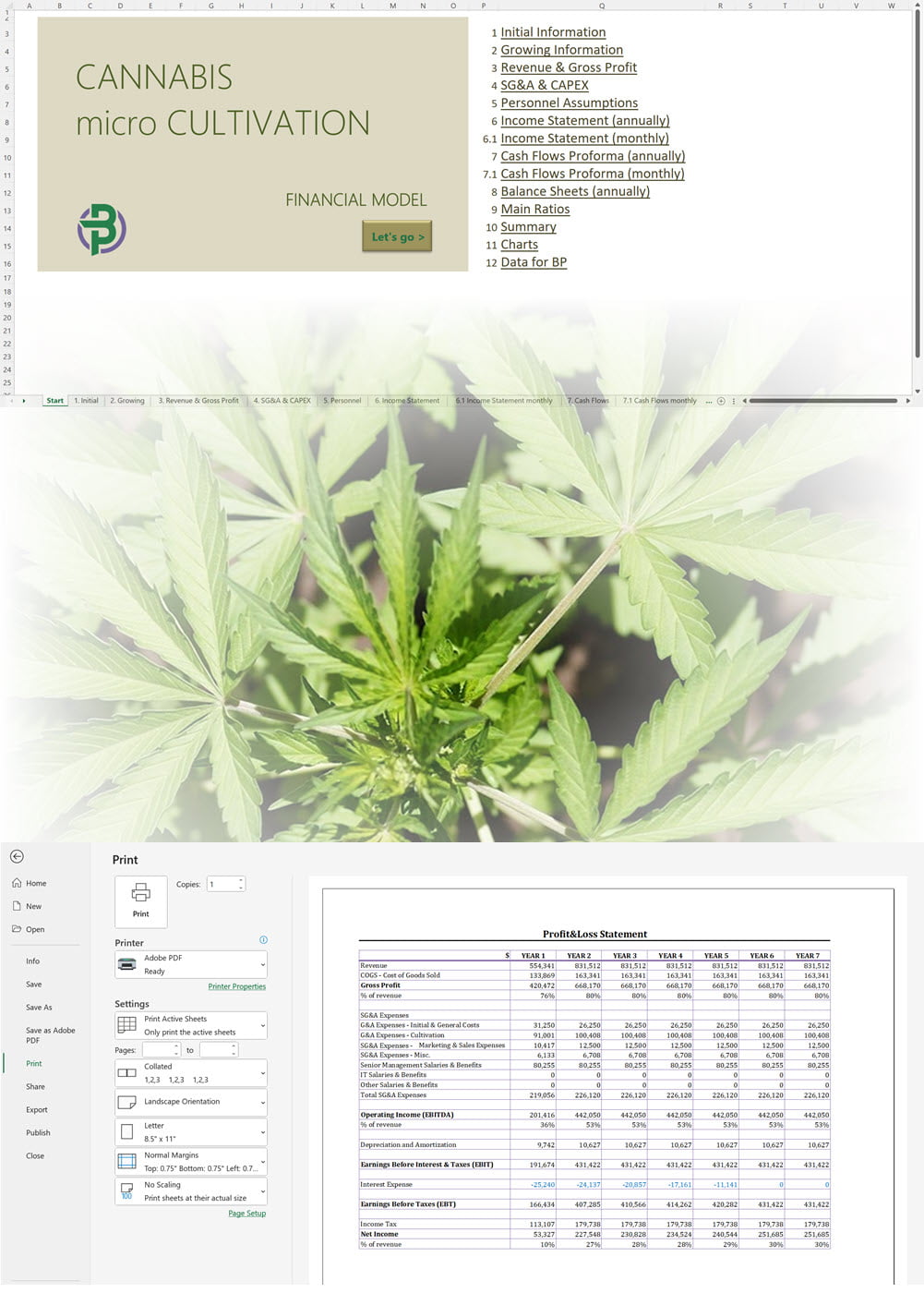

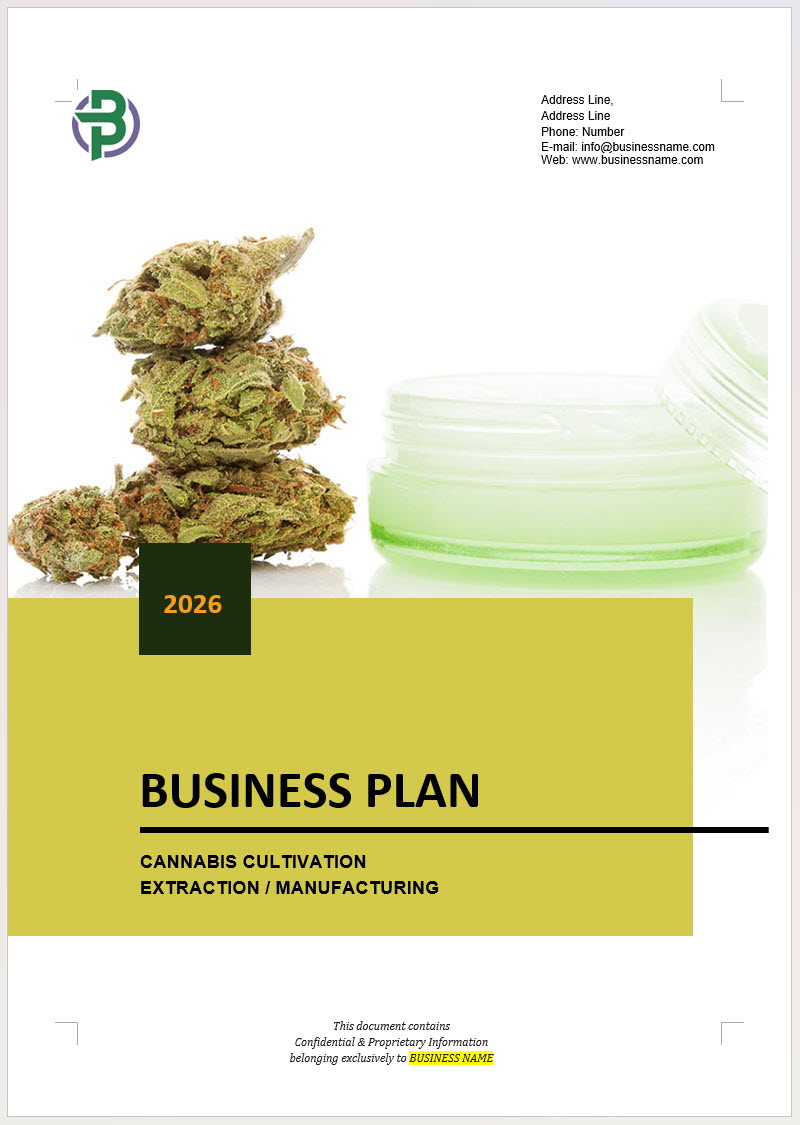
Cannabis Cultivation, Extraction and Manufacturing Business Plan Template
Price range: $75.00 through $450.00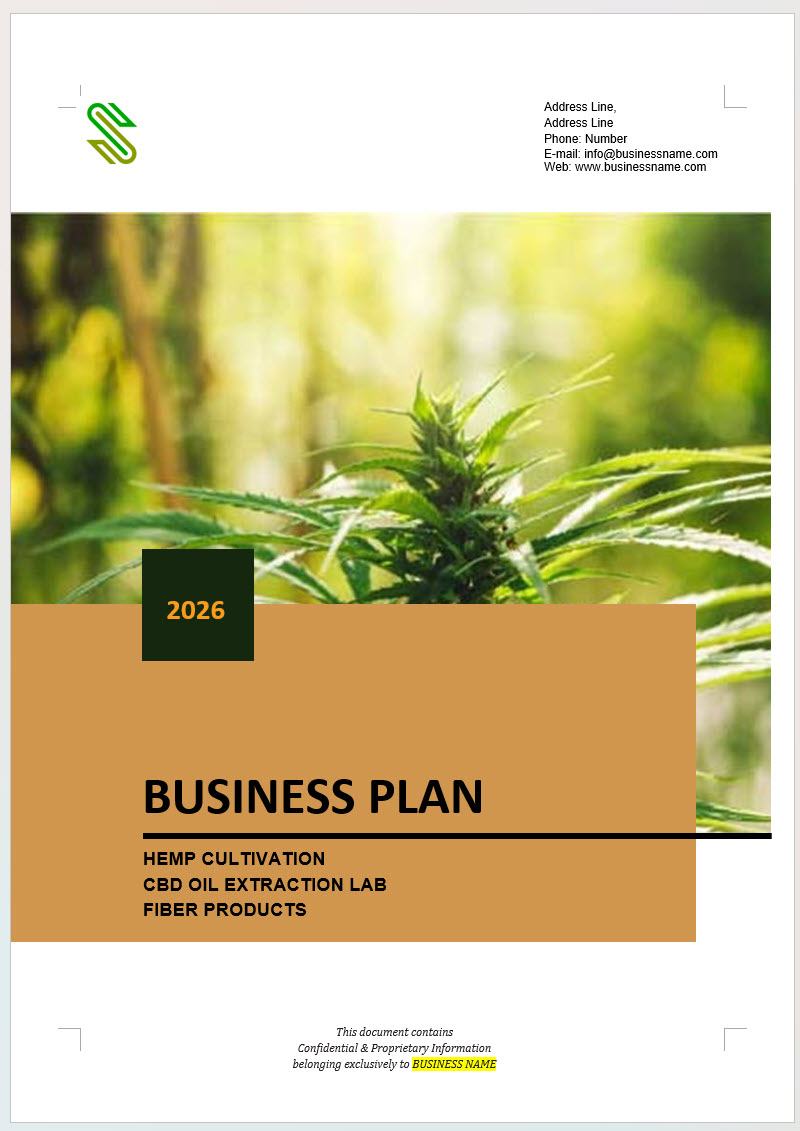
Hemp Cultivation and CBD Oil Extraction and/or Fiber Products Business Plan Template
Price range: $75.00 through $350.00