Key Takeaways
- Cannabis law and regulations:
- Medical cannabis in Texas is regulated by the Compassionate Use Program (37 TAC Part 1, Chapter 12) (updated in October 2025), Texas Health and Safety Code, Chapter 487 and the Occupations Code, Chapter 169.
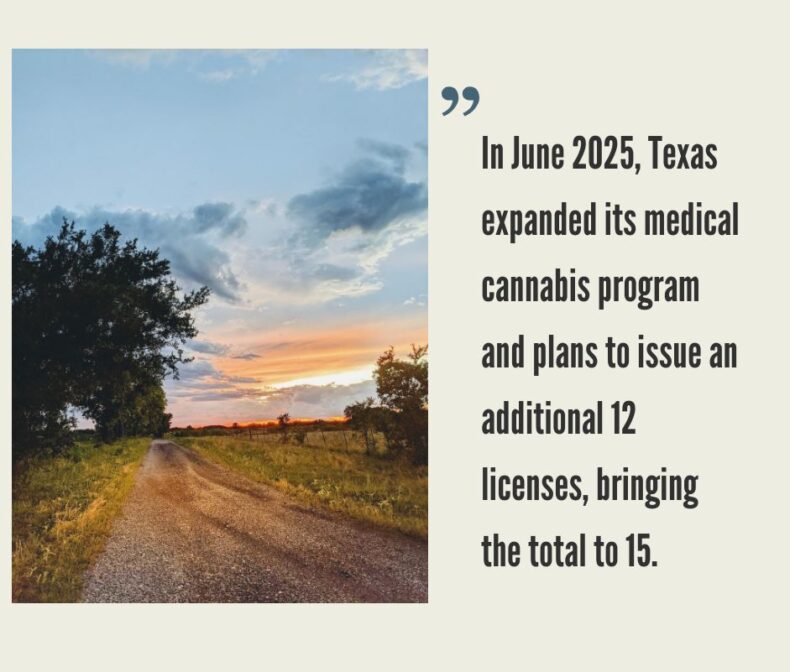
- On June 20, 2025, Gov. Abbott signed House Bill 46 into law, expanding the state’s medical cannabis program by adding qualifying conditions for medical cannabis treatment, introducing new product forms, replacing the 1% THC by weight limit with up to 10 milligrams per dose and 1 gram per package, allowing dispensing organizations to open satellite locations, and instructing the Texas Department of Public Safety to issue at least 12 new dispensing organization licenses to bring the total number of licensees to 15.
- Licenses available:
- Dispensing Organization License – vertically integrated businesses authorized to perform cultivation, processing, and dispensing of low-THC cannabis to qualified patients via registered physicians.
- Products legal:
- Low-THC cannabis containing no more than 10mg of THC per dose or 1 gram of THC per package, in the form of tinctures, lozenges, oils, cannabis patches, lotions and suppositories as well as approved inhalers, nebulizers and vaping devices
- Taxes:
- Texas does not impose an excise tax on the sale of low-THC cannabis. Purchases are subject to statewide retail sales tax of 6.25%.
- Market:
- As of September 2025, there were 127,206 patients receiving medical cannabis treatment in Texas.
Medical Cannabis Legalization in Texas
On June 1, 2015, Gov. Greg Abbot signed SB 339 – a limited medical cannabis bill, known as the Texas Compassionate Use Act – into law to allow patients with intractable epilepsy to access low-THC (not more than 0.5% by weight of THC), high-CBD (10% or more CBD) medical cannabis. Medical use of these substances is limited to swallowing, not smoking, the prescribed dose of low-THC.
The Department of Public Safety (DPS) administers the Compassionate Use Program (CUP) in Texas.
The DPS set to work creating a registry of doctors who could prescribe medical cannabis, and three organizations – Compassionate Cultivation, Surterra Texas and Fluent – have been licensed to grow, process and sell medical cannabis to patients. The DPS shall only issue additional dispensing organization licenses if it is necessary to ensure “reasonable access statewide to, and the availability of, low-THC cannabis for patients” according to the Texas Health and Safety Code, Chapter 487.
In June 2019, Texas Gov. Greg Abbott signed into law House Bill 3703, a measure that added multiple sclerosis, Parkinson’s disease, ALS, terminal cancer, autism and many kinds of seizure disorders to the state’s list of qualifying medical cannabis conditions.
In June 2021, a new bill (House Bill 1535) was signed into law to raise the maximum THC level of low-THC cannabis to 1% and allow low-THC cannabis to be prescribed to patients with post-traumatic stress disorder as well as any form of cancer, instead of only terminal cancer.
In January 2023, the Texas Department of Public Safety (DPS), Regulatory Services Division (RSD) began accepting new applications for Compassionate Use Program dispensing organization licenses. The last application submission window closed on April 28, 2023. Texas regulators have received 132 applications.
On June 20, 2025, House Bill 46 was signed by Gov. Abbott. The bill takes effect September 1, 2025. The bill expands the state’s medical cannabis program in the following manner:
- Adds chronic pain, traumatic brain injury, Crohn’s disease or other inflammatory bowel disease, and any terminal illness or condition for which a patient is receiving hospice or palliative care, to the list of qualifying conditions for medical cannabis treatment.
- Each prescription from a physician for low-THC cannabis may provide for a 90-day supply and provide up to 4 refills of a 90-day supply.
- Allows a physician to prescribe more than one package in a 90-day period.
- Allows the use of cannabis patches, lotions and suppositories as well as approved inhalers, nebulizers and vaping devices.
- For the definition of low-THC cannabis, replaces the 1% THC by weight limit with up to 10 milligrams per dose and 1 gram per package.
- Instructs DPS to issue at least 9 additional dispensing organization licenses by December 1, 2025, from applications submitted before July 1, 2025, and at least 3 additional dispensing organization licenses by April 1, 2026, from applications submitted at any time.
- Allows dispensing organizations to open, with the approval of DPS, off-site storage locations. When applying for a dispensing organization license, applicants are now able to include in the application the address of any satellite location that they plan to use for secure storage of low-THC cannabis.
As instructed by House Bill 46, on October 9, 2025, the DPS officially finalized the updated regulations for the state’s medical cannabis program – making the changes made by House Bill 46 effective, starting from October 29.
The DPS has already completed the first licensing phase and awarded conditional licenses to 9 companies. According to an update from the DPS on April 1, 2026, as required by the updated regulations, 3 additional conditional licenses were awarded. The 12 companies have been placed on a Texas Compassionate Use Program license eligibility list and must now undergo further evaluation before the final licenses can be issued.
The expansion of the list of qualifying medical conditions for cannabis took effect on September 1, 2025. After a public comment period, the Department of State Health Services published finalized rules in the Texas Register, granting doctors permission to recommend medical conditions for addition to the list of qualifying conditions and creating regulations for the use of low-THC inhalation devices.
Steps Towards Adult-Use Cannabis Legalization
On July 24, 2025, House Bill 195 was introduced which, if legalized, would allow adults aged 21 and over to possess up to 2.5 ounces of cannabis or 15 grams of concentrate. Licenses would be created for cannabis growers, processors, testing laboratories, and retailers.
Texas Cannabis Market Statistics
In the first 12 months after the launch of the state’s medical cannabis program, there were just 646 enrolled patients. In the years since, this number grew to 1,309 patients in December 2019 and then jumped by 1,153% to 16,403 patients in December 2021 according to data from the DPS. The growth continued, surpassing 43,000 patients in December 2022 and reaching nearly 73,000 patients in December 2023. In a Texas Compassionate Use Program evaluation report, it was suggested that this increase was largely driven by the addition of PTSD as a qualifying condition in June 2021. Data from the Compassionate Use Registry of Texas reveals that nearly 50% of patients who received at least 1 prescription in 2022 were enrolled with PTSD as their only or first qualifying condition.
In December 2024, patient numbers reached 102,597 and continue to rise consistently. As of May 2025, there were 116,216 patients receiving medical cannabis treatment in Texas. With House Bill 46 adding chronic pain, traumatic brain injury, and any “terminal illness or condition” treated with palliative care or hospice to the list of medical conditions for which patients may use medical cannabis as treatment, the number of registered medical cannabis patients rose to over 127,000 in September 2025.
Physician numbers also rose rapidly over the years – from just 57 in December 2018 to 902 in September 2025.
Texas Cannabis Market Infographics
Vertically Integrated Cannabis Business Plan Sample, Texas
'70% ready to go' business plan templates
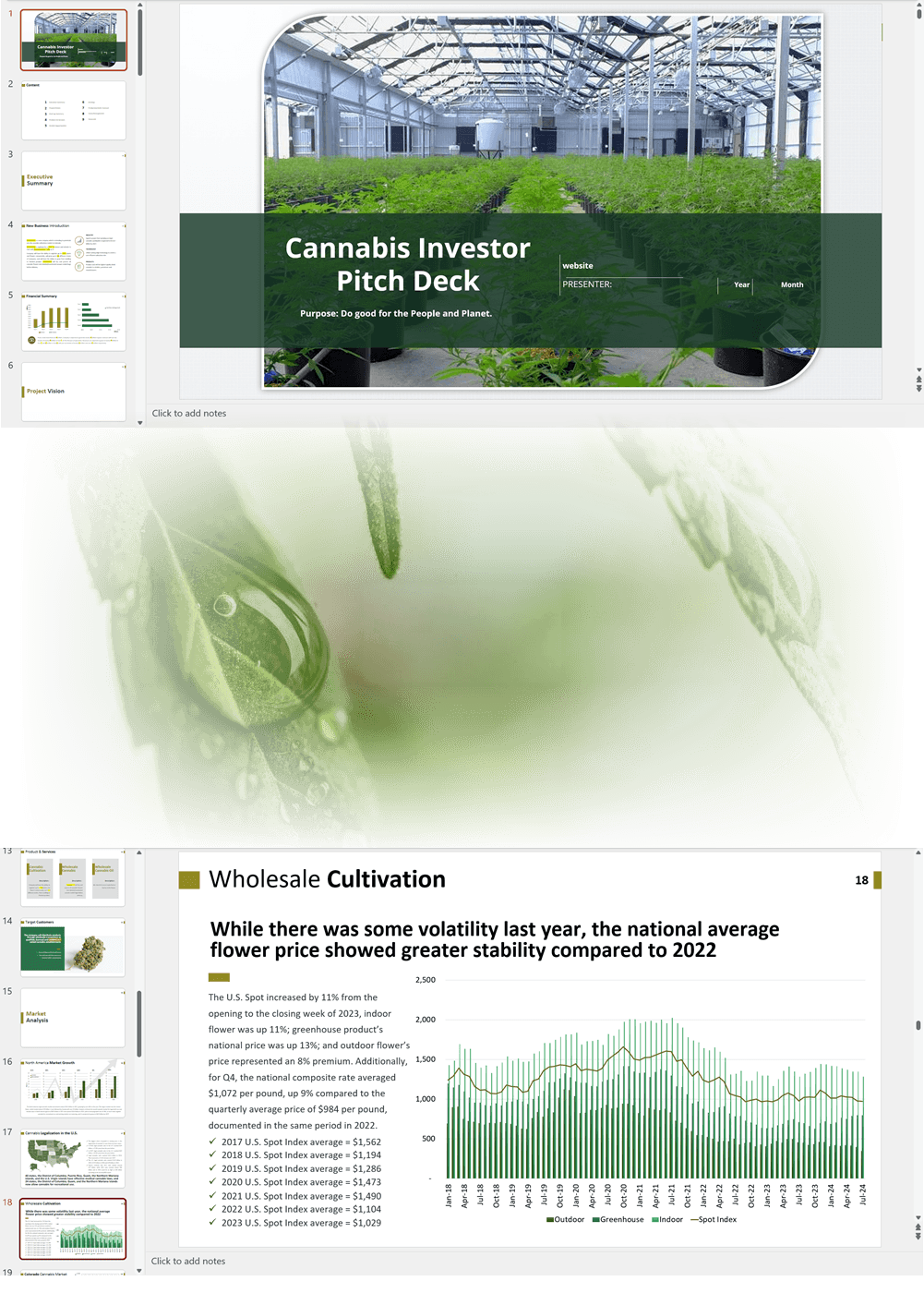
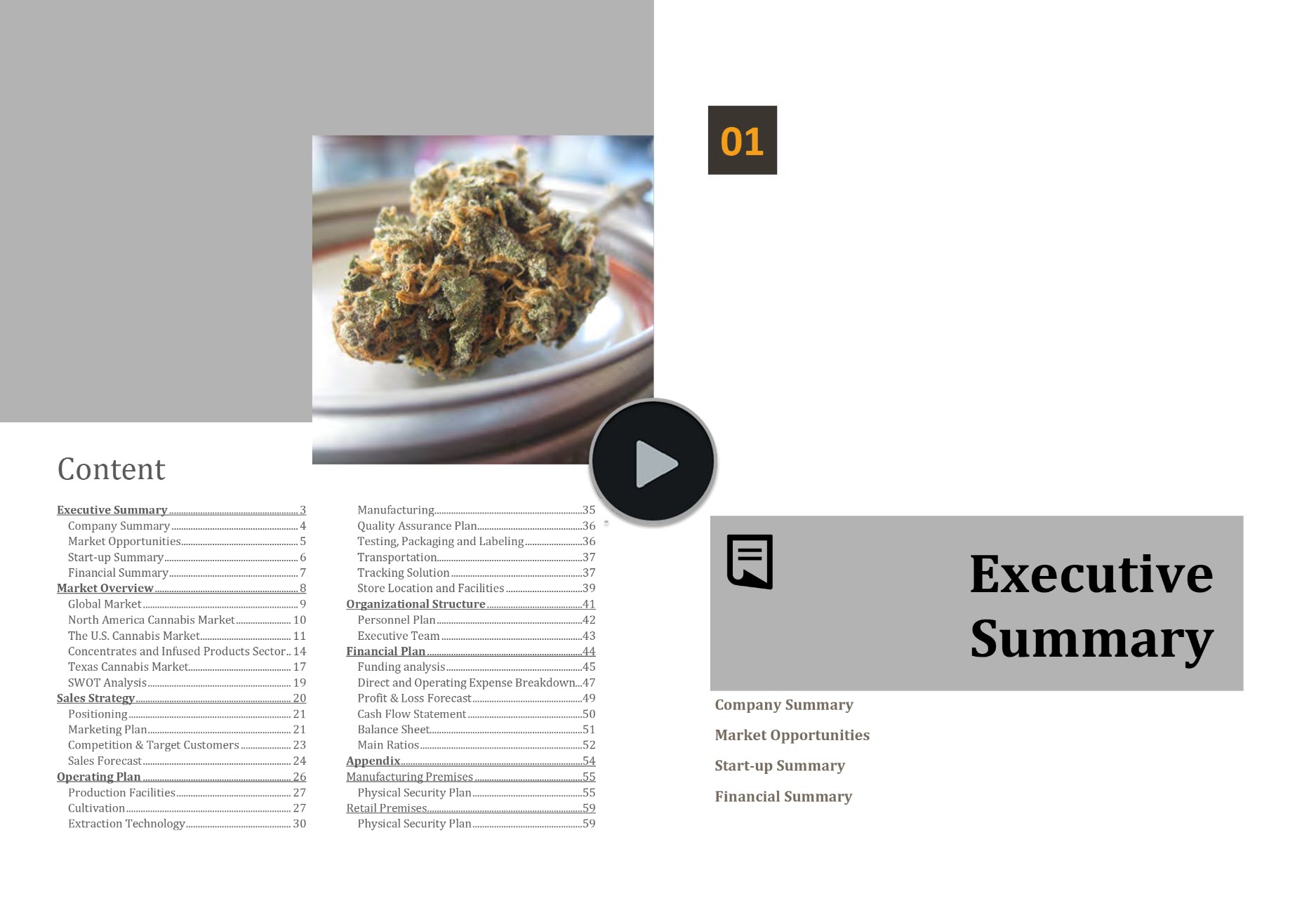
Our cannabis financial models and cannabis business plan templates will help you estimate how much it costs to start and operate your own cannabis business, to build all revenue and cost line-items monthly over a flexible seven year period, and then summarize the monthly results into quarters and years for an easy view into the various time periods. We also offer investor pitch deck templates.
Best Selling Templates
-

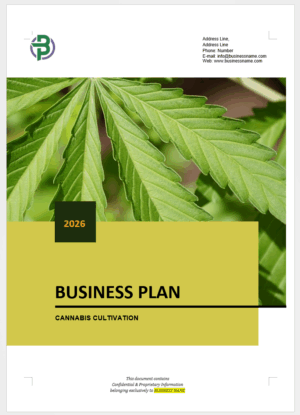
Cannabis Cultivation Business Plan Template
Price range: $75.00 through $350.00 Select options This product has multiple variants. The options may be chosen on the product page -

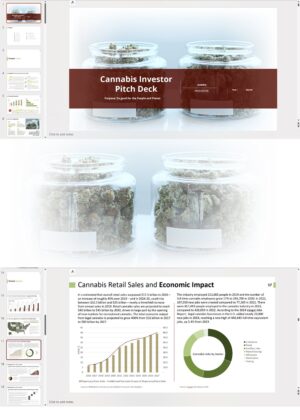
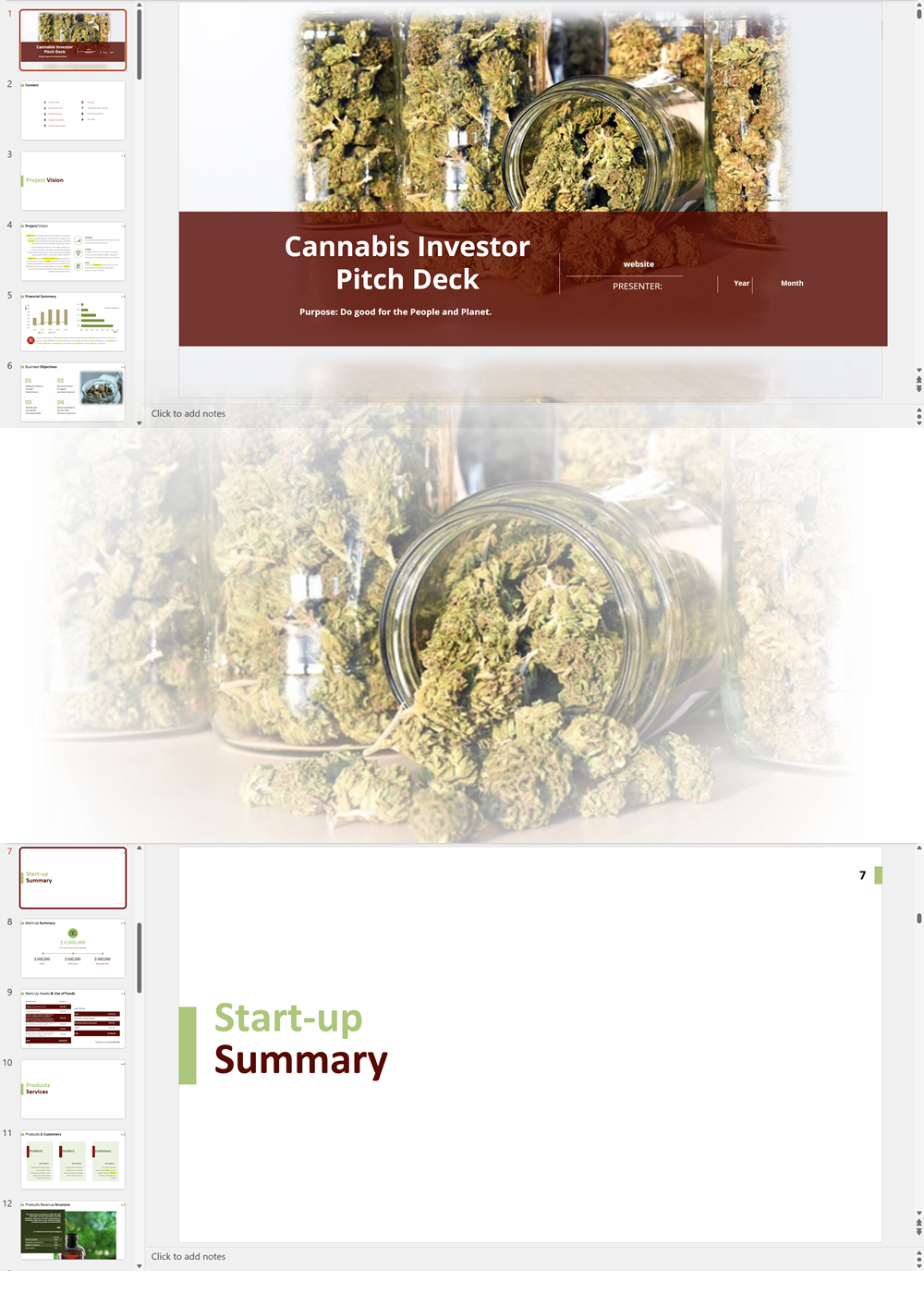
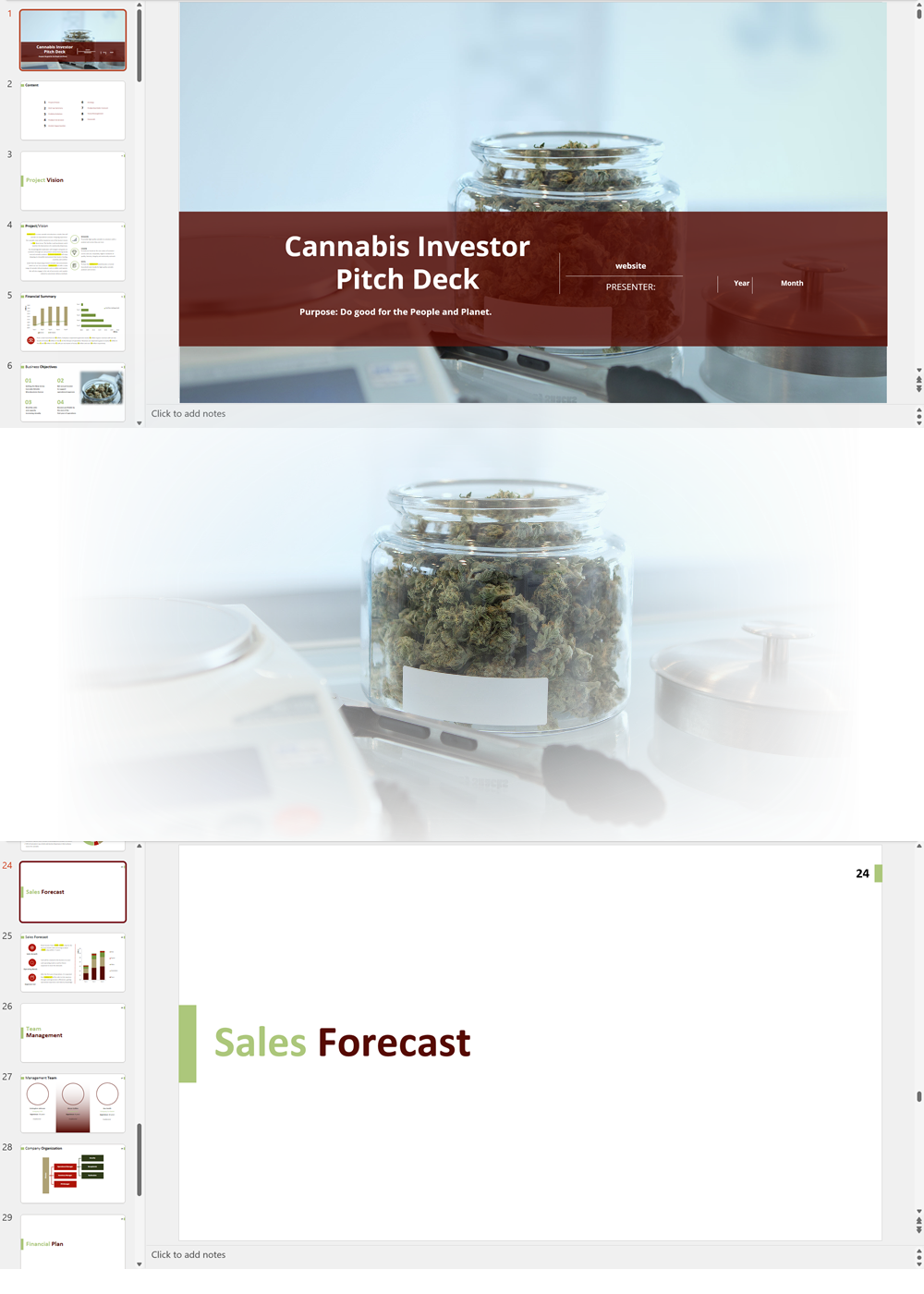
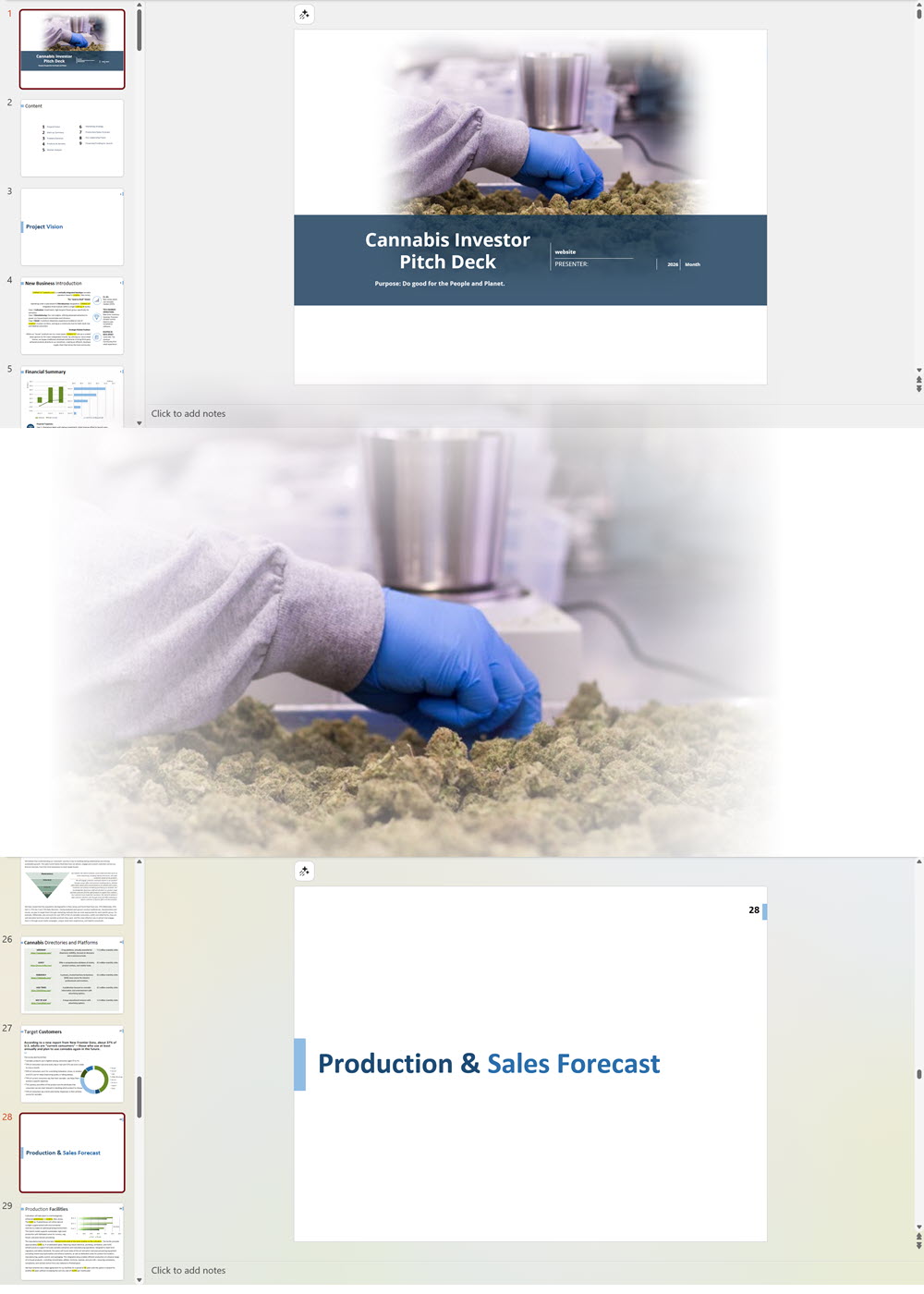
Cannabis Dispensary Investor Pitch Deck Template
$75.00 Select options This product has multiple variants. The options may be chosen on the product page -
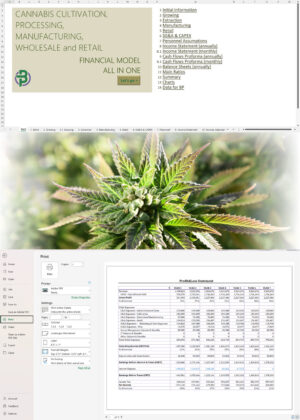
Cannabis Financial Model All in One
$250.00 Select options This product has multiple variants. The options may be chosen on the product page
Hemp CBD business plan templates are also available at hempcbdbusinessplans.com.
Our Templates
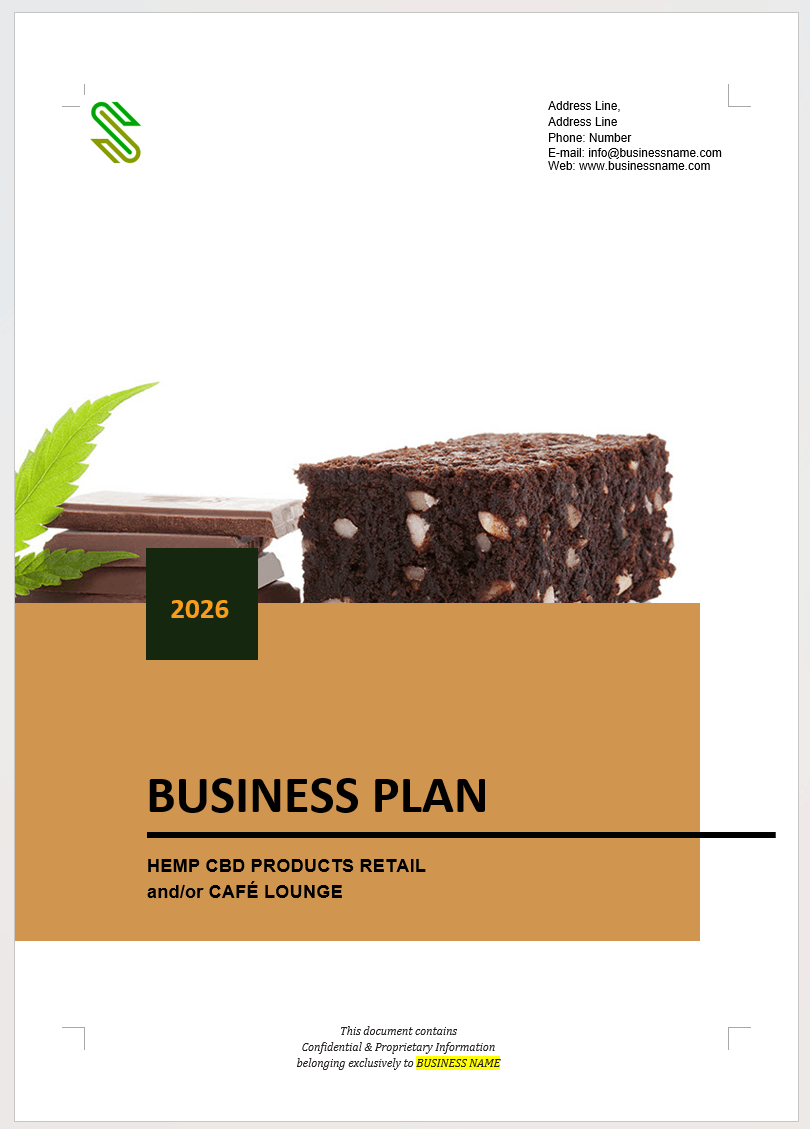
CBD Store and/or Cafe Lounge Business Plan Template
Price range: $75.00 through $275.00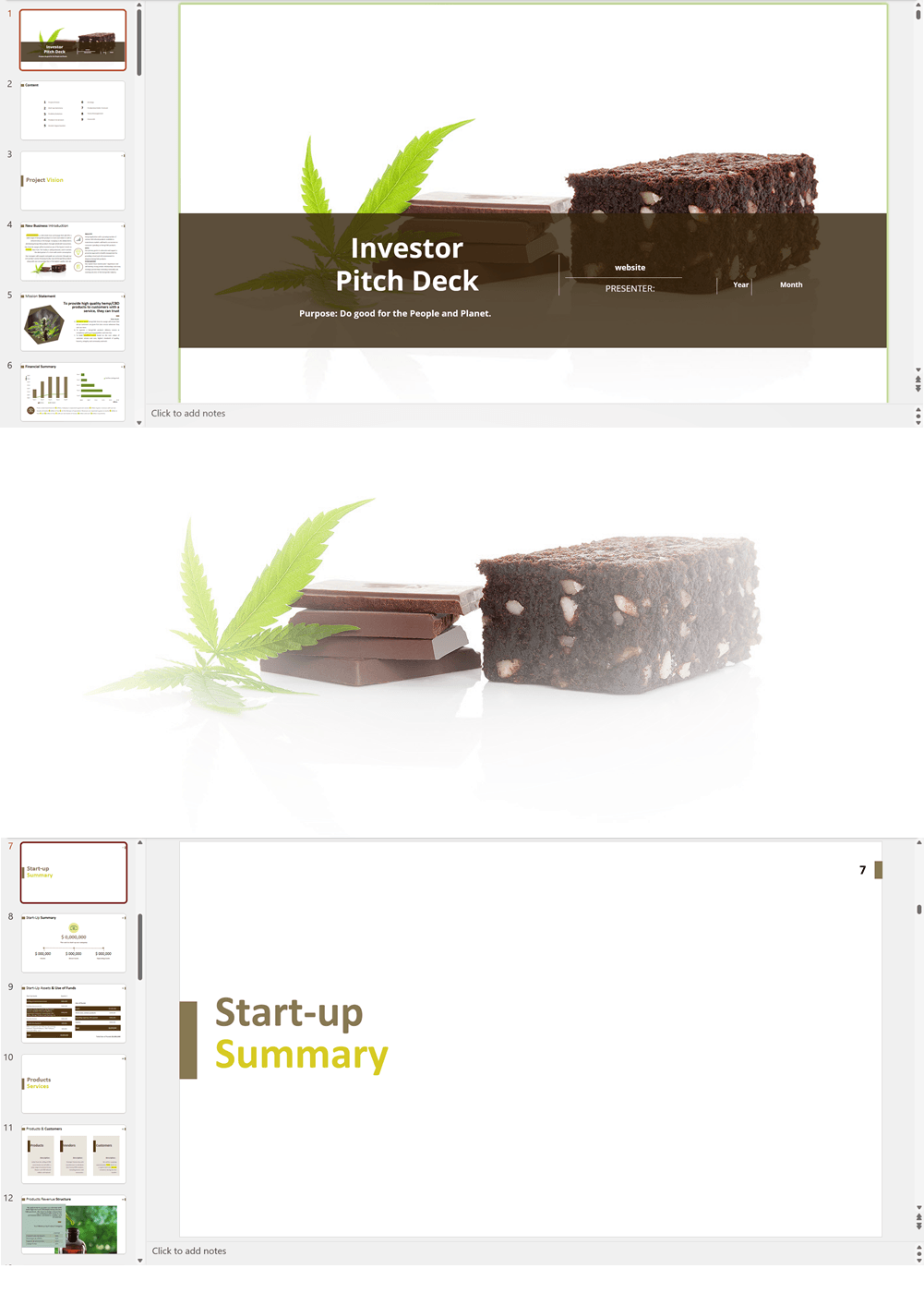
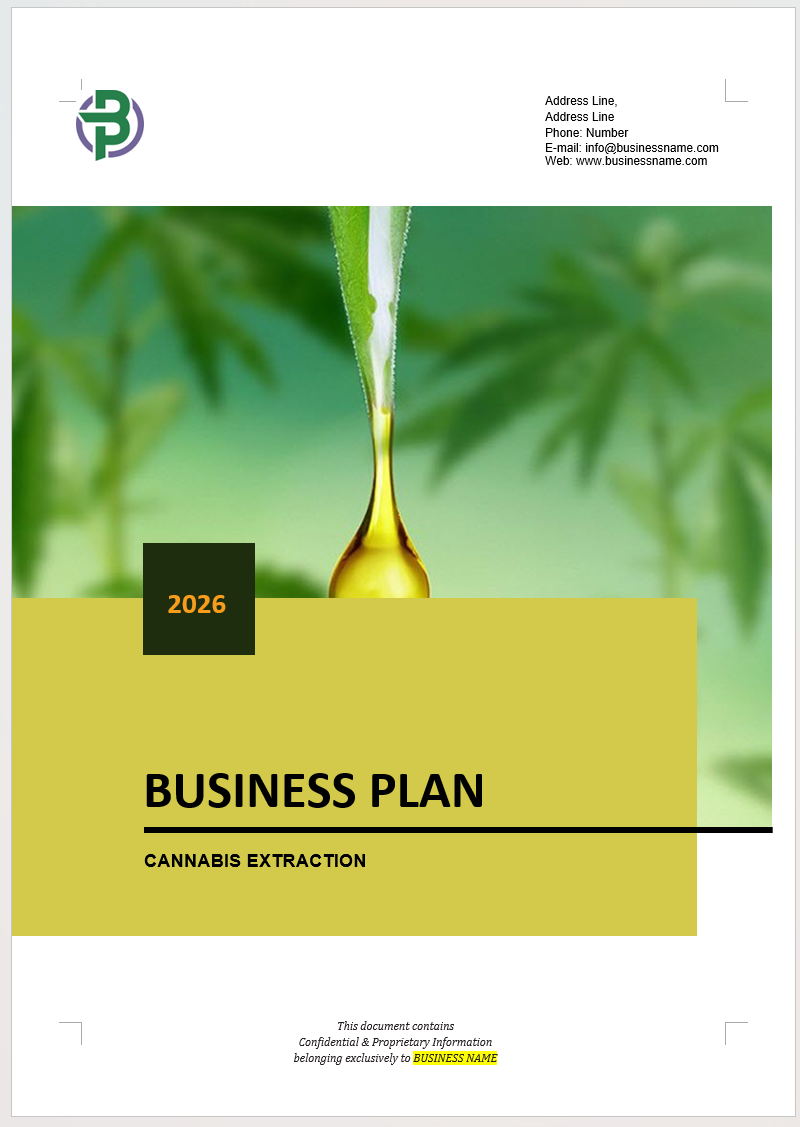
Cannabis Extraction / Concentrates Business Plan Template
Price range: $75.00 through $350.00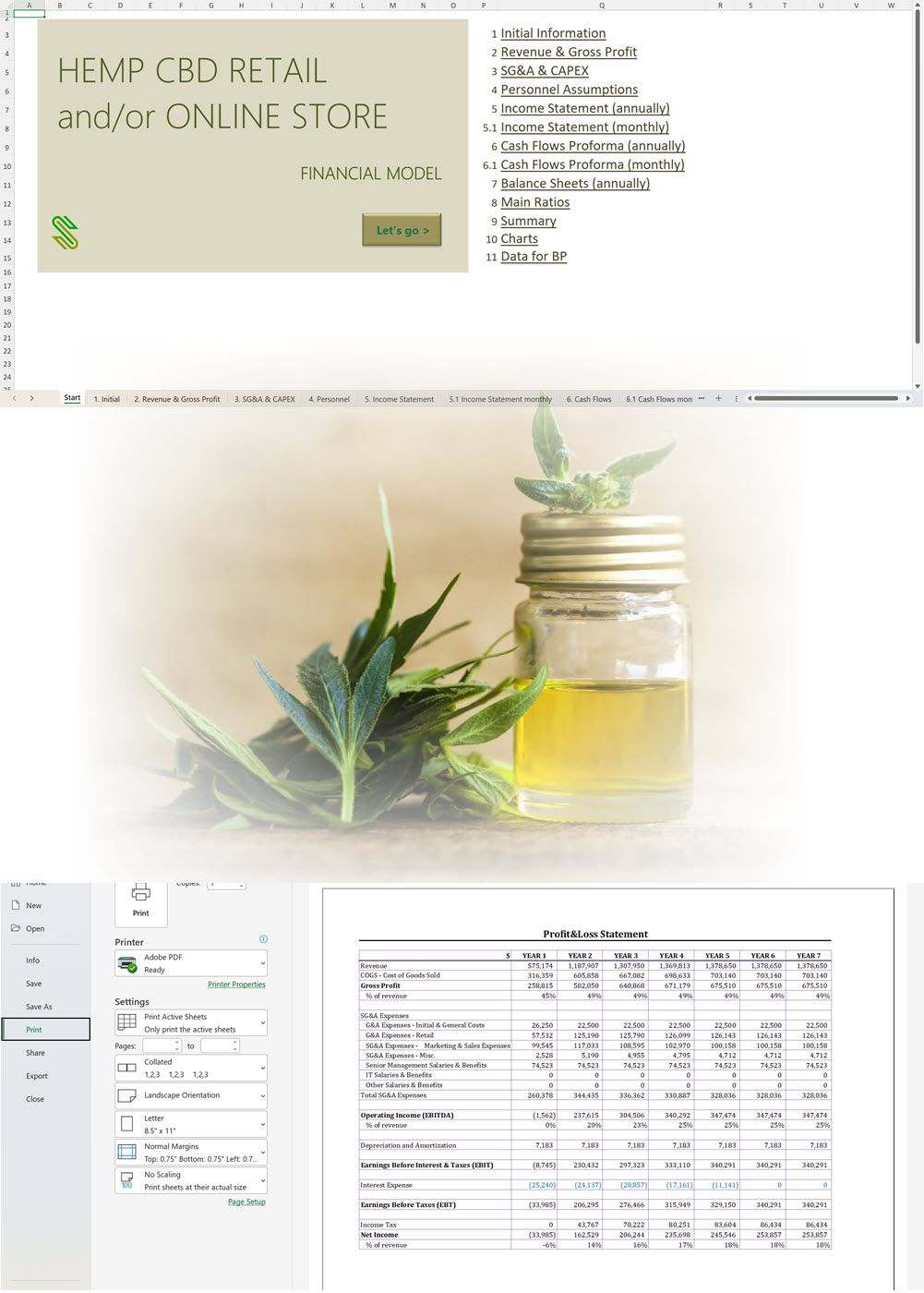
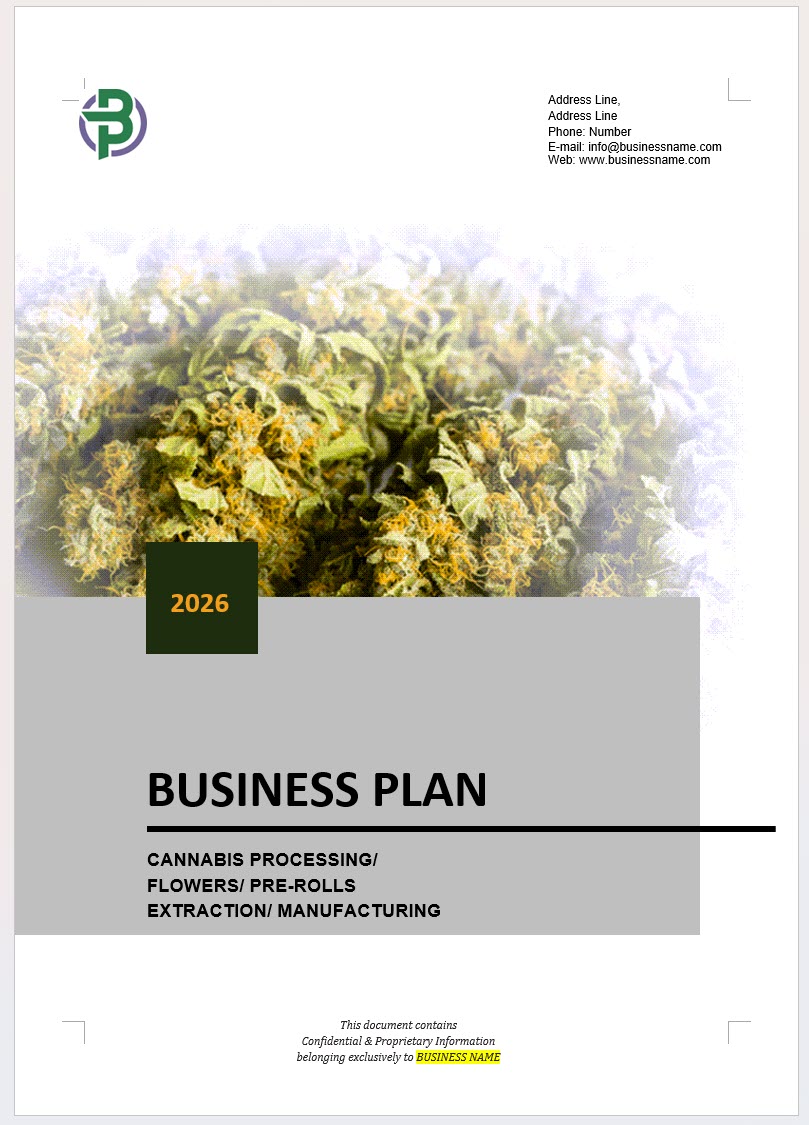
Cannabis Processing/ Flowers/ Pre-rolls/ Extraction/ Manufacturing Business Plan Template
Price range: $75.00 through $350.00
Cannabis Transportation Business Plan Template
Price range: $75.00 through $275.00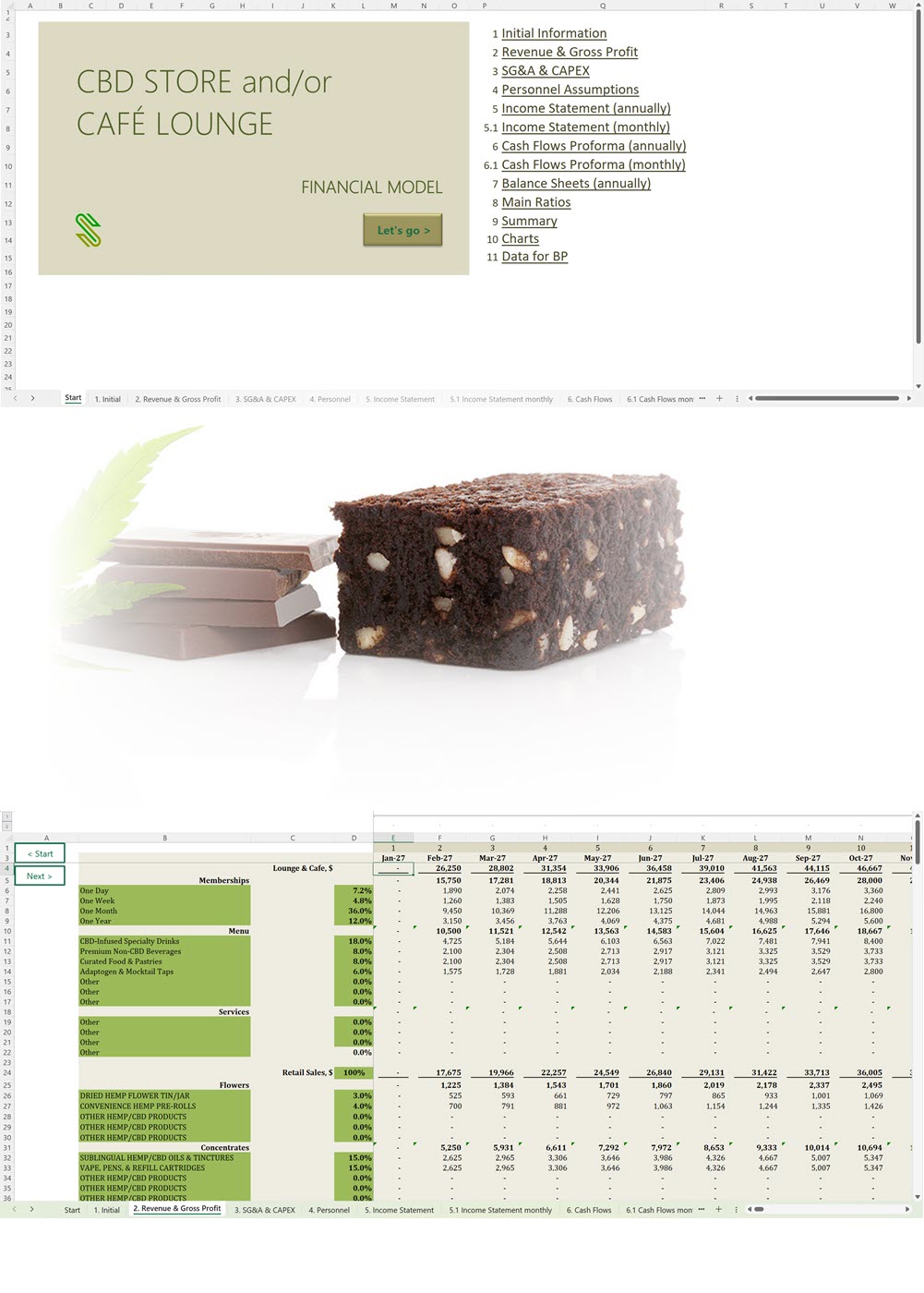
CBD Products Retail/Online Store Business Plan Template
Price range: $75.00 through $275.00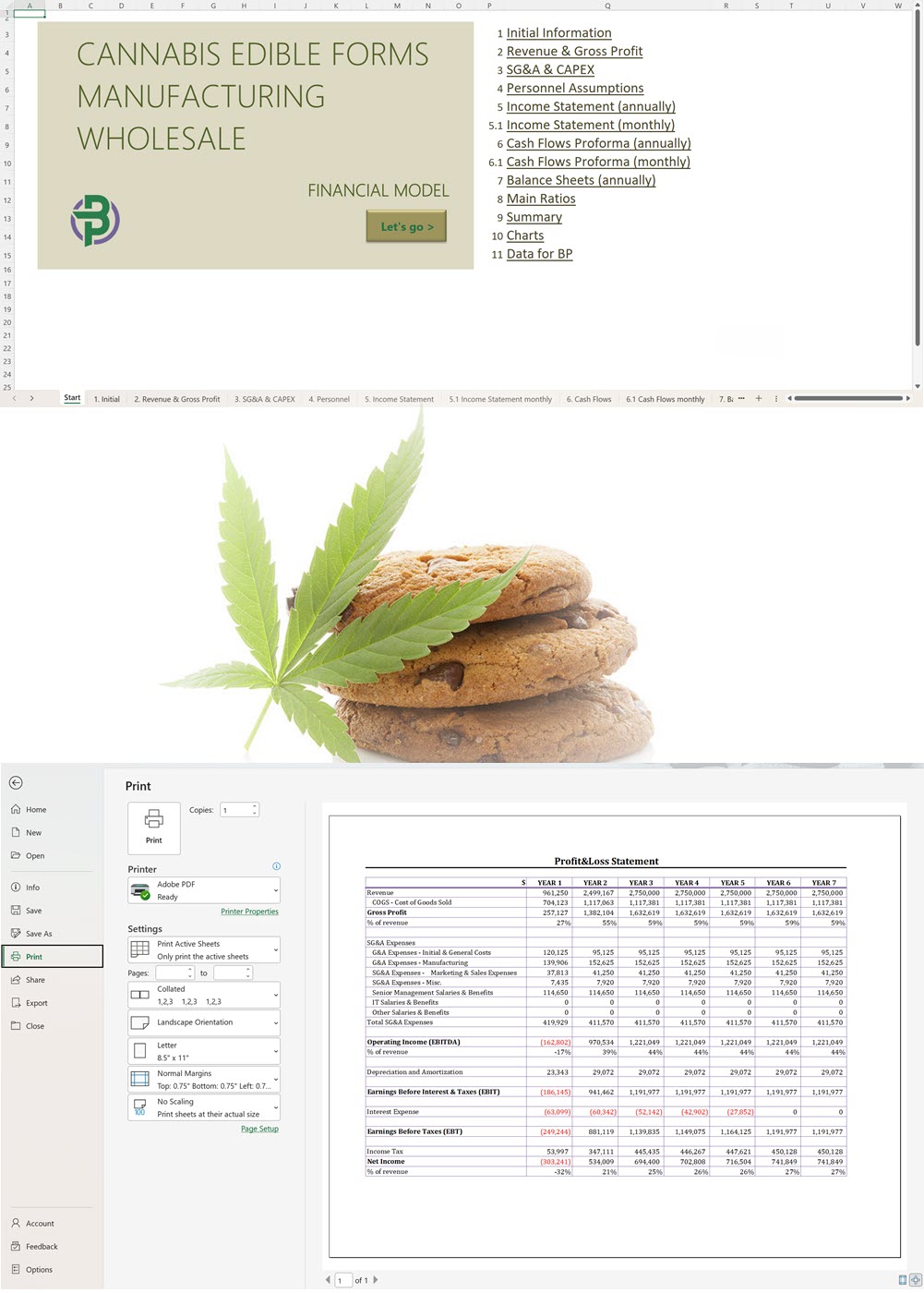
Cannabis Edibles Financial Model
$150.00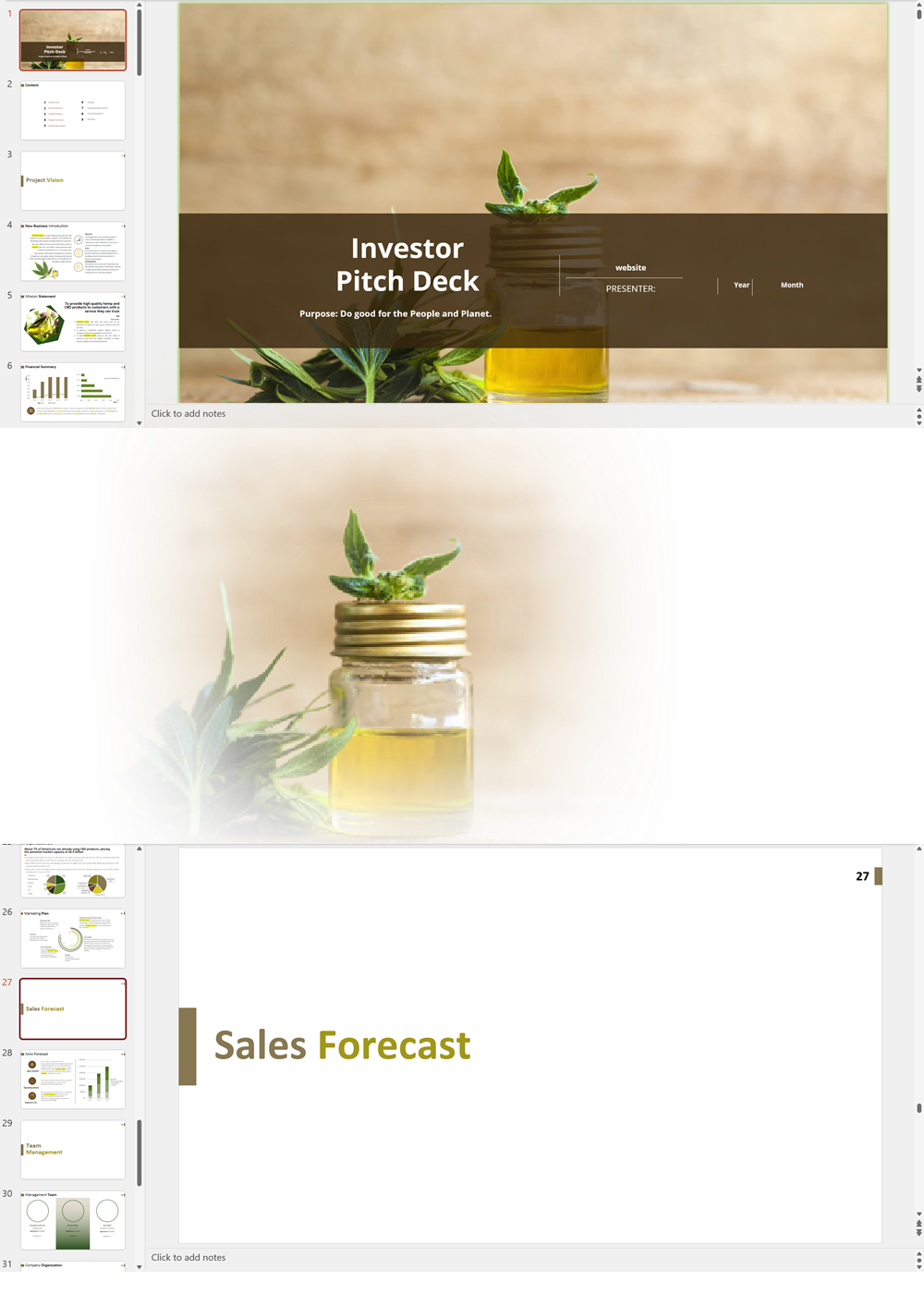
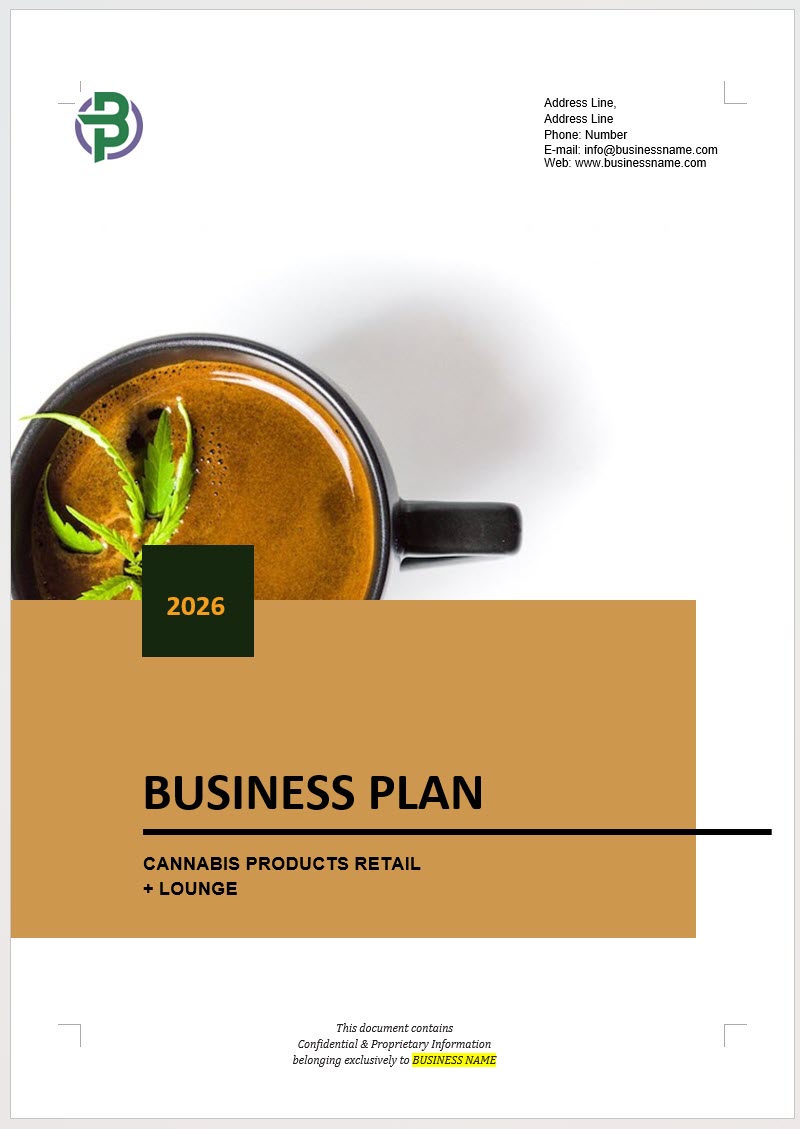
Cannabis Lounge + Retail Business Plan Template
Price range: $75.00 through $350.00
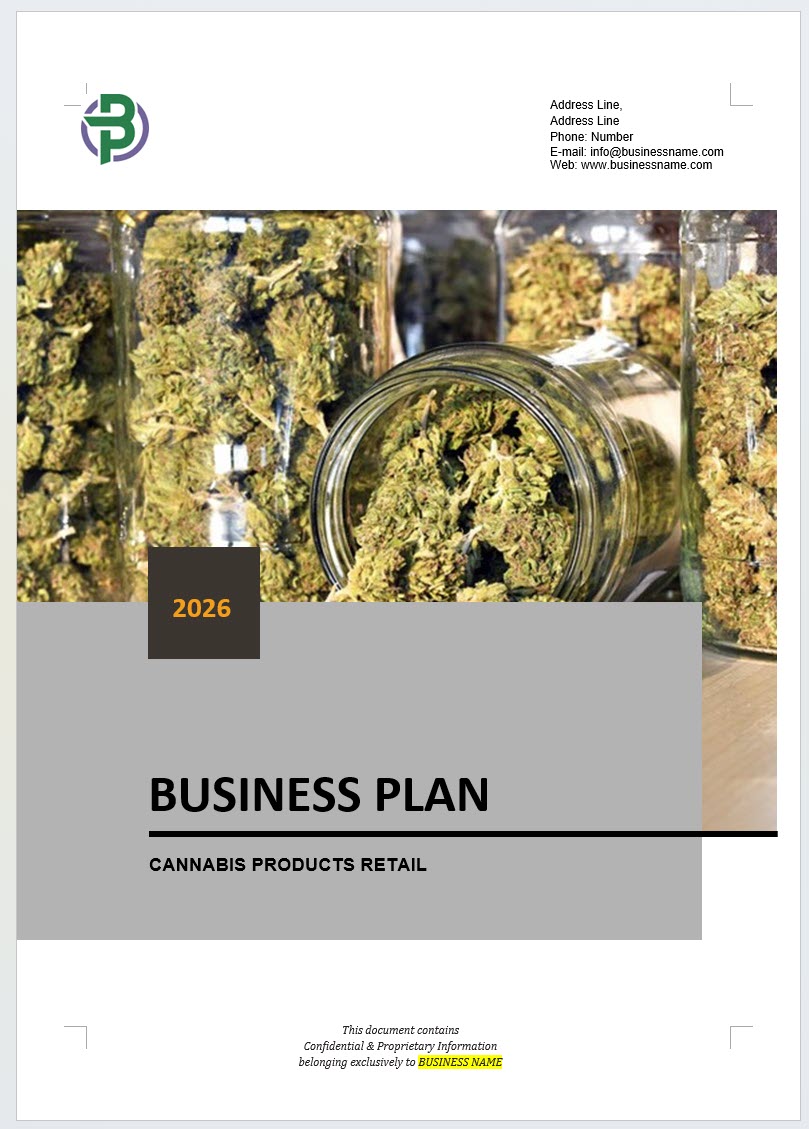
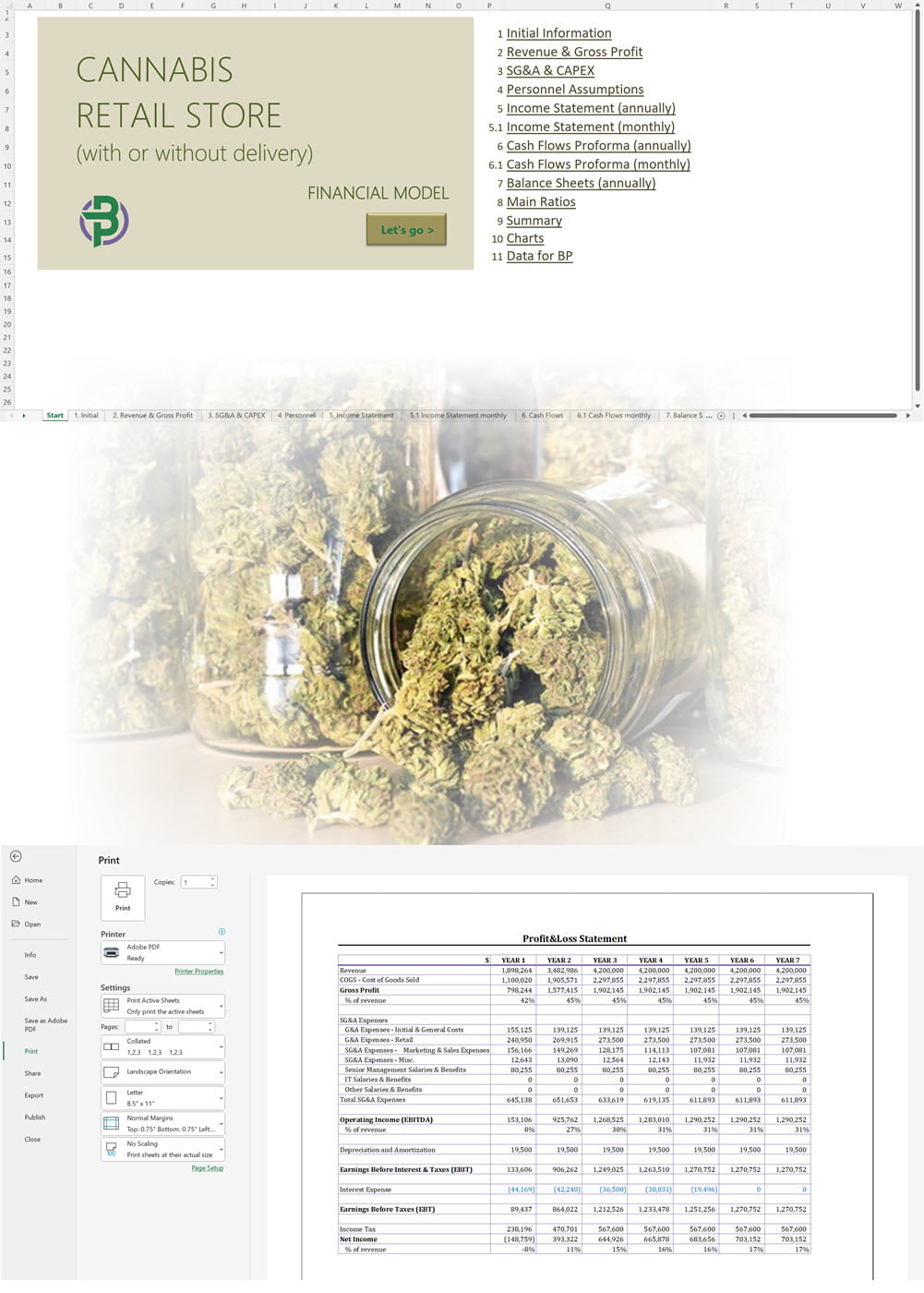
Cannabis Retail Business Plan Template (with or without Delivery)
Price range: $75.00 through $350.00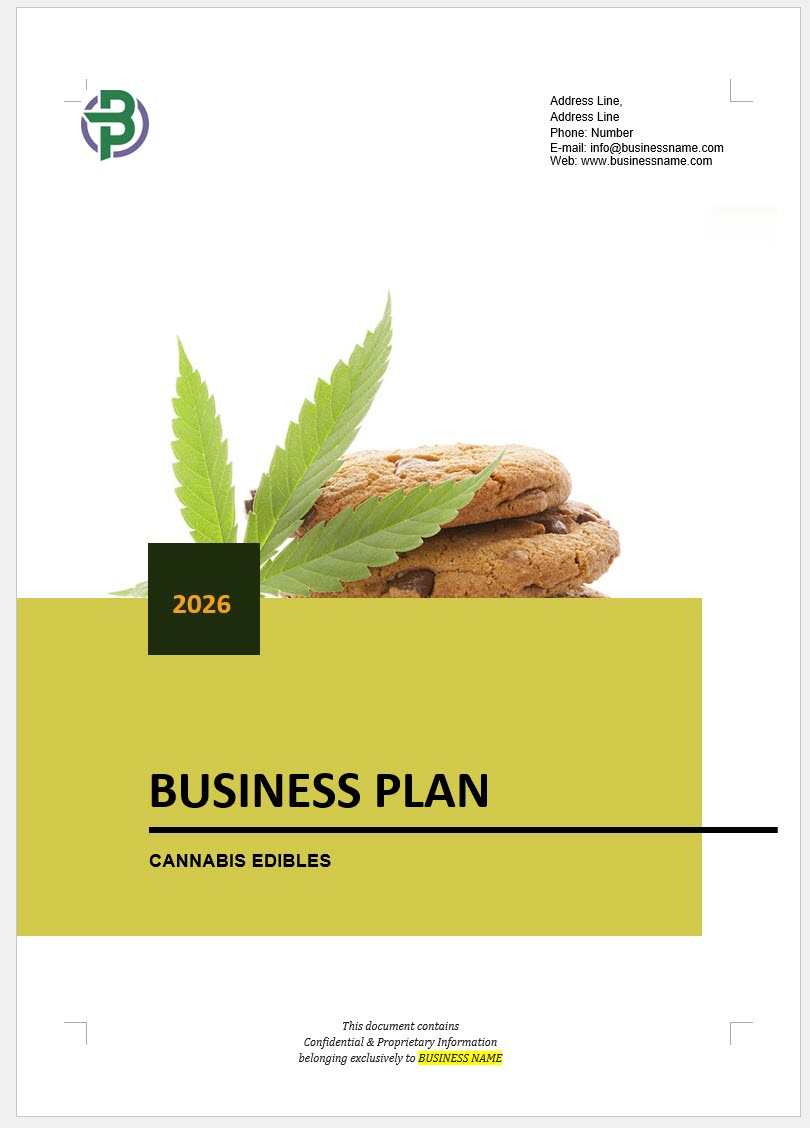
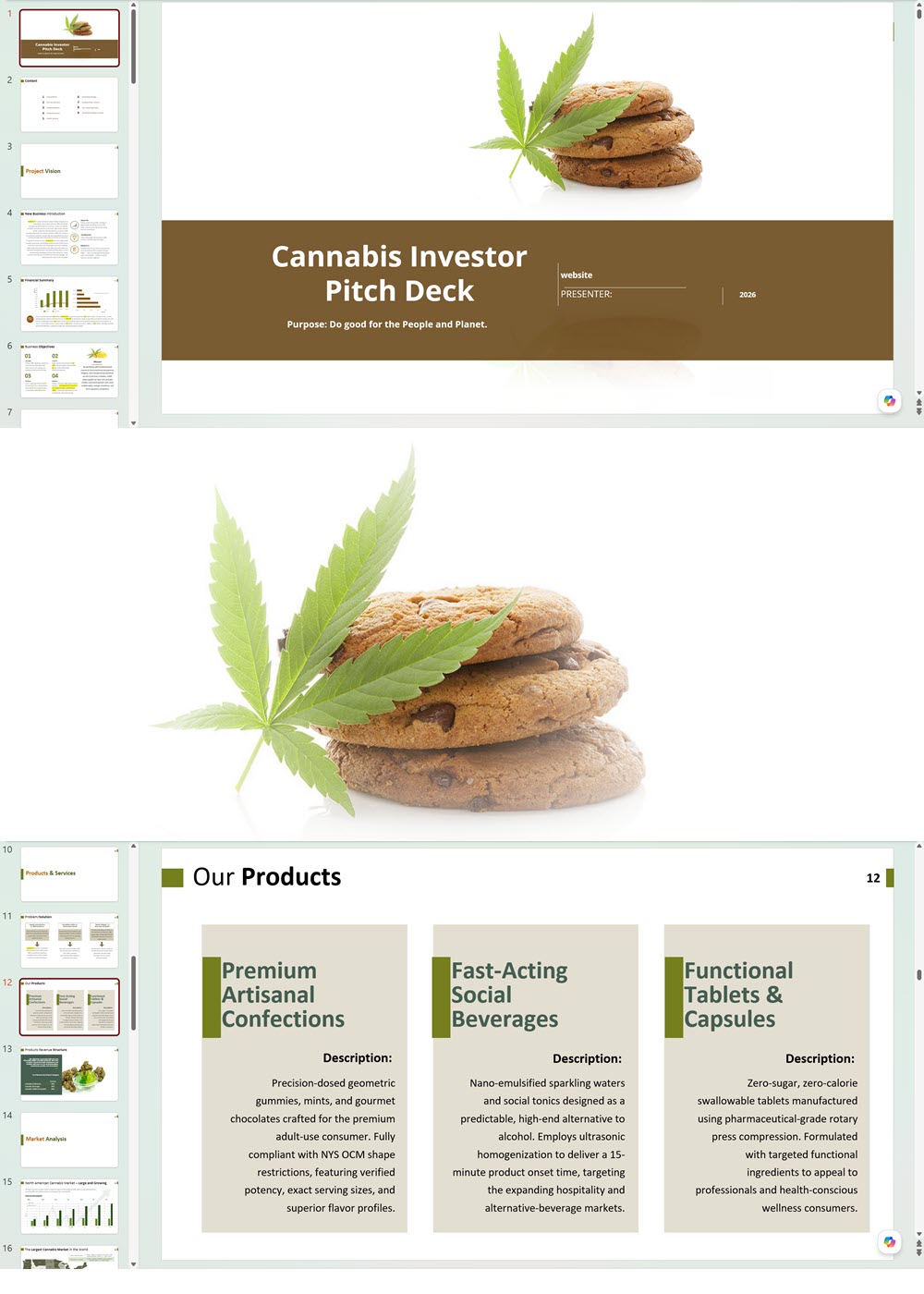
Cannabis Edibles Business Plan Template
Price range: $75.00 through $350.00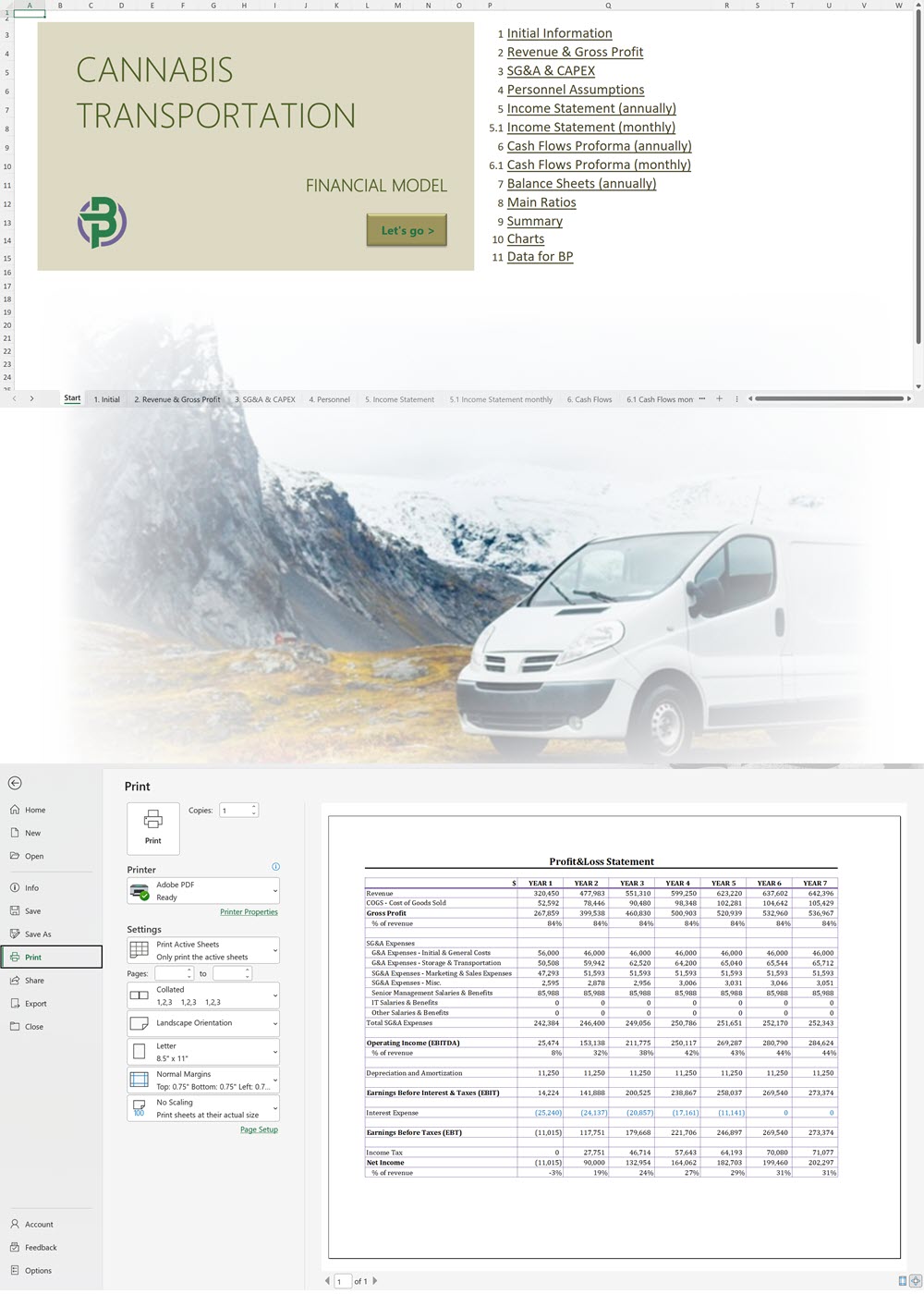
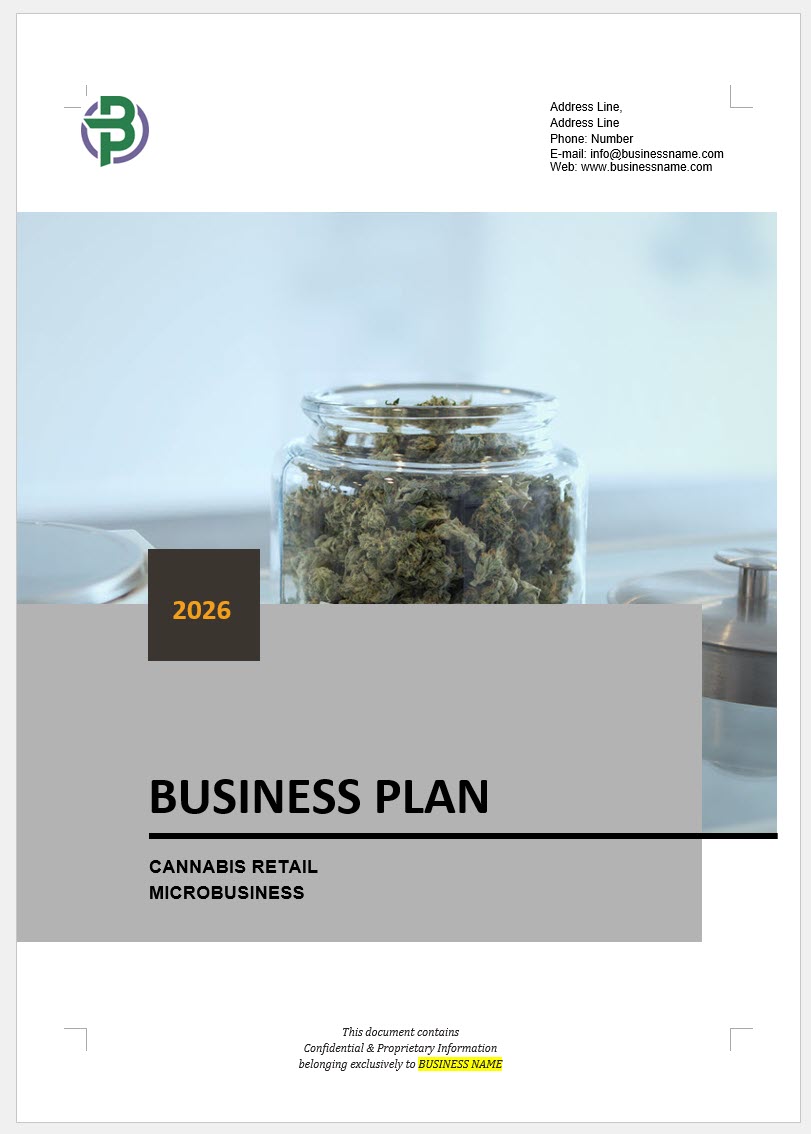
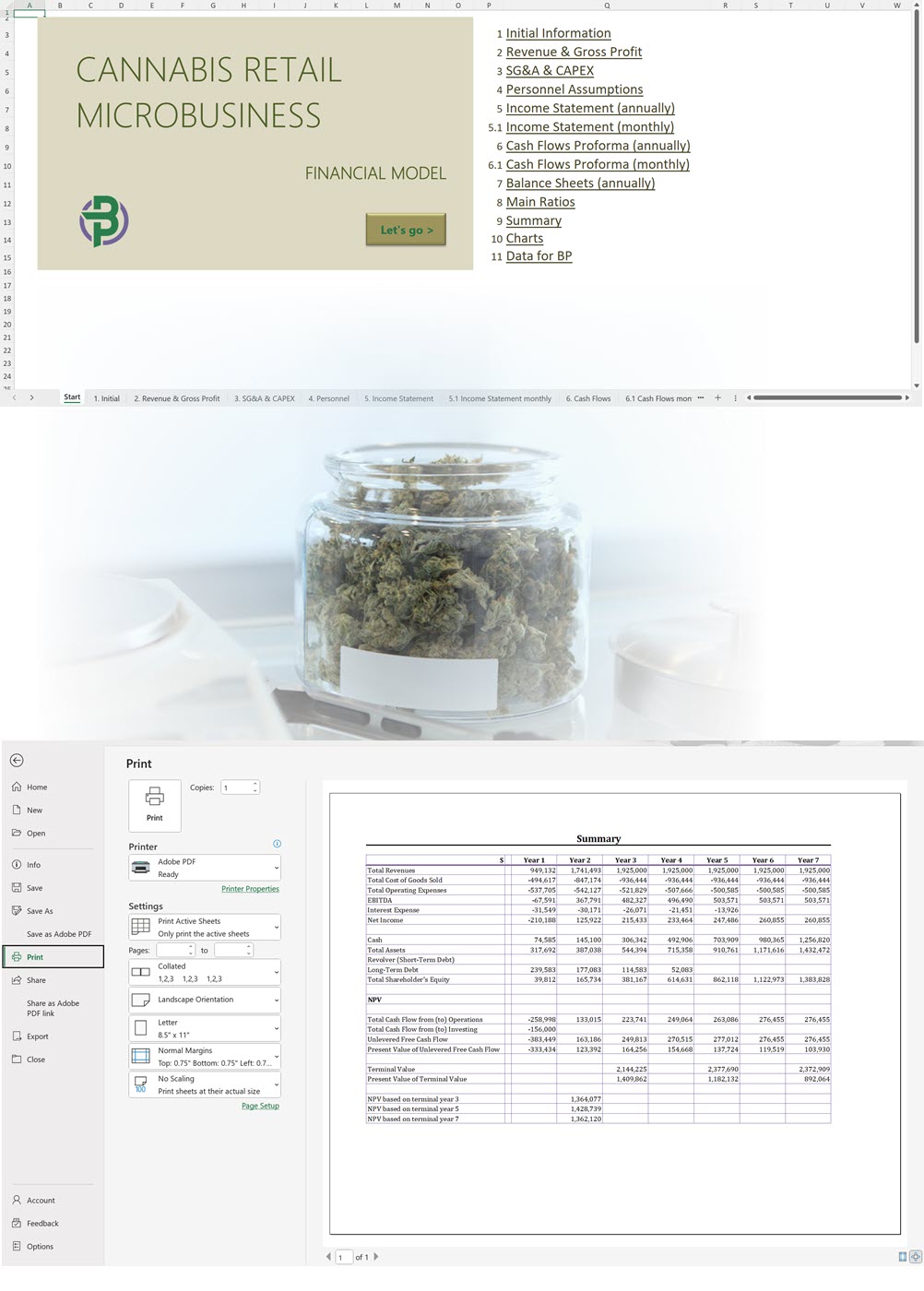
Cannabis Retail Microbusiness Business Plan Template
Price range: $75.00 through $275.00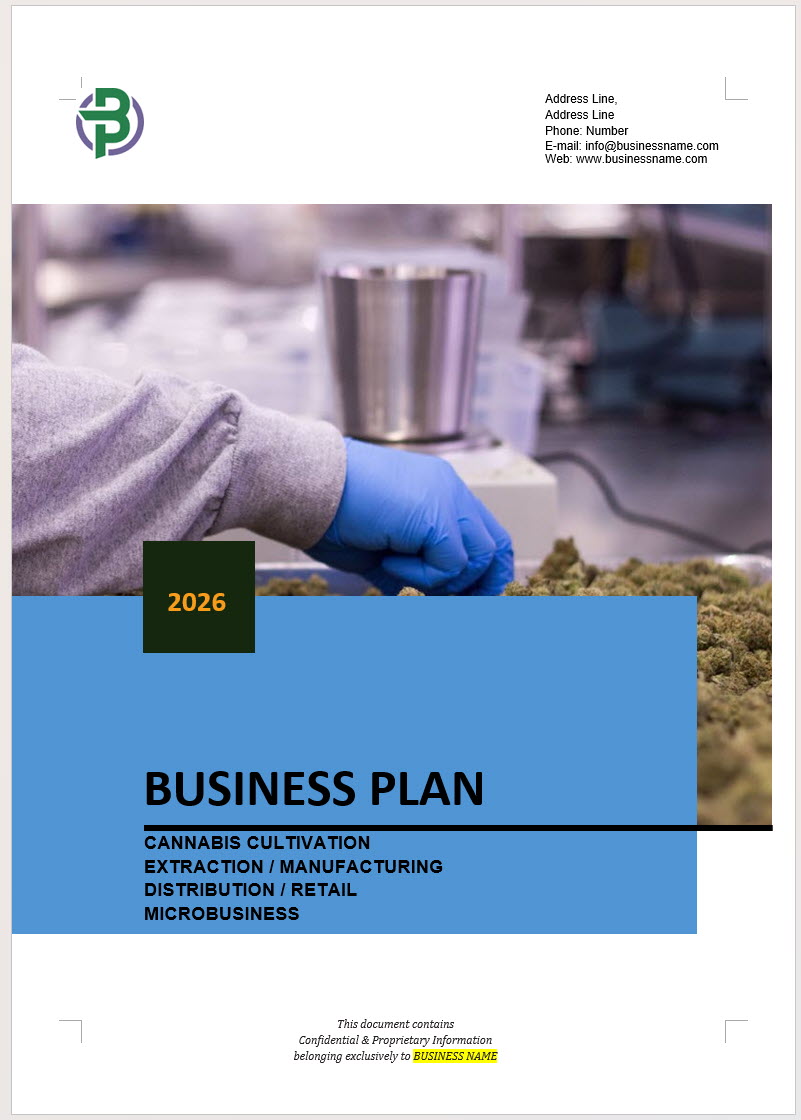
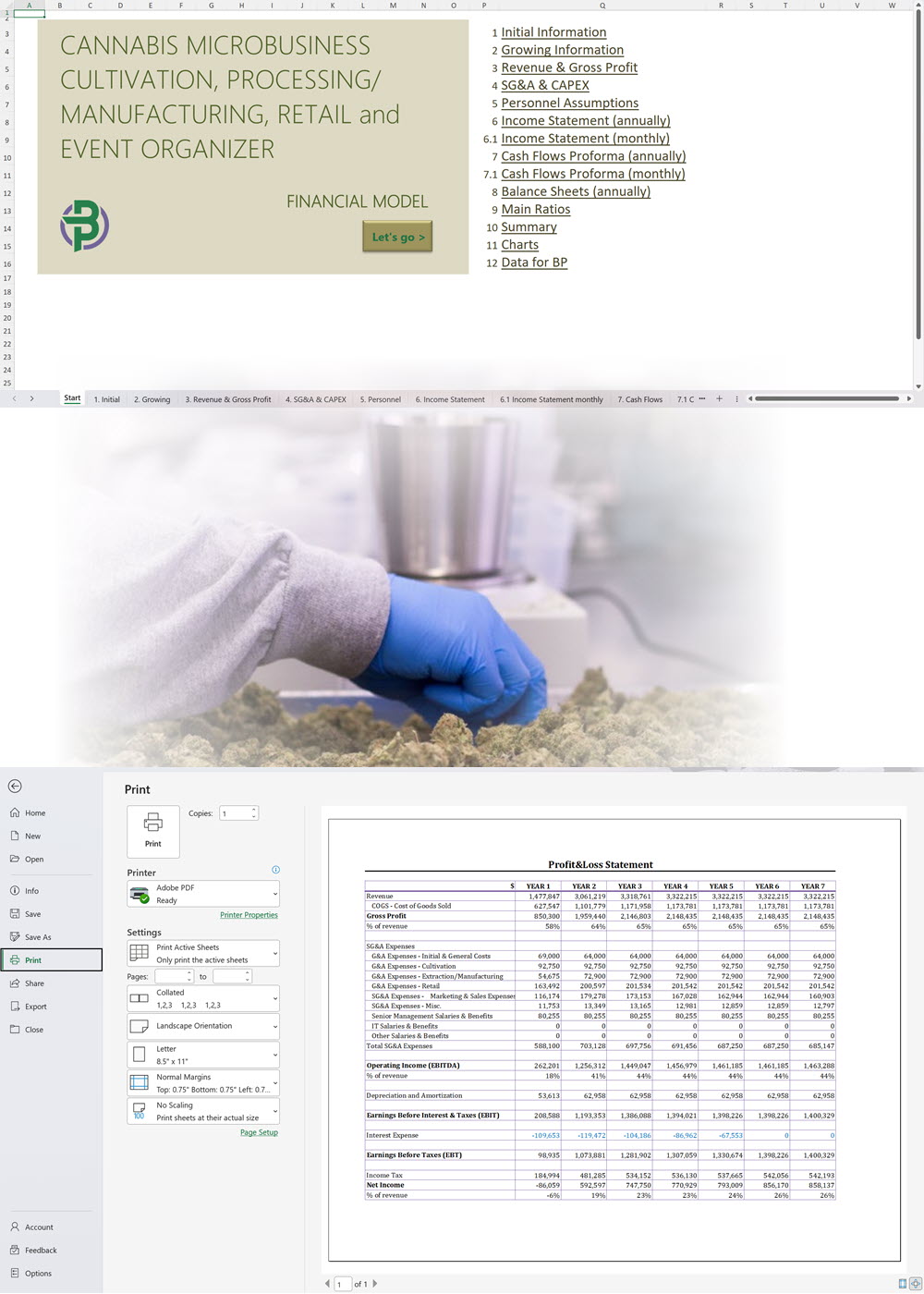
Cannabis Cultivation, Extraction, Manufacturing, Distribution, Retail and Microbusiness Business Plan Template
Price range: $75.00 through $500.00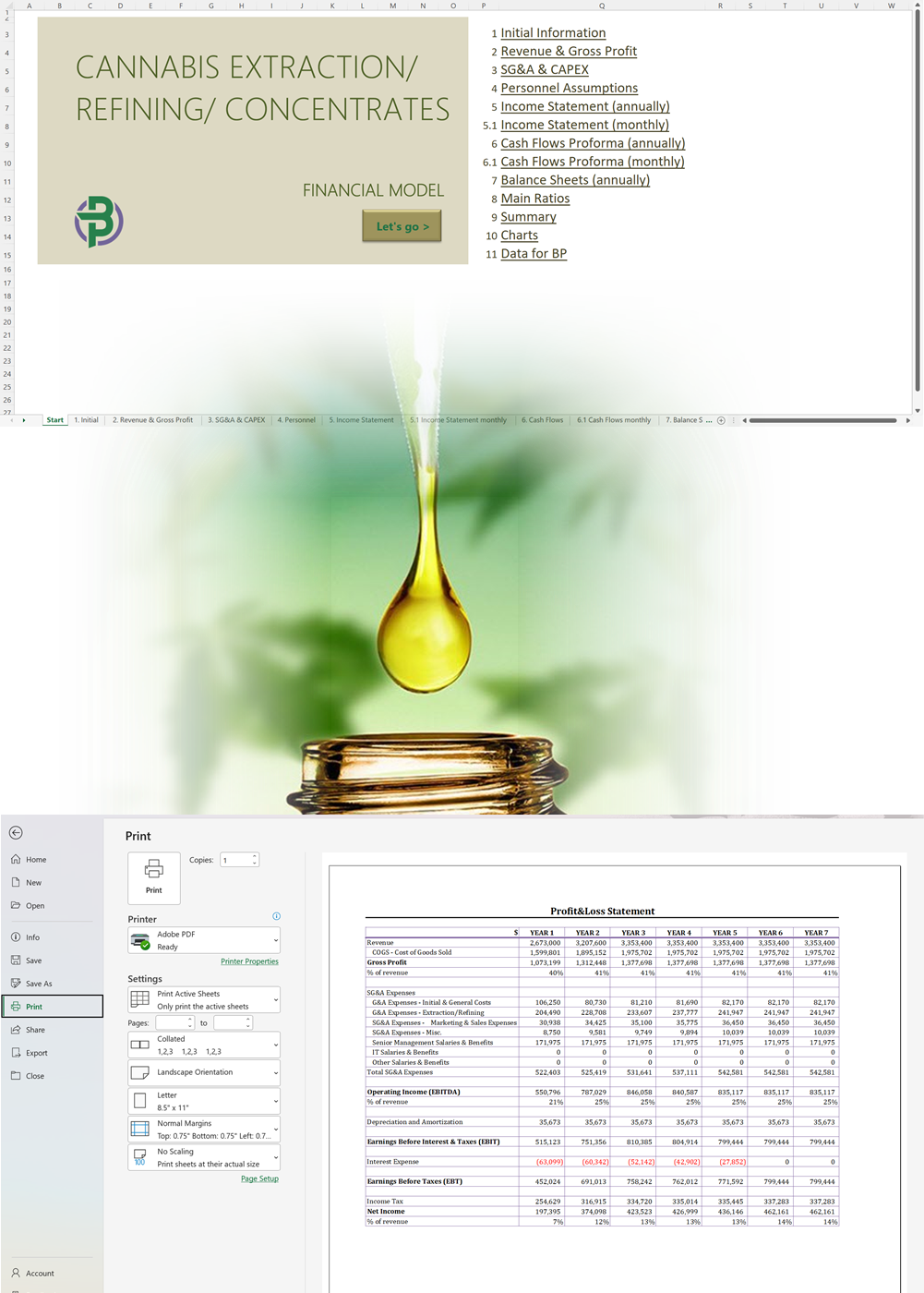

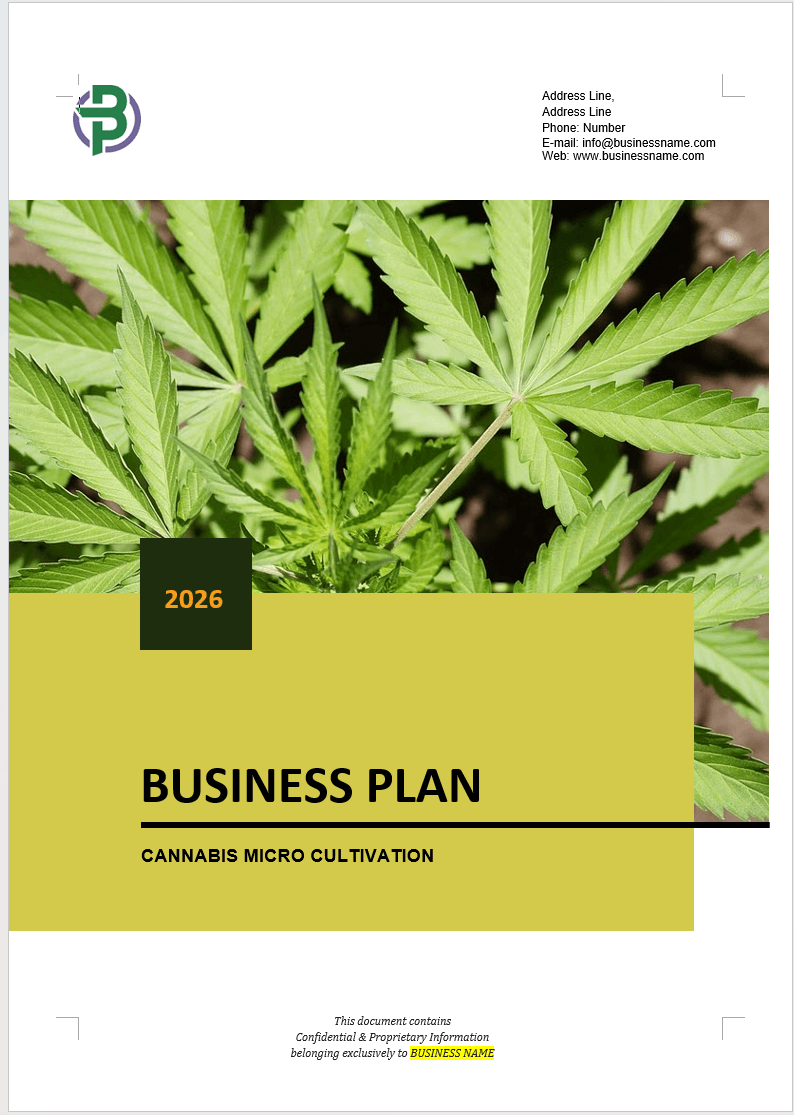
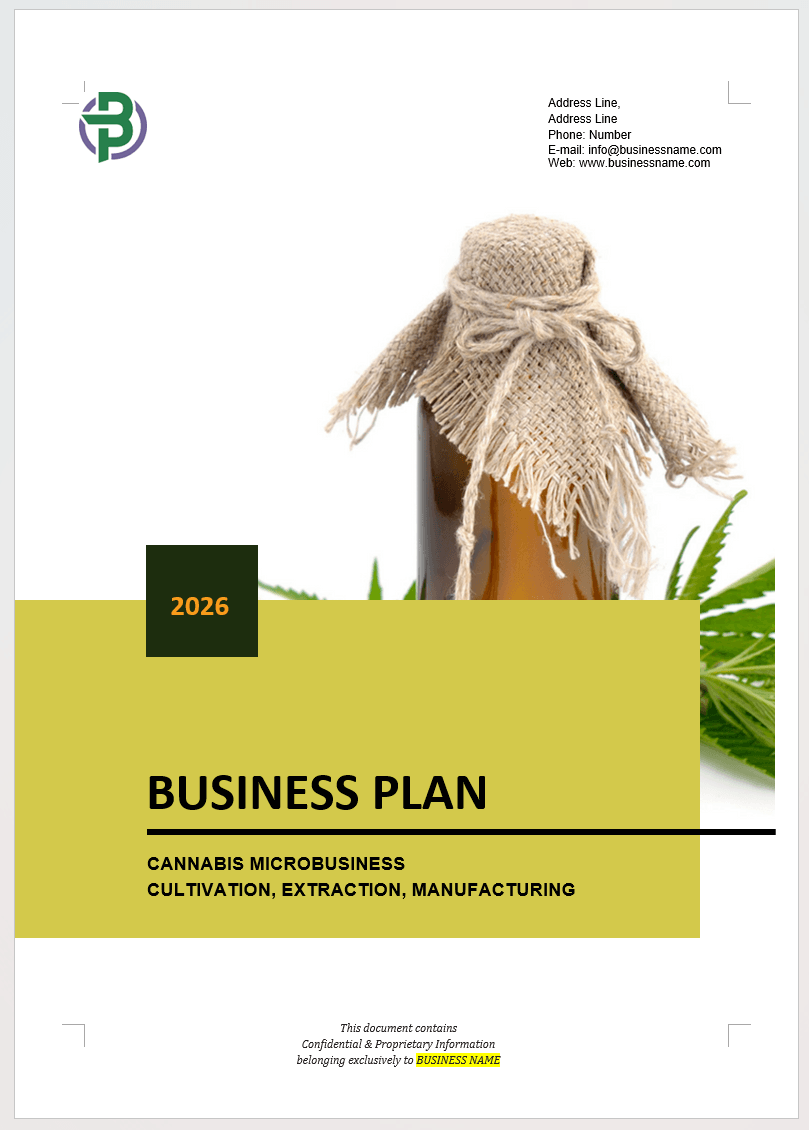
Cannabis Micro Cultivation Business Plan Template
Price range: $75.00 through $300.00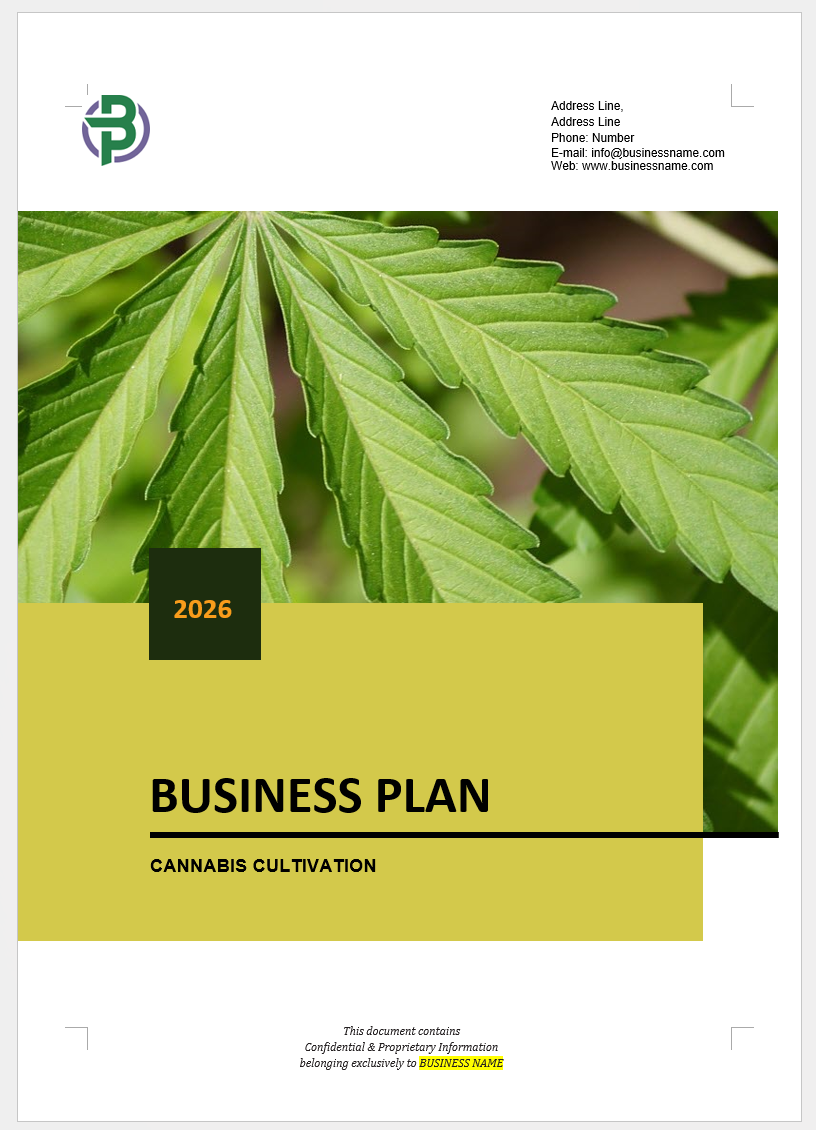
Cannabis Cultivation Business Plan Template
Price range: $75.00 through $350.00