- Understand regulatory and legal requirements. Do market research.
Nevada voters legalized medical cannabis on the ballot in 2000 and recreation cannabis on the ballot in 2016. Recreational cannabis sales became legal in the state on July 1, 2017.
The Nevada Medical Cannabis Program is governed by Title 56 Nevada Revised Statutes 678A‐678C and Nevada Cannabis Compliance Regulations (NCCR) 453A. The Nevada Adult-Use Cannabis Program is governed by Title 56 Nevada Revised Statutes 678A-B, D.
From July 1, 2017, through June 30, 2020, the medical cannabis program and the adult-use cannabis program were administered by the Department of Taxation. As of July 1, 2020, both programs are administered by the Cannabis Compliance Board (CCB).
- Decide the type of cannabis business. Choose a location. Check local zoning regulations.
Cannabis Licenses in Nevada
There are six types of cannabis establishment definitions in Nevada:
Cannabis Stores/Dispensaries: Licensed to purchase cannabis from cultivation facilities, cannabis and cannabis products from product manufacturing facilities, and cannabis from other retail stores; can sell cannabis and cannabis products to consumers.
Cultivation Facility: Licensed to cultivate (grow), harvest, and package cannabis; to have cannabis tested by a testing facility; and to sell cannabis to retail cannabis stores, to cannabis product manufacturing facilities, and to other cultivation facilities, but not to consumers.
Product Manufacturing Facility: Licensed to purchase cannabis; manufacture, process, and package cannabis and cannabis products; and sell cannabis and cannabis products to other product manufacturing facilities and to retail cannabis stores, but not to consumers. Cannabis products include things like edibles, ointments, and tinctures.
Testing Laboratory: Licensed to test cannabis and cannabis products, including for potency and contaminants.
Distributor: Licensed to transport cannabis from a cannabis establishment to another cannabis establishment. For example, from a cultivation facility to a retail store.
Cannabis Consumption Lounges. AB341 in the 81st Session (2021) of the Nevada State Legislature authorized the Nevada Cannabis Compliance Board (CCB) to license and regulate cannabis consumption lounges. Nevada regulators estimate 60-65 licenses will be issued, including 40-45 licenses for existing cannabis stores and another 20 for independent lounges.
Licensing costs include a nonrefundable application fee, plus an additional fee if the company is awarded a license:
- Cannabis retail store, initial issuance – 20,000; renewal – 6,600
- Cannabis cultivation facility, initial issuance – 30,000; renewal – 10,000
- Cannabis production facility, initial issuance – 10,000; renewal – 3,300
- Cannabis independent testing laboratory, initial issuance – 15,000; renewal – 5,000
- Cannabis consumption lounge, initial issuance – 10,000; renewal – 10,000
- Cannabis distributor, initial issuance – 15,000; renewal – 5,000
For an application for a license other than an adult-use cannabis establishment license for a retail cannabis consumption lounge or independent cannabis consumption lounge, a one-time, nonrefundable application fee of $5,000. For an application for an adult-use cannabis establishment license for a retail cannabis consumption lounge, a one-time, nonrefundable application fee of $100,000. For an application for an adult-use cannabis establishment license for an independent cannabis consumption lounge, a one-time, nonrefundable application fee of $10,000.
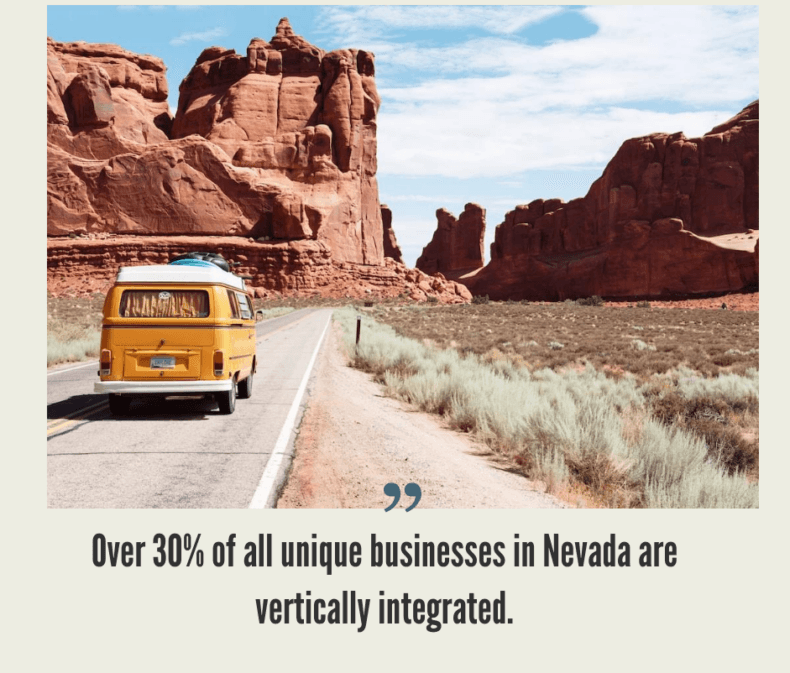
Vertical Integration. The state allows vertical integration but does not mandate it. Over 30% of all unique businesses in Nevada are licensed to sell, grow, and manufacture.
Weed Delivery in Las Vegas
Sales facilities can deliver to medical patients, caregivers, and adult-use consumers (only to private residences). Delivery can be done by the sales facility or an authorized third-party delivery licensee.
A cannabis sales facility delivering cannabis or cannabis products to a consumer shall: (a) Ensure that all cannabis and cannabis products are secured at all times during delivery; and (b) Maintain a physical or electronic copy of a delivery manifest generated using the seed-to-sale tracking system that contains all the information required by the Board.
A cannabis sales facility shall not deliver more than 5 ounces and a medical cannabis dispensary more than 10 ounces of cannabis or an equivalent amount of cannabis products to any combination of consumers within a single trip.
- Develop a solid cannabis business plan. Secure financing.
'70% ready to go' business plan templates
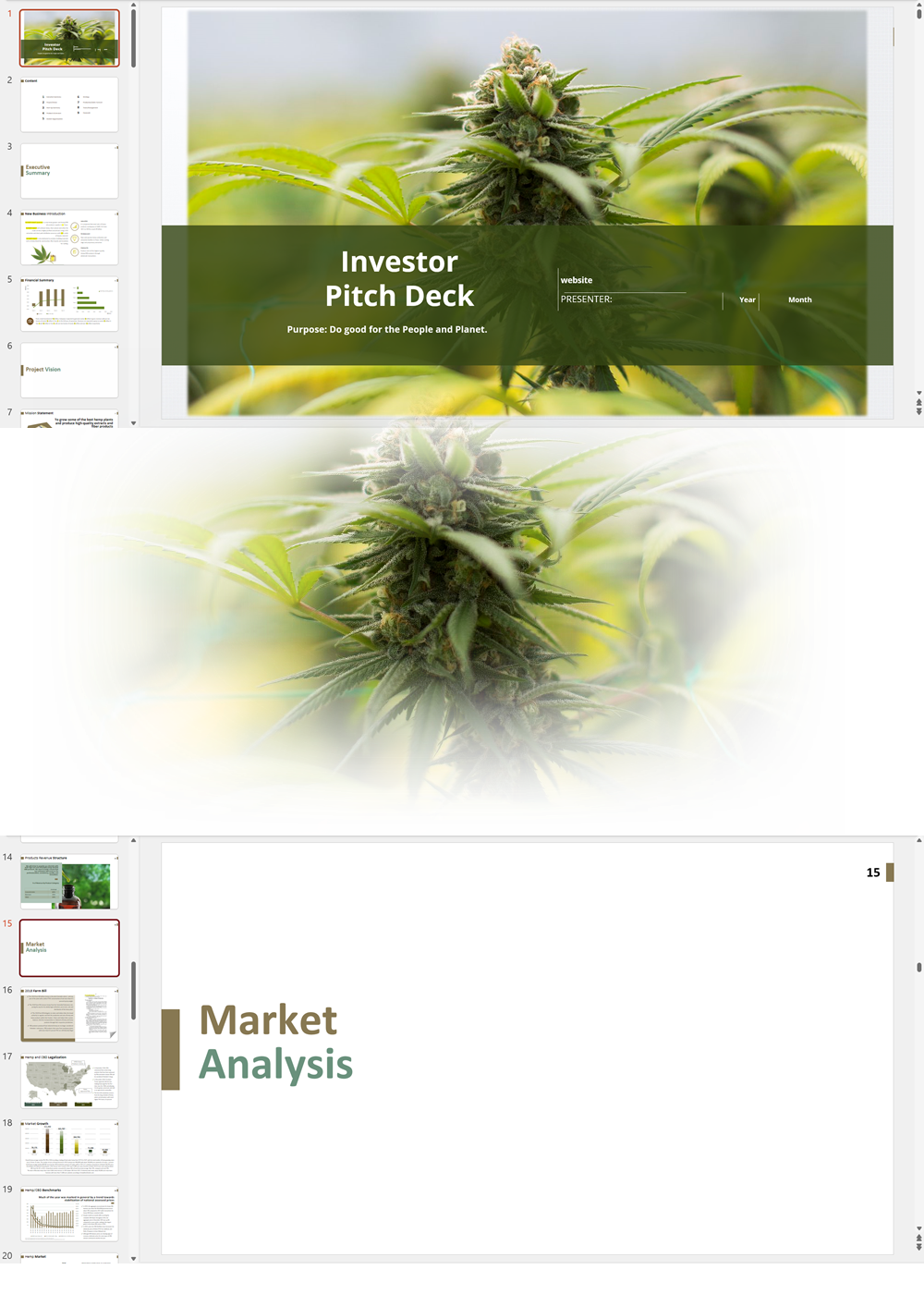
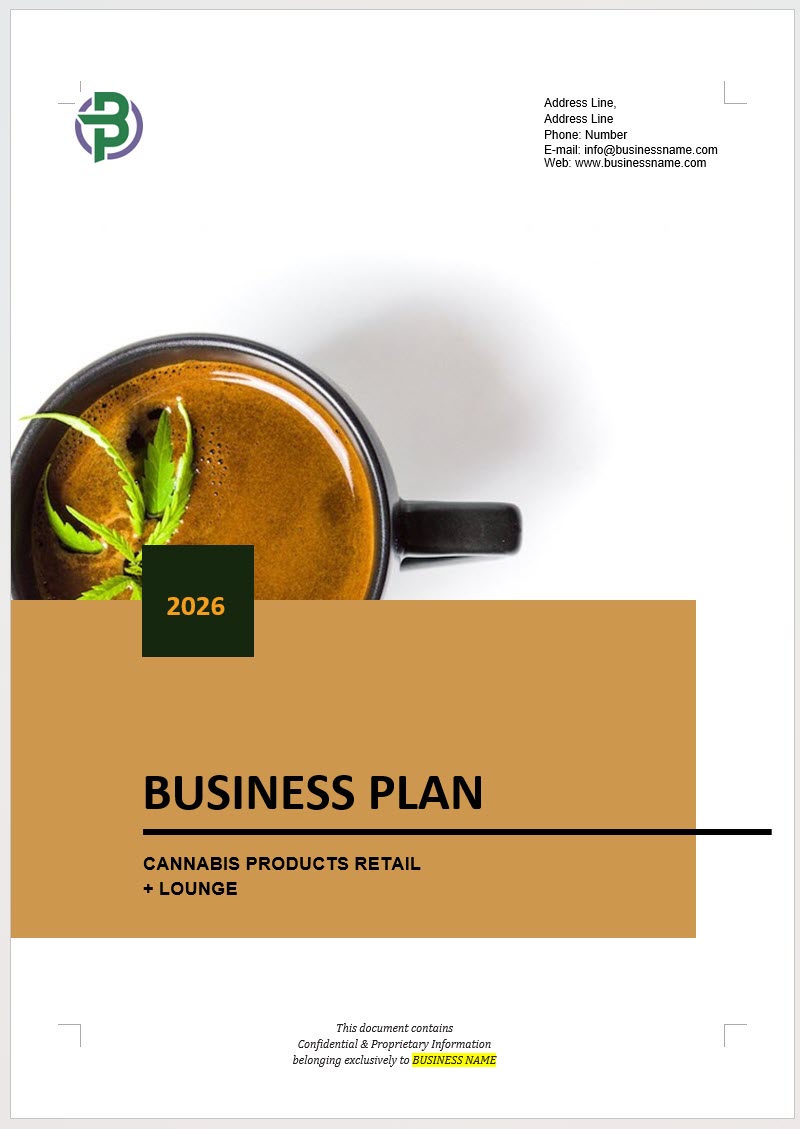
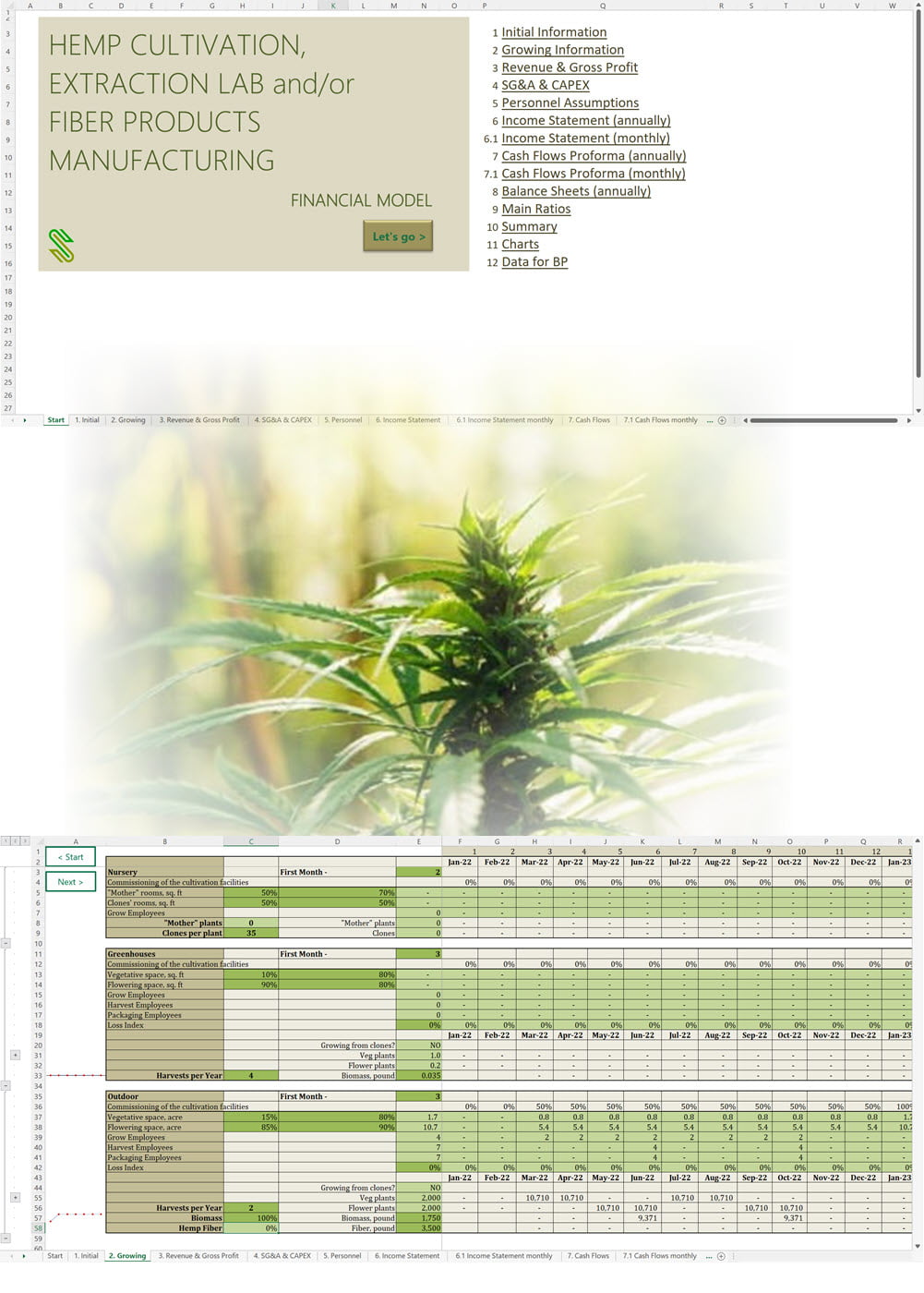
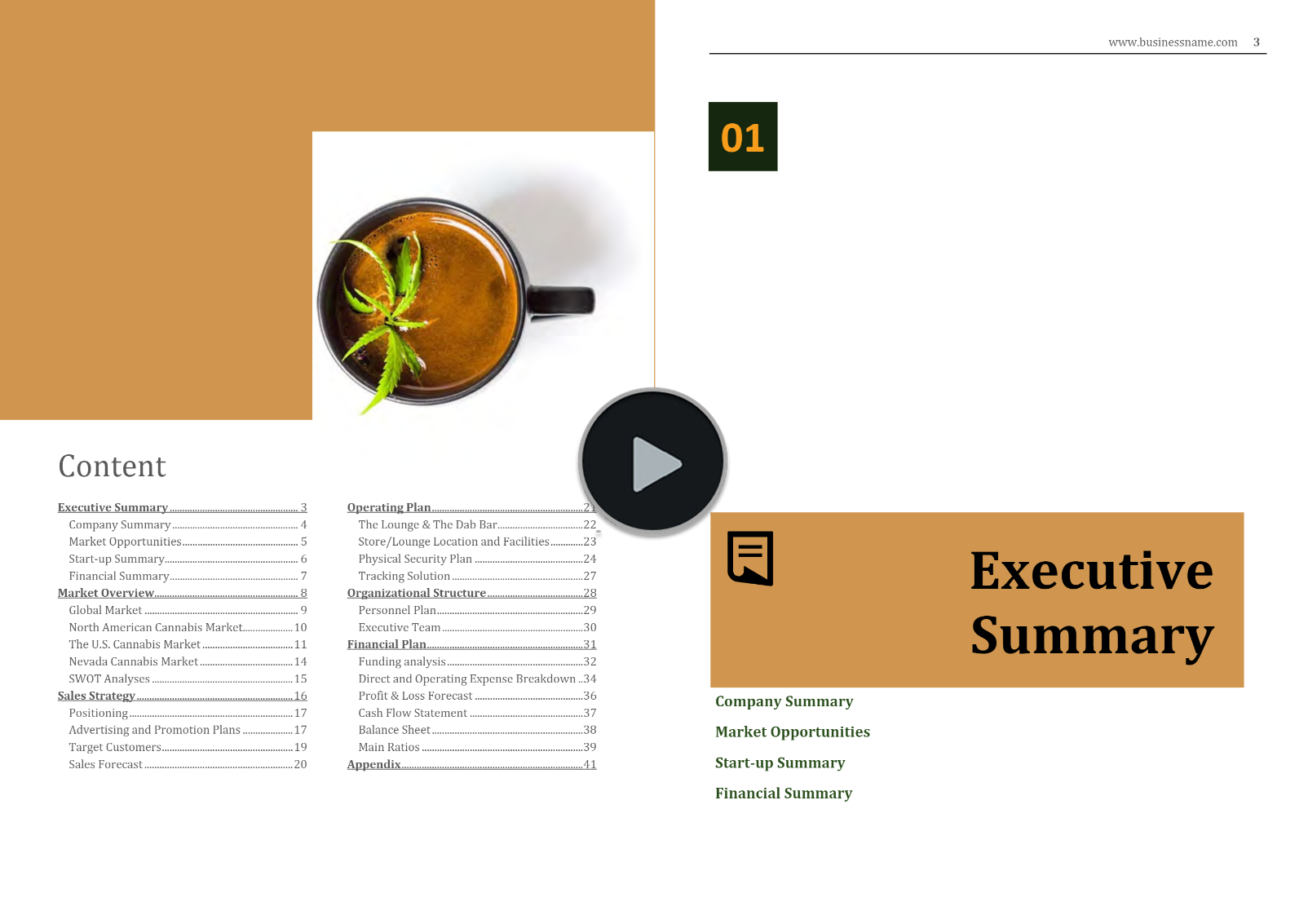
We offer a wide range of '70% ready-to-go' cannabis business plan templates that will help you prepare a professional cannabis business plan document supported with expert financials and an investor pitch deck. All our templates are completely open and editable and you can use Word, Excel and PowerPoint to work with them.
- Prepare the necessary documentation and obtain required local permits, including zoning approval.
- Obtain required state and local business licenses for your cannabis establishment.
- Register your business as an employer and a tax payer.
- Keep track of your ongoing compliance requirements. License renewal.
Physical security measures, good production practices, packaging, labelling and transport requirements, reporting requirements and more.
Cannabis establishment license renewal applications can be completed using the Cannabis Customer Portal: https://aca.accela.com/nvmed/. The establishment license must first be linked with a PIN by an owner, officer, board member or point of contact. The renewal application will automatically become available 60 days prior to the license expiration date.
Nevada Cannabis Taxes
Cannabis sales are subject to the following taxes:
- 15 percent excise tax on the first wholesale sale (calculated on the Fair Market Value for Affiliate sales and calculated on the sales price for Non‐affiliate sales). Fair Market Value is the median sales price for wholesale sales between cannabis cultivation facilities and cannabis establishments that are not affiliates. The Nevada Department of Taxation (Department) calculates and publishes the Fair Market Value each quarter based upon the prior available 3 months of recorded Non‐Affiliate wholesale sales as input by industry in the seed‐to‐sale tracking. Wholesale cannabis excise taxes are the responsibility of the cultivation facility.
- 10 percent excise tax on the sales price when sold by an adult‐use cannabis retail store. Retail cannabis excise taxes are the responsibility of the adult‐use retail store, retail cannabis consumption lounge and an independent cannabis consumption lounge but may be recovered from the purchaser.
Cannabis Advertising Requirements in Nevada
- All advertisements must contain the name of the cannabis establishment, the license number and warnings that must include, without limitation, the following words: (1) “Keep out of reach of children”; and (2) “For use only by adults 21 years of age and older.”
- Advertising is allowed at entertainment events if it is reasonably estimated that less than 30% of people attending will be under 21 years of age; is not allowed at sporting events where persons under 21 years of age are allowed to enter.
- Advertising is allowed only on television, radio and other publications if projected audience under 21 years of age is more than 30%. Documentation of how the reasonable expected age of the audience was determined must be kept for five years.
- Advertising is not allowed within 1,000 feet of property line of public and private schools, daycare, playgrounds, parks, community centers and libraries. Advertising is not allowed on or in public transportation vehicles or shelter for public transportation. Advertising cannot be handed out.
- Advertising cannot show people under the age of 21 years old consuming cannabis products or any images that may appeal to people under 21 years of age.
- A cannabis establishment shall not advertise or offer any cannabis or cannabis product as “free” or “donated” without a purchase.
The state’s Cannabis Compliance Board has also issued guidance on what is and what is not considered advertising.
Main steps in short
- Understand regulatory and legal requirements. Do market research.
- Decide the type of cannabis business. Choose a location. Check local zoning regulations.
- Develop a solid business plan. Secure financing.
- Prepare the necessary documentation and obtain required local permits, including zoning approval.
- Obtain required state and local business licenses for your cannabis establishment.
- Register your business as an employer and a tax payer.
- Keep track of your ongoing compliance requirements.
Cannabis Retail and Lounge Business Plan Sample, Nevada
Best Selling Templates
-

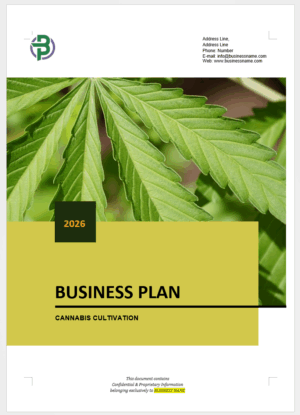
Cannabis Cultivation Business Plan Template
Price range: $75.00 through $350.00 Select options This product has multiple variants. The options may be chosen on the product page -

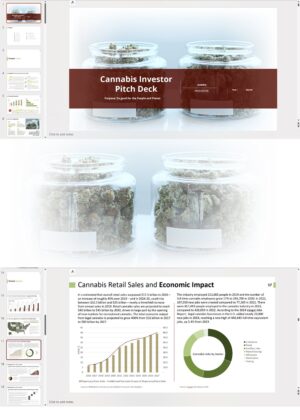
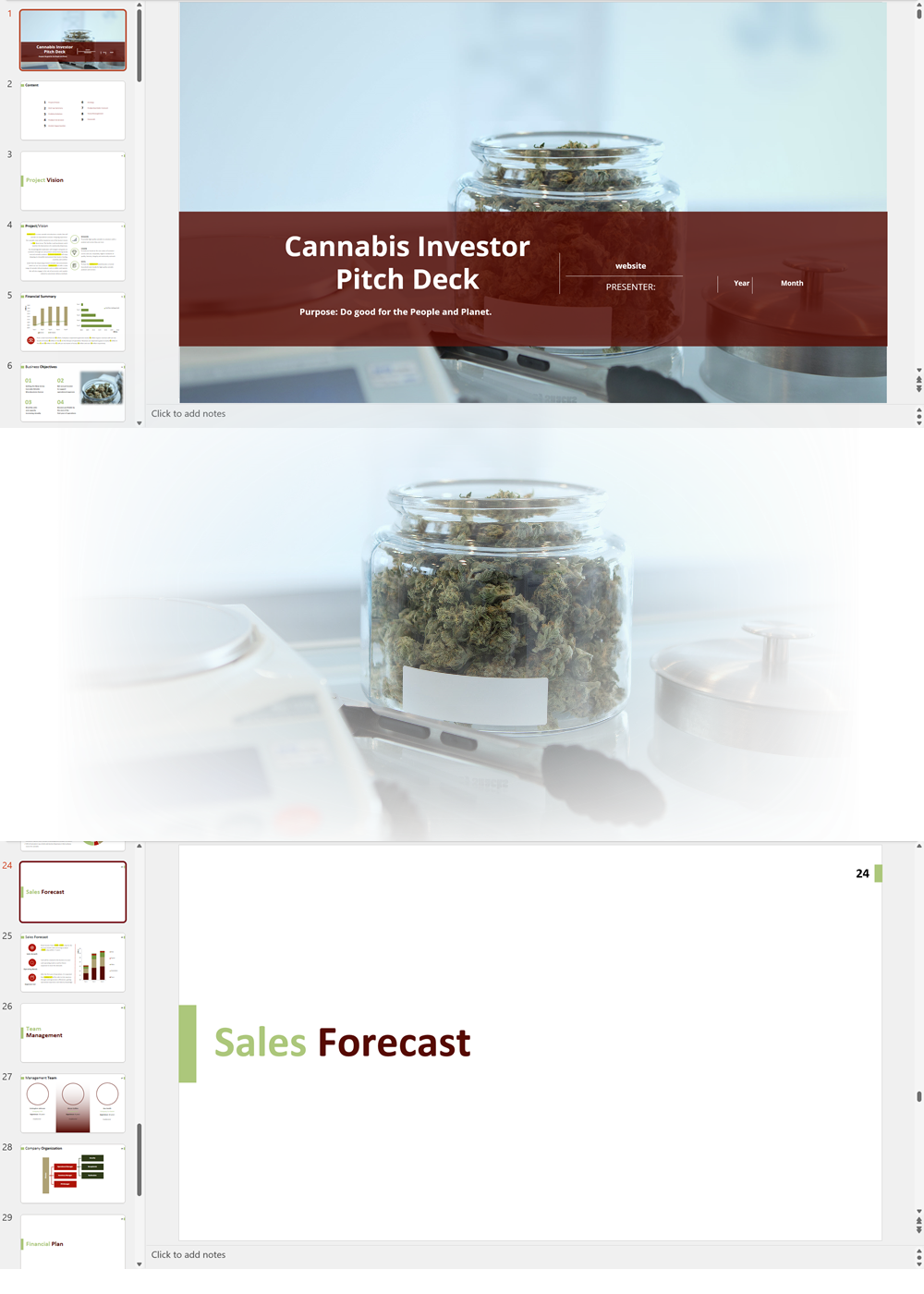
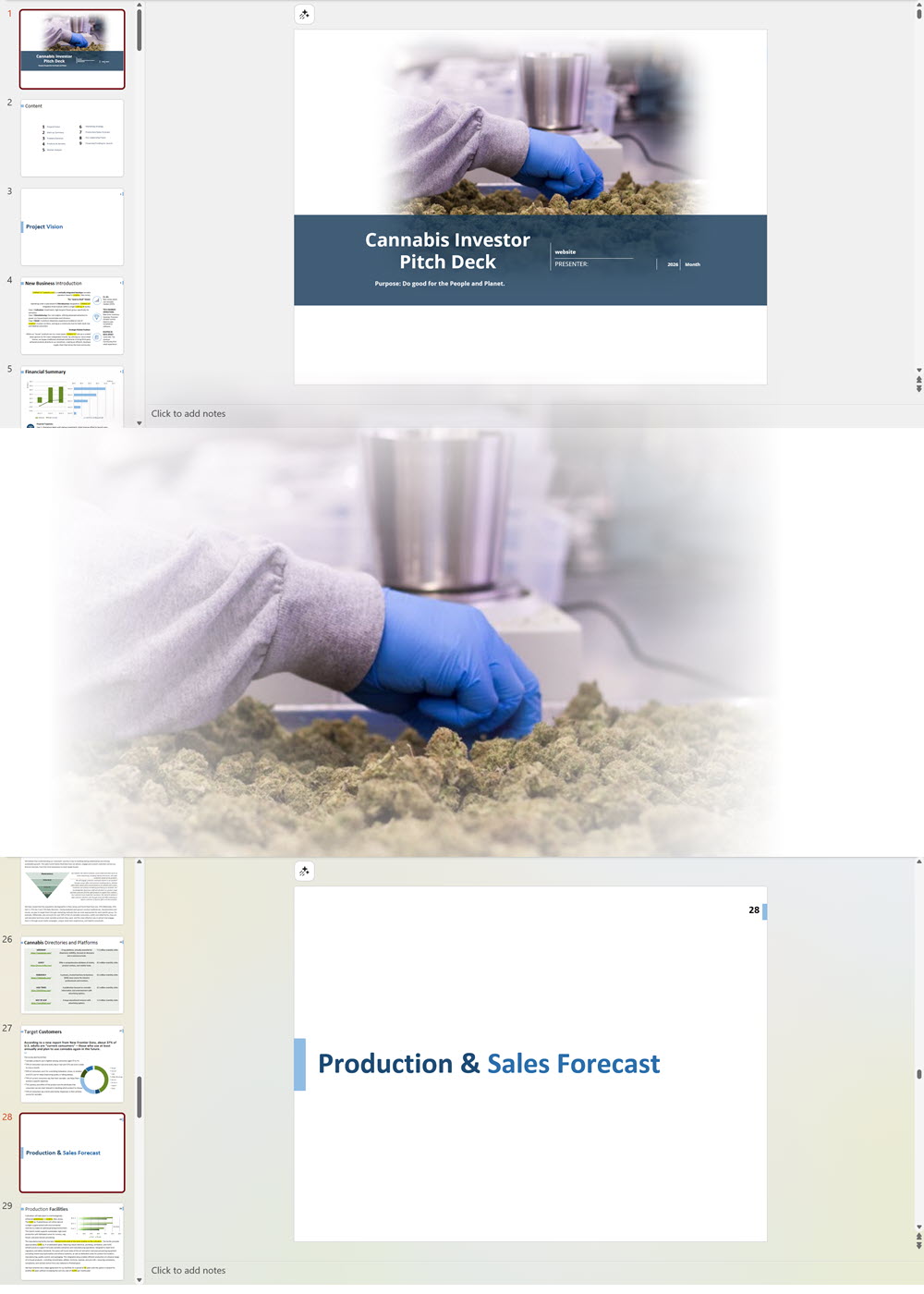
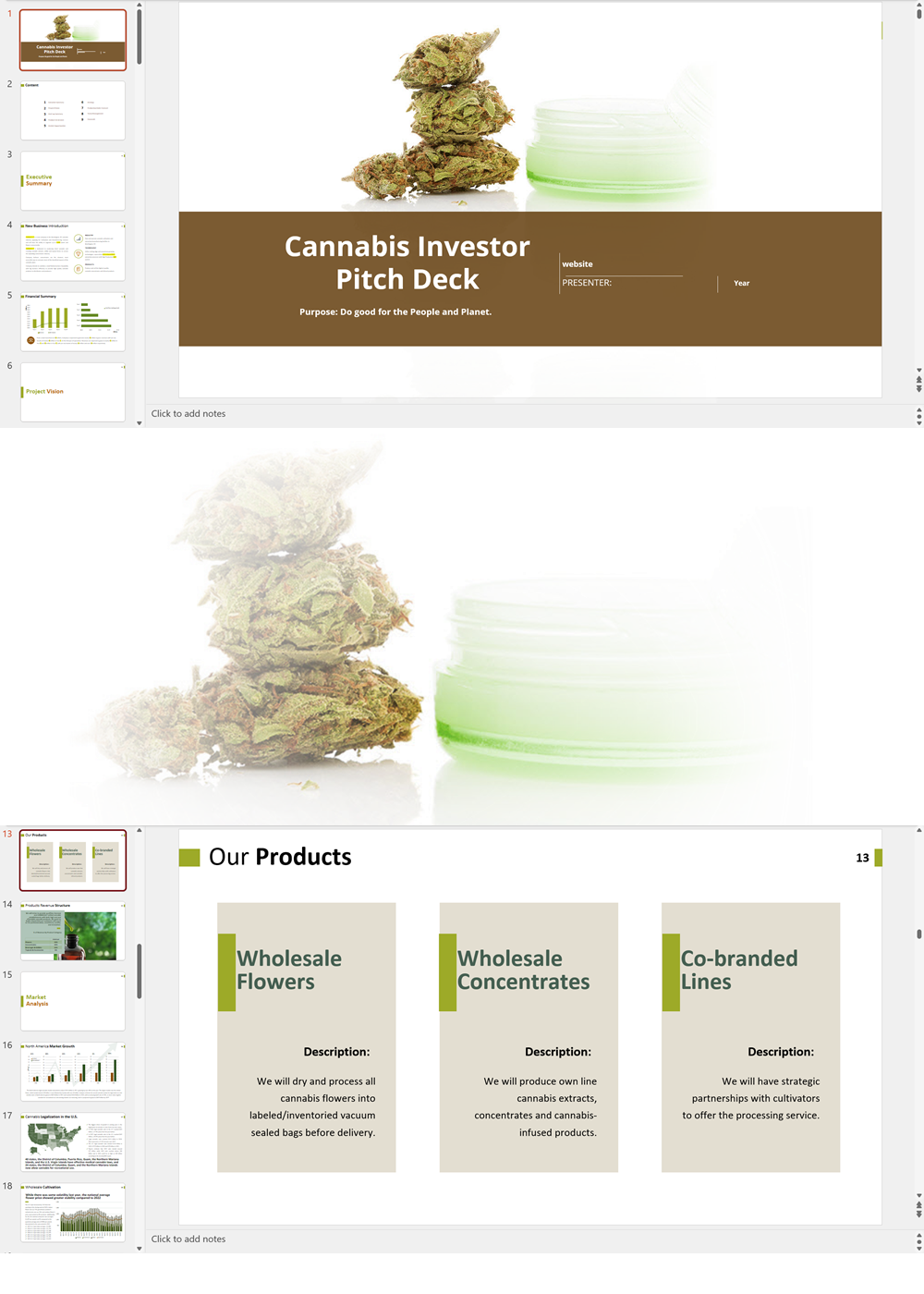
Cannabis Dispensary Investor Pitch Deck Template
$75.00 Select options This product has multiple variants. The options may be chosen on the product page -
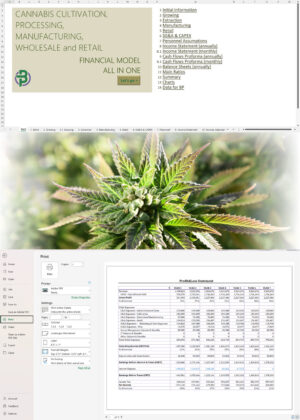
Cannabis Financial Model All in One
$250.00 Select options This product has multiple variants. The options may be chosen on the product page
We also offer hemp/CBD business plan templates at hempcbdbusinessplans.com.
Our Templates
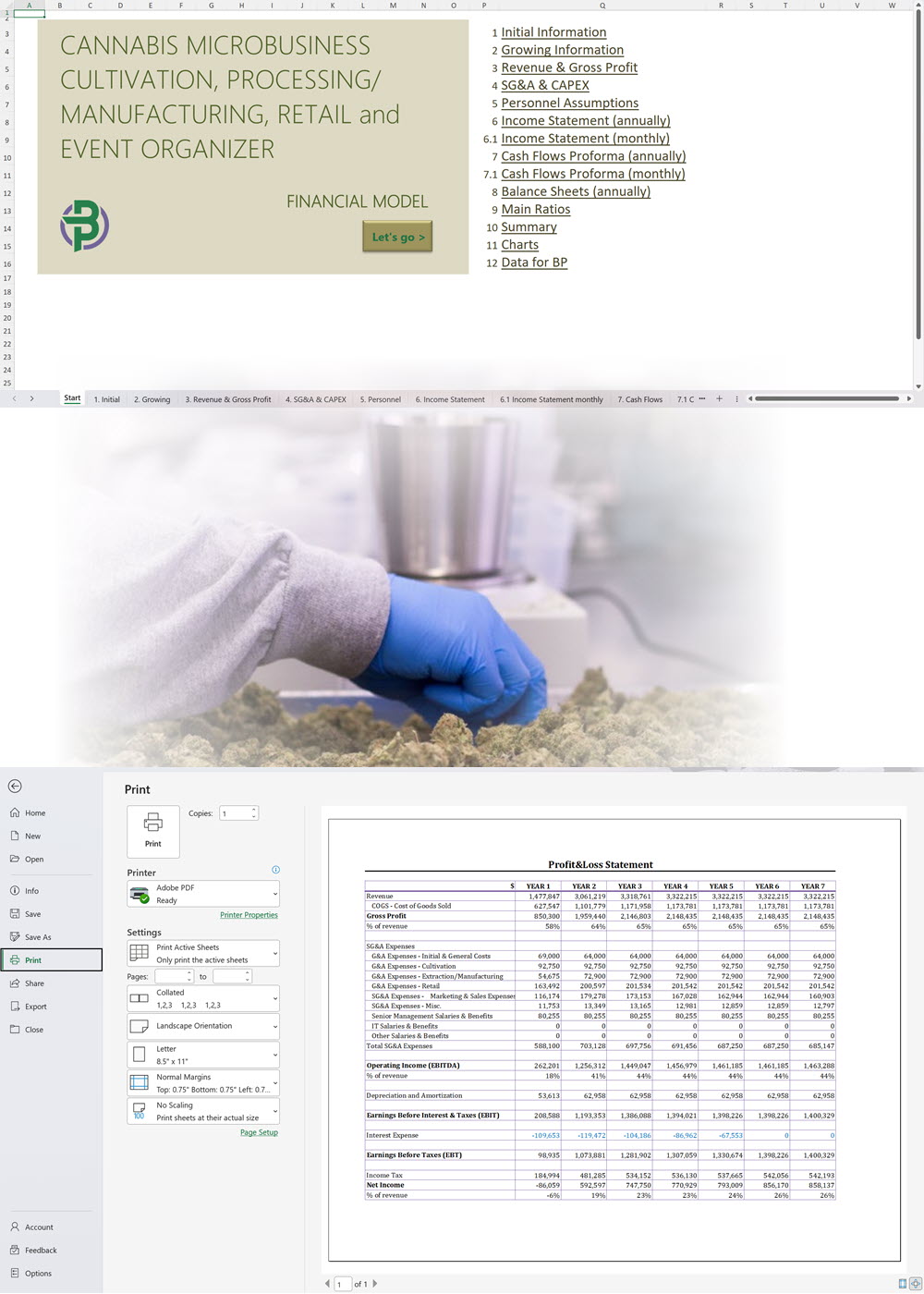
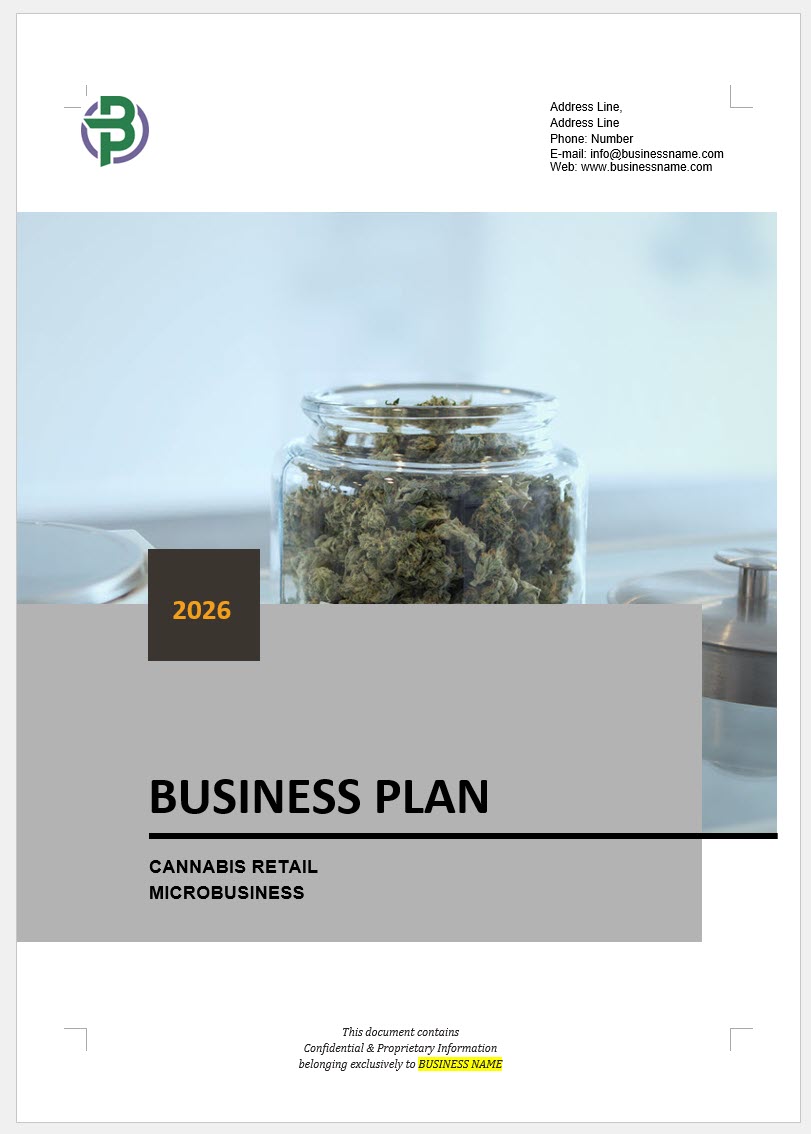
Cannabis Retail Microbusiness Business Plan Template
Price range: $75.00 through $275.00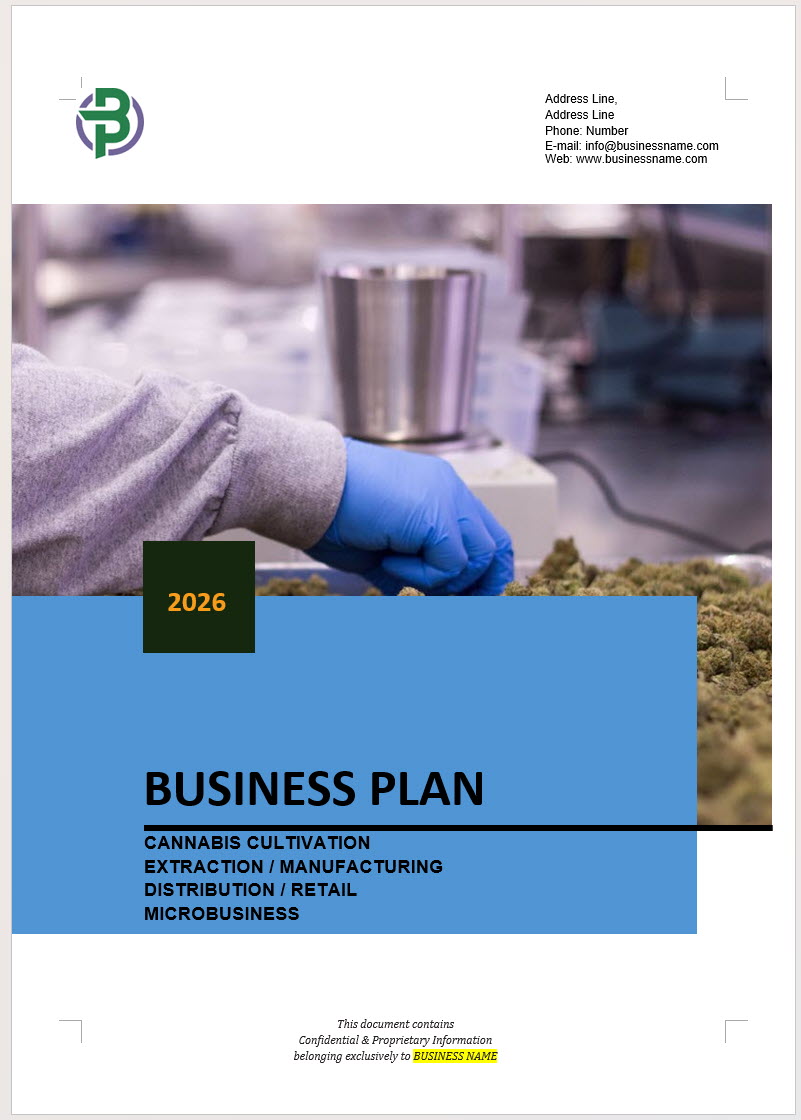
Cannabis Cultivation, Extraction, Manufacturing, Distribution, Retail and Microbusiness Business Plan Template
Price range: $75.00 through $500.00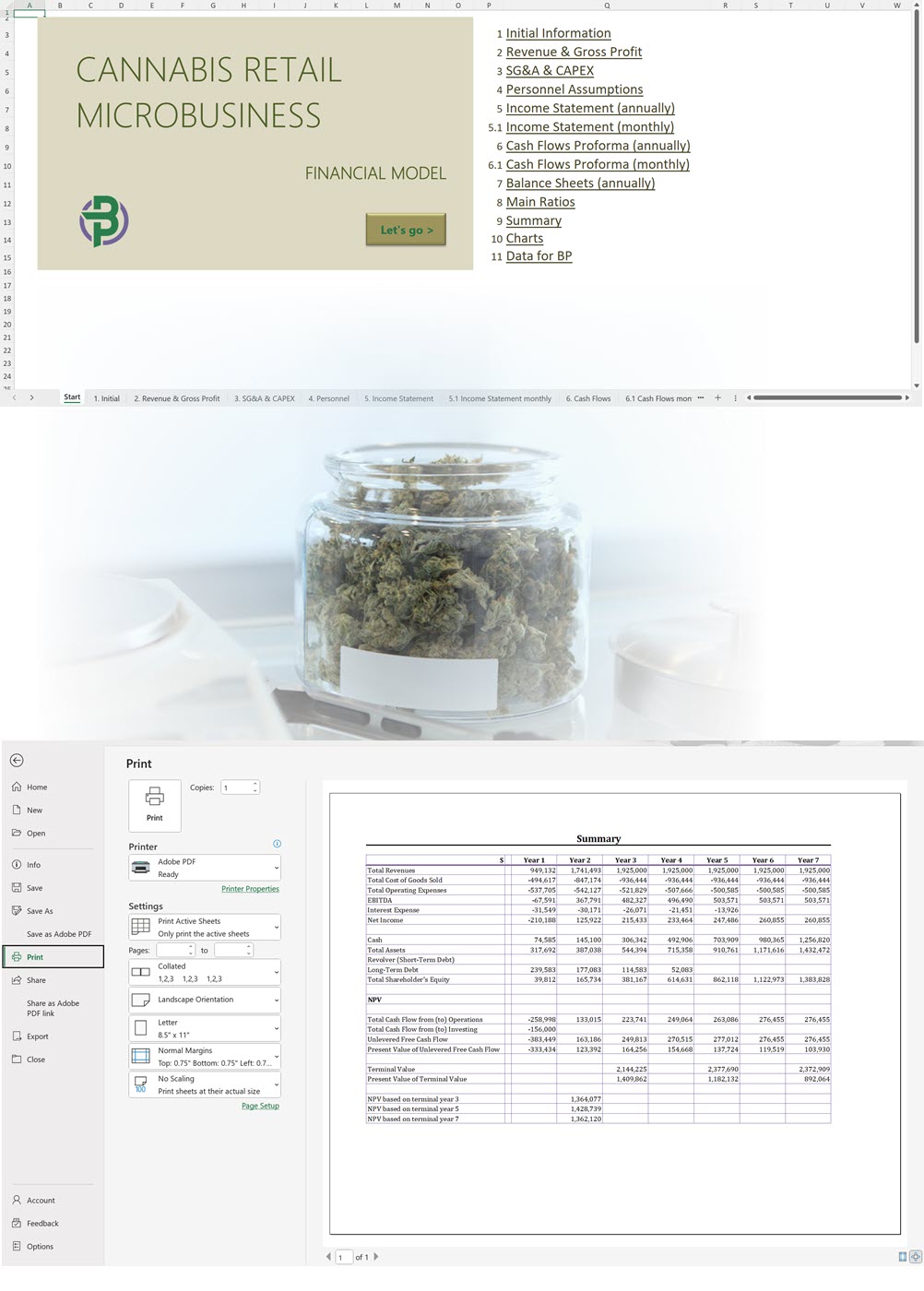
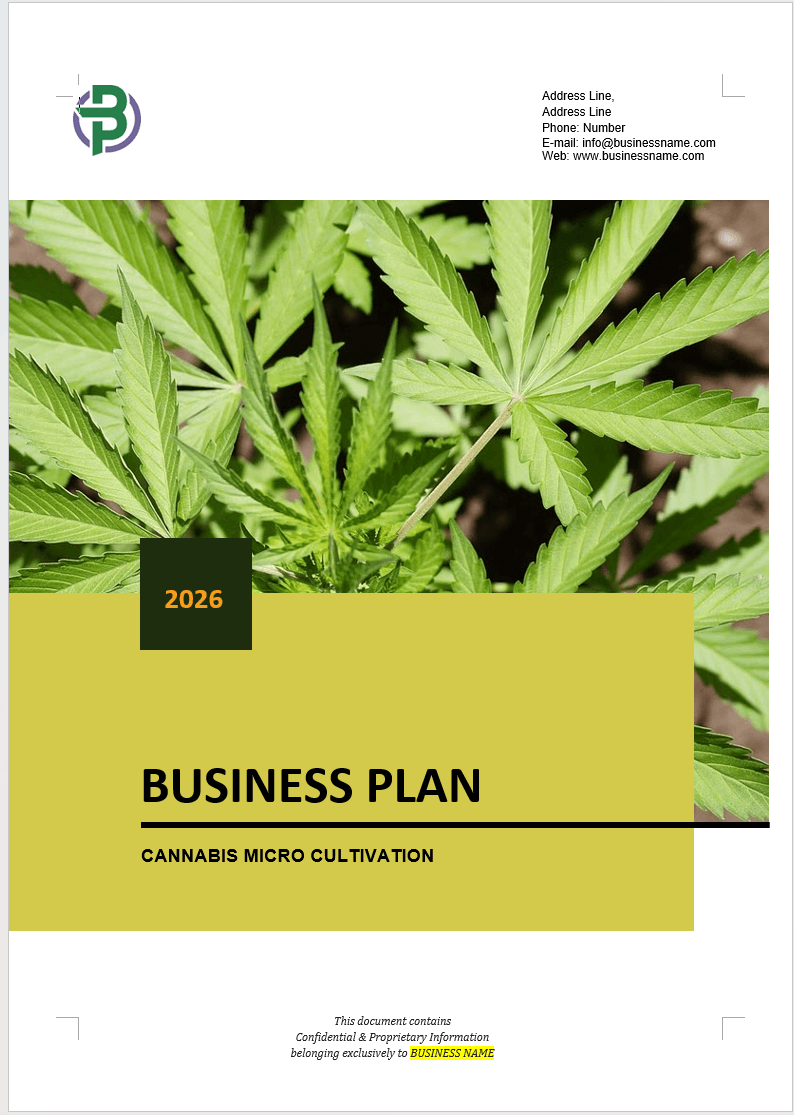
Cannabis Micro Cultivation Business Plan Template
Price range: $75.00 through $300.00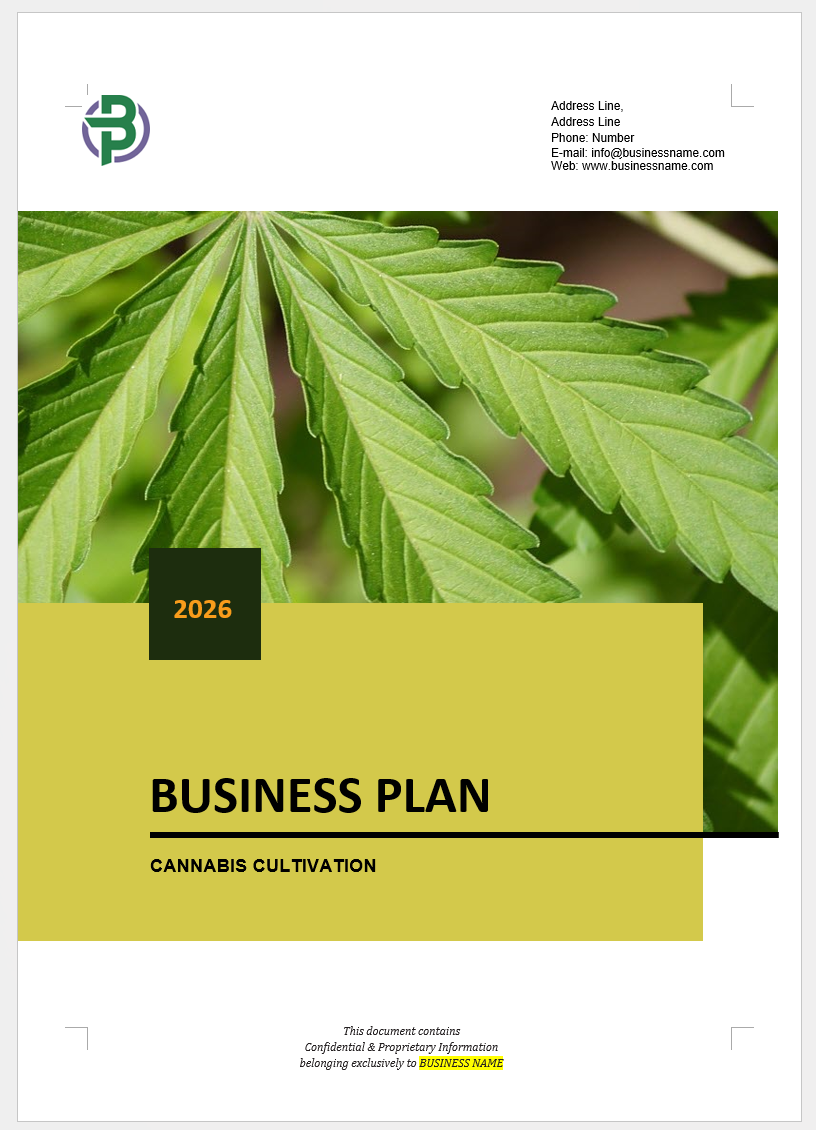
Cannabis Cultivation Business Plan Template
Price range: $75.00 through $350.00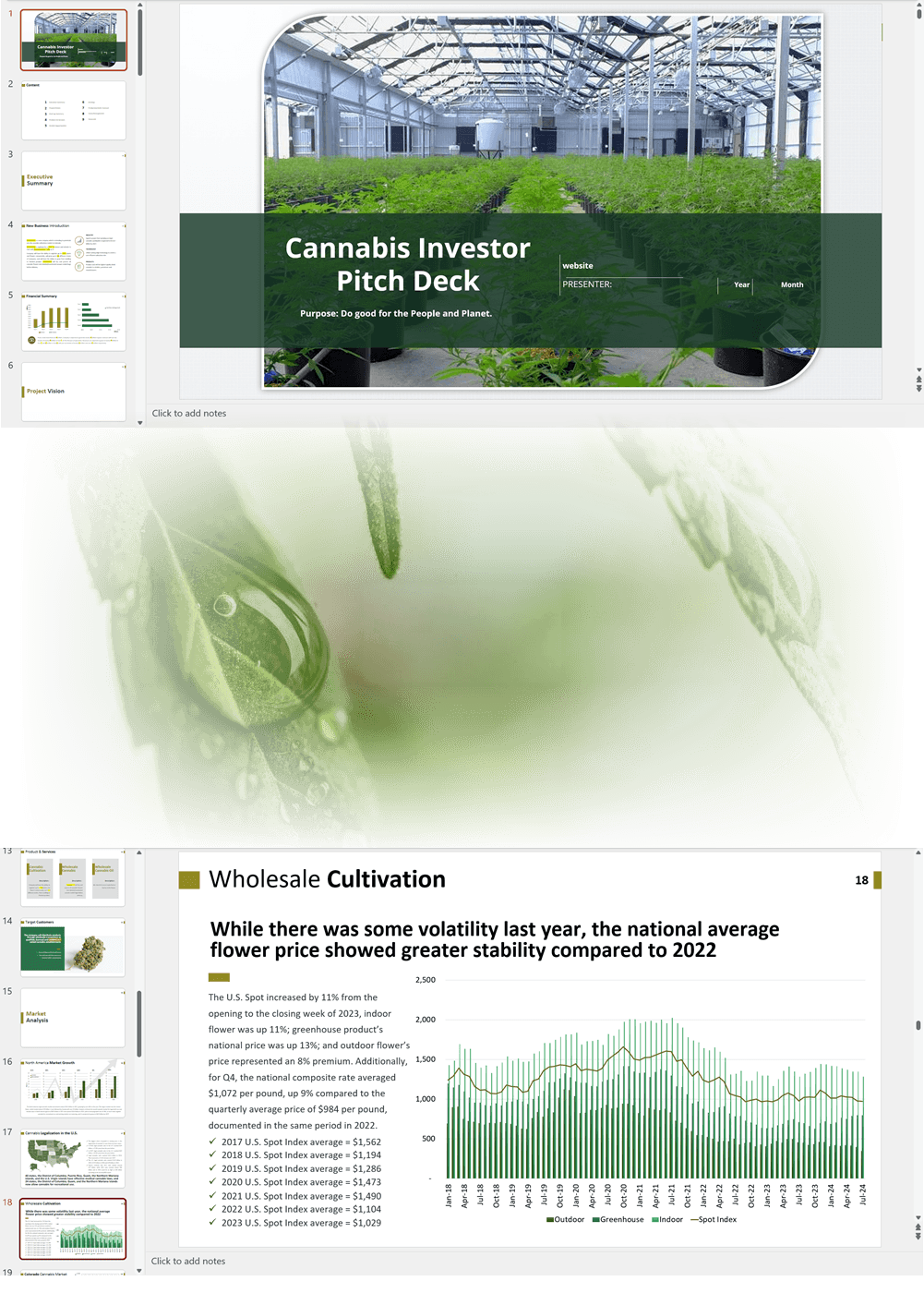
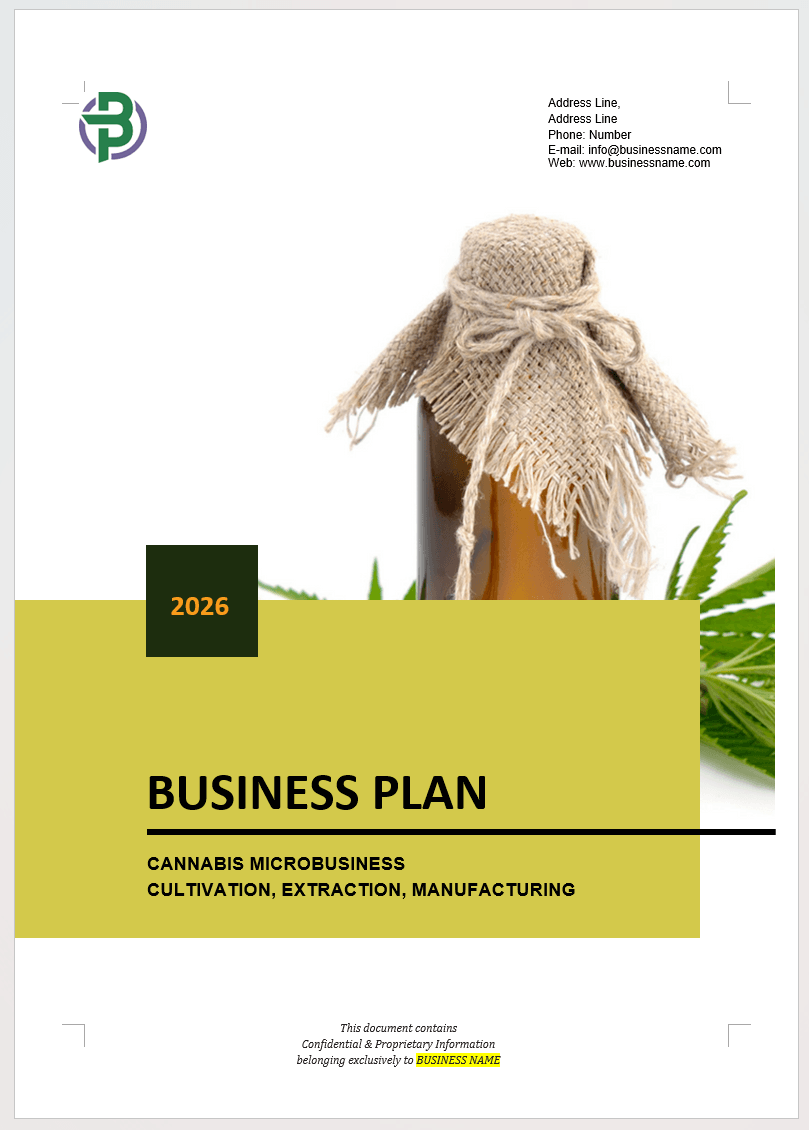
Cannabis Microbusiness Cultivation and Manufacturing Business Plan Template
Price range: $75.00 through $350.00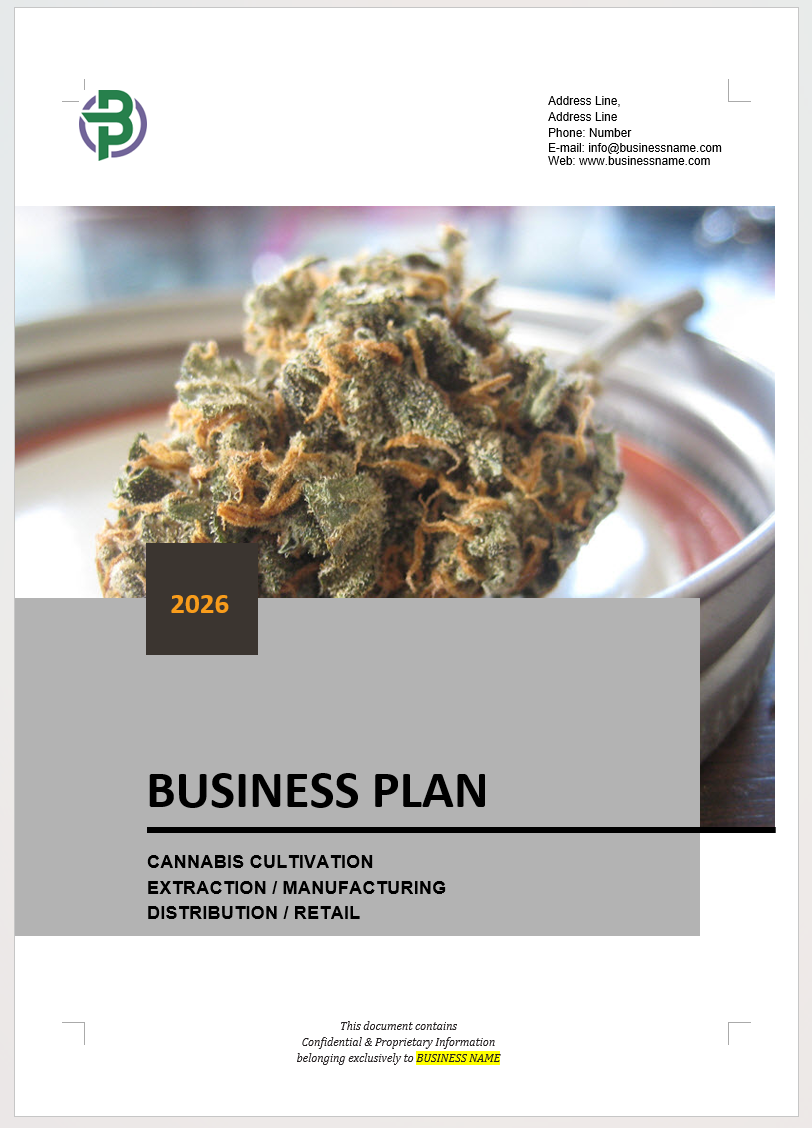
Vertically Integrated Cannabis Business Plan Template
Price range: $75.00 through $500.00

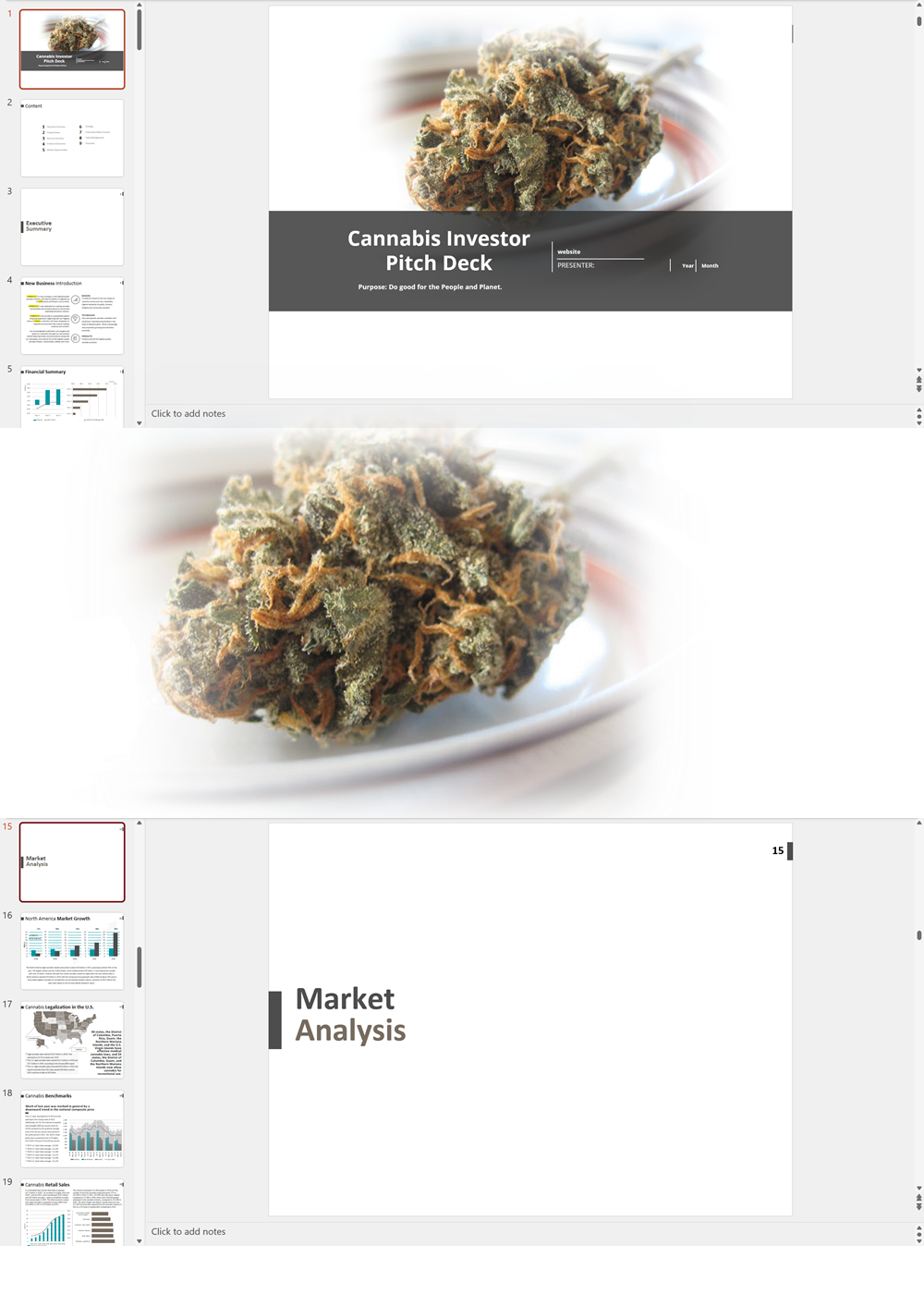

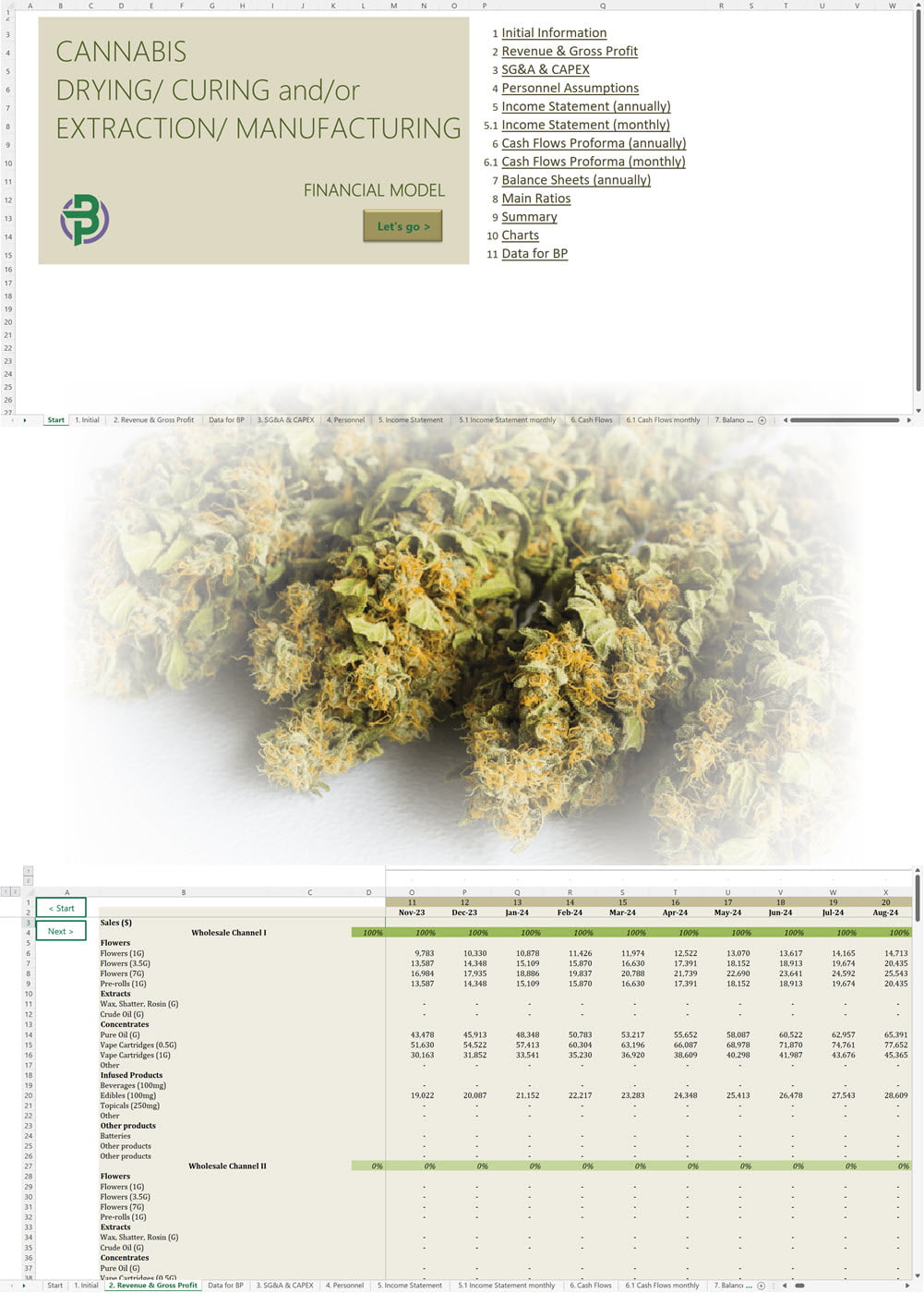
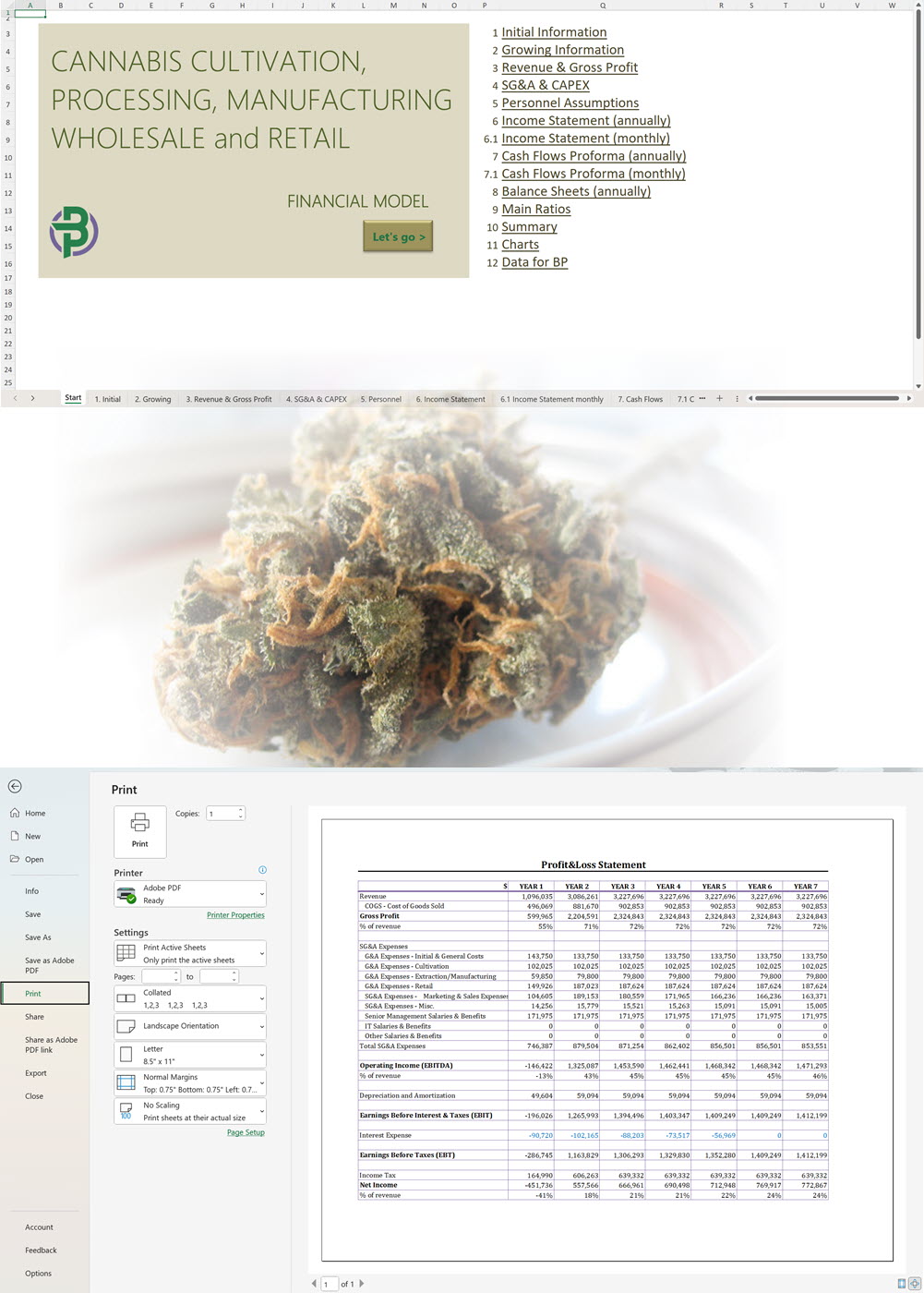
Cannabis Microbusiness Business Plan Template for Cultivation + Extraction + Manufacturing + Wholesale + Retail + Services
Price range: $75.00 through $500.00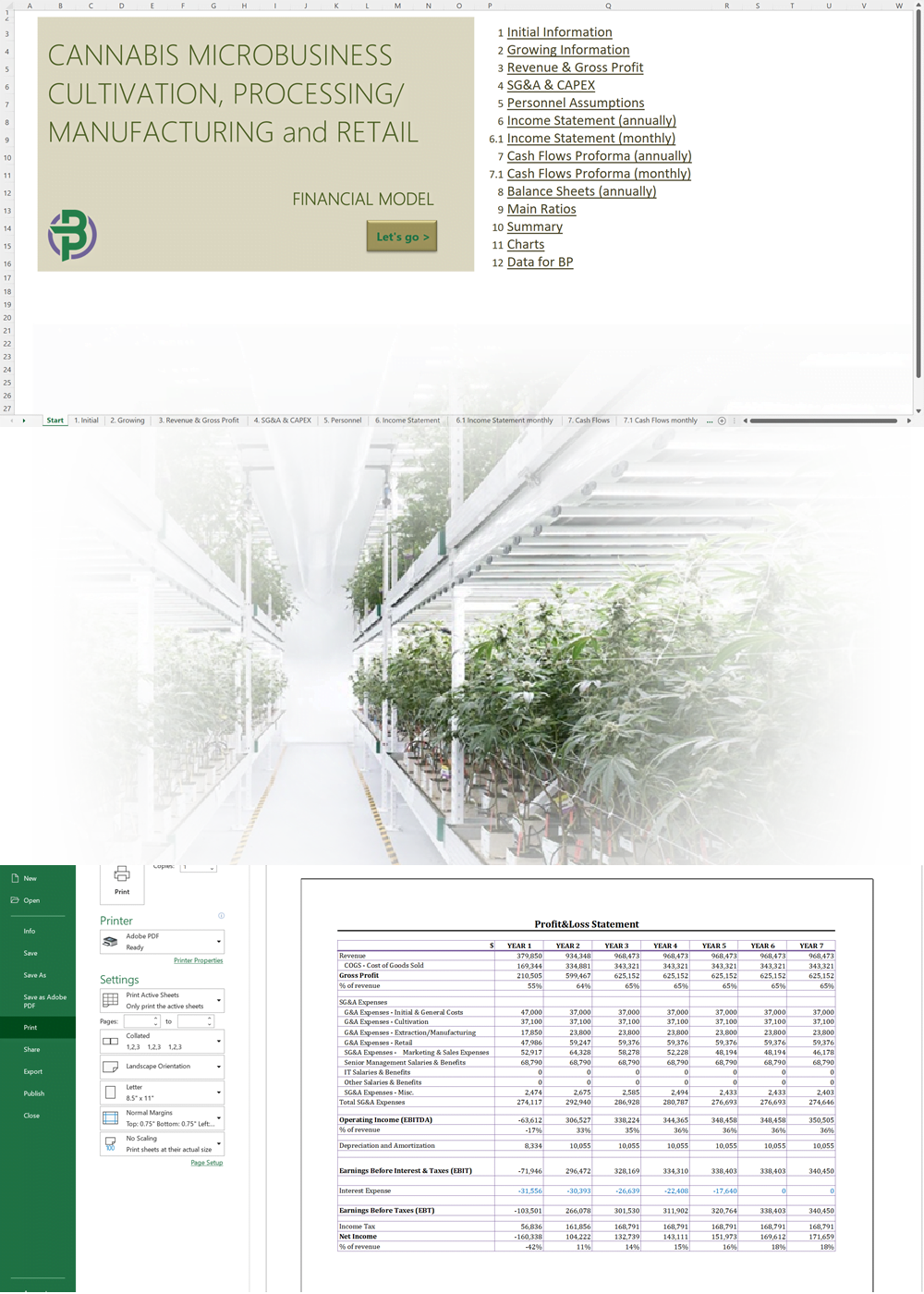
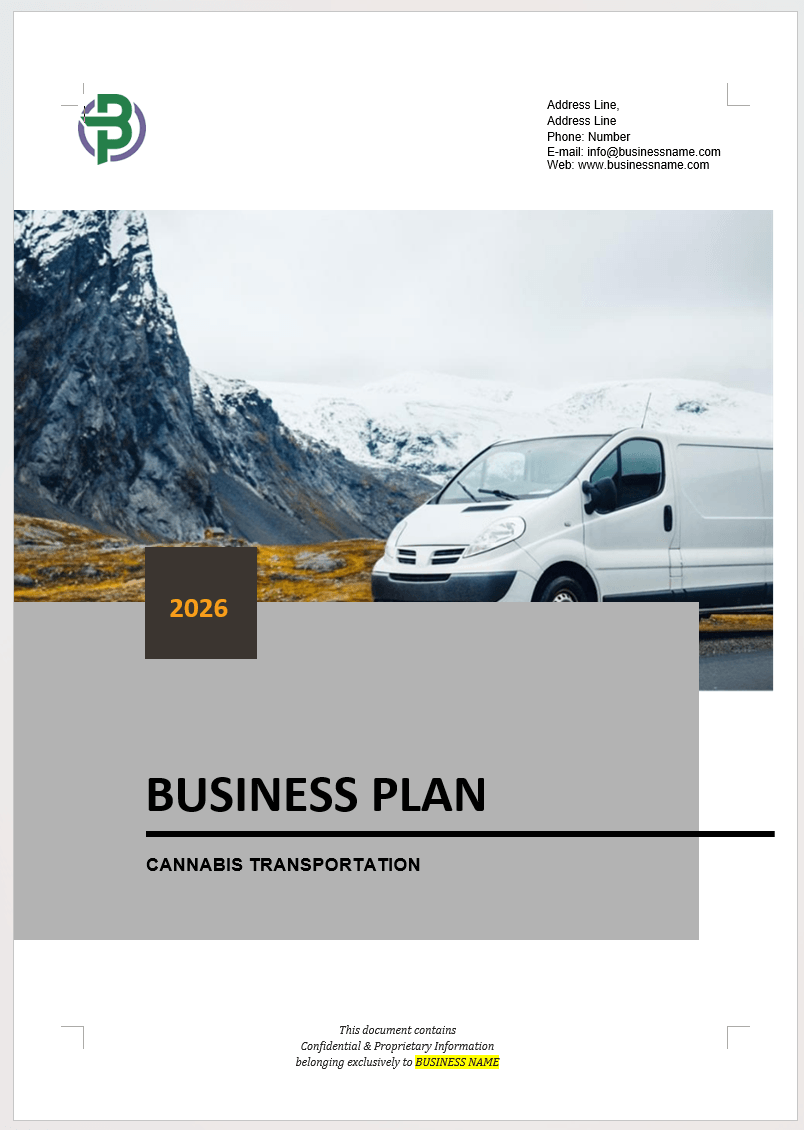
Cannabis Transportation Business Plan Template
Price range: $75.00 through $275.00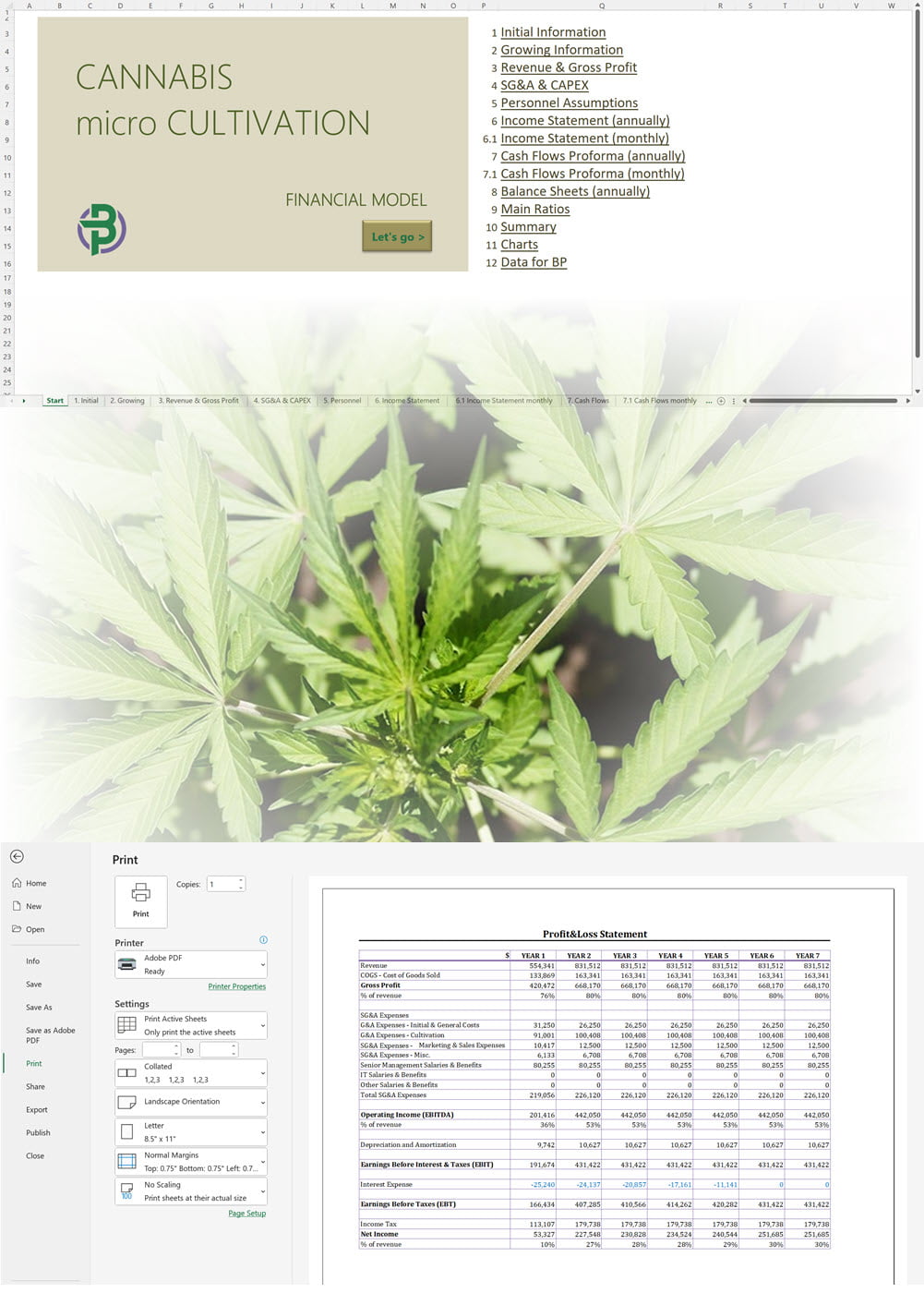

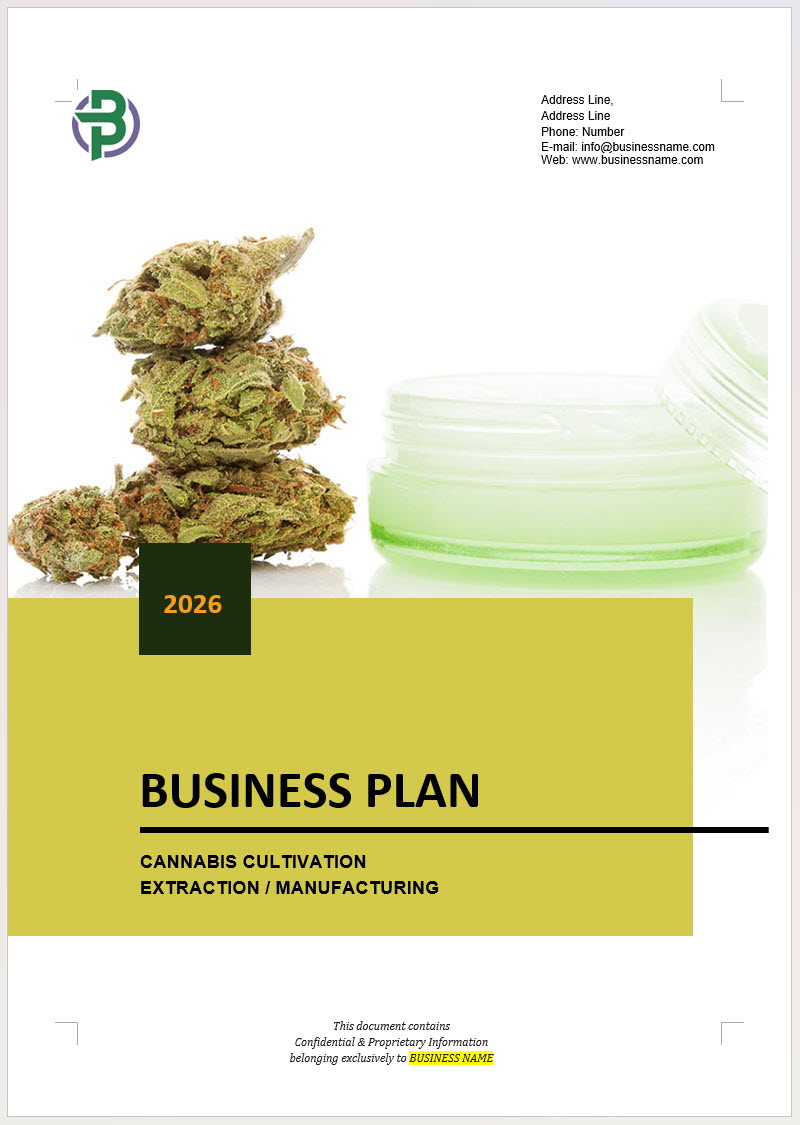
Cannabis Cultivation, Extraction and Manufacturing Business Plan Template
Price range: $75.00 through $450.00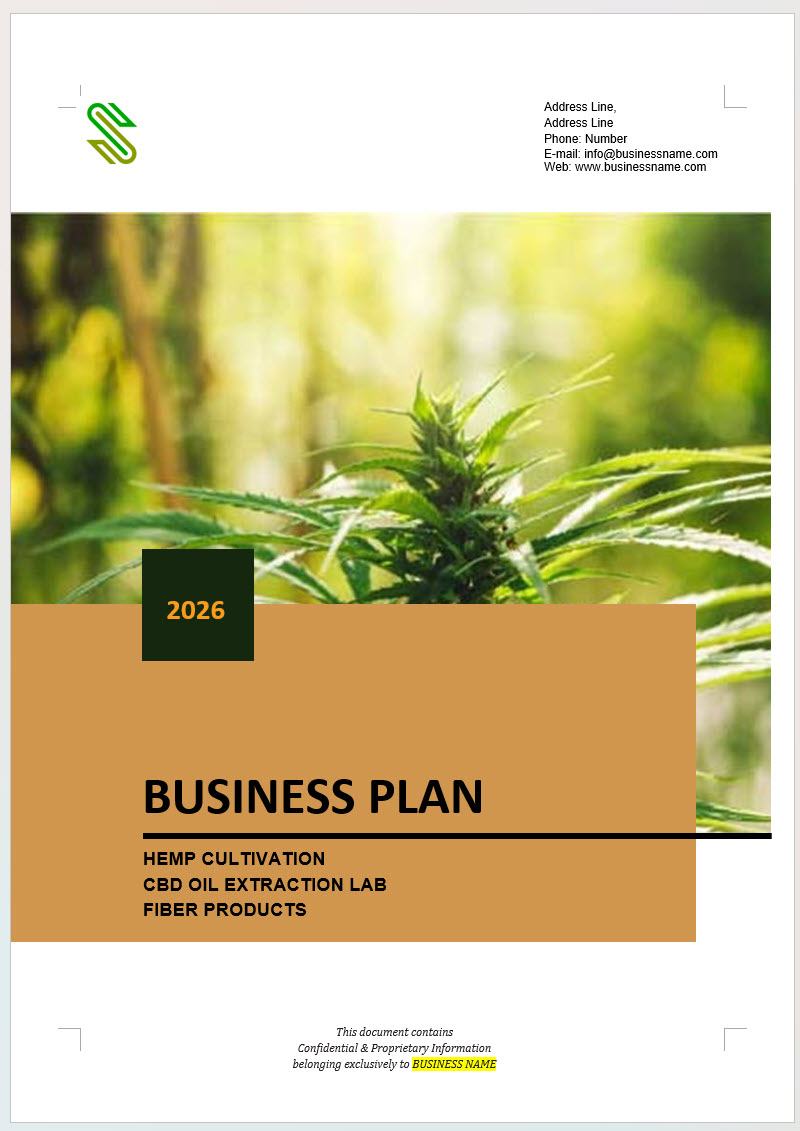
Hemp Cultivation and CBD Oil Extraction and/or Fiber Products Business Plan Template
Price range: $75.00 through $350.00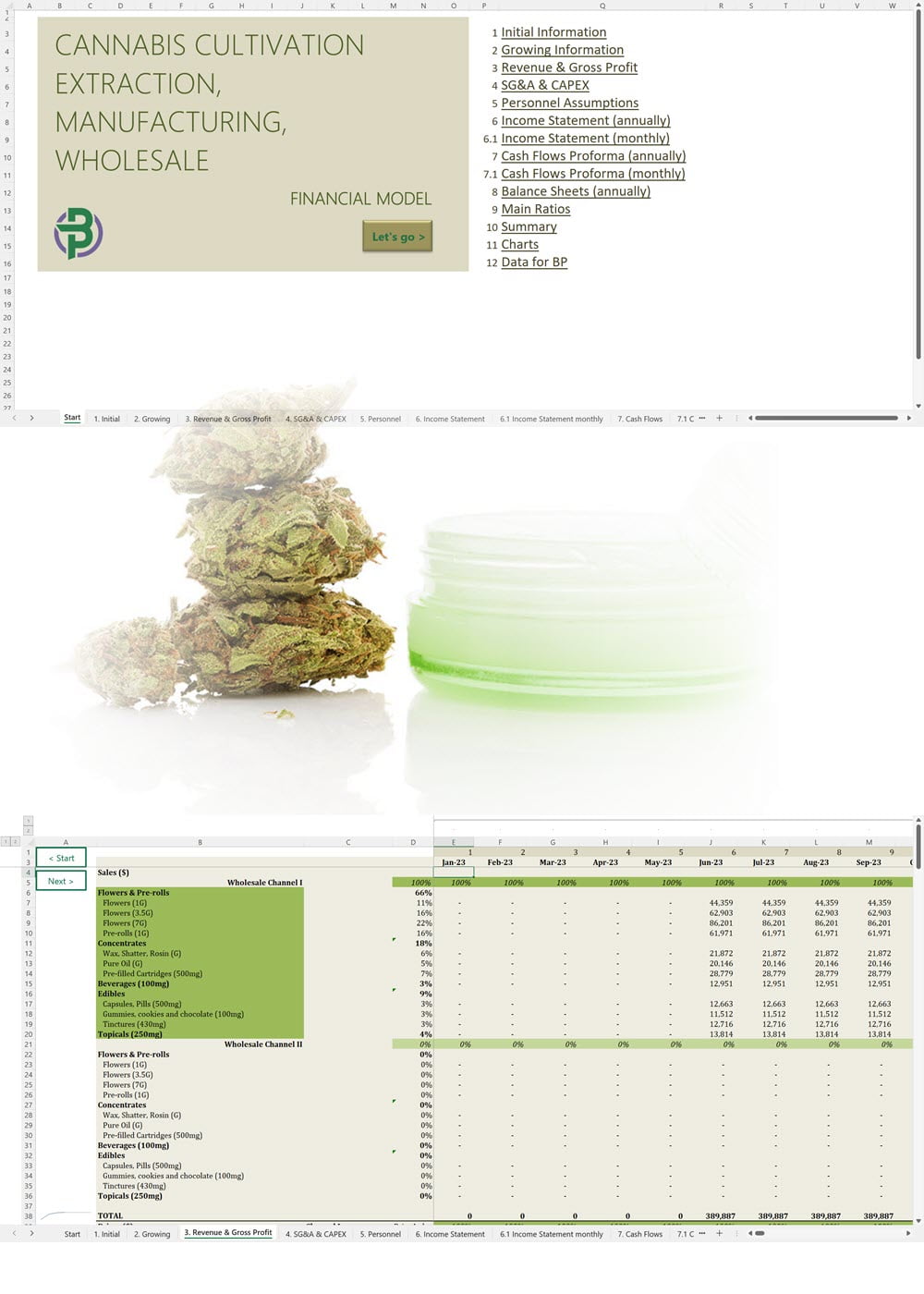
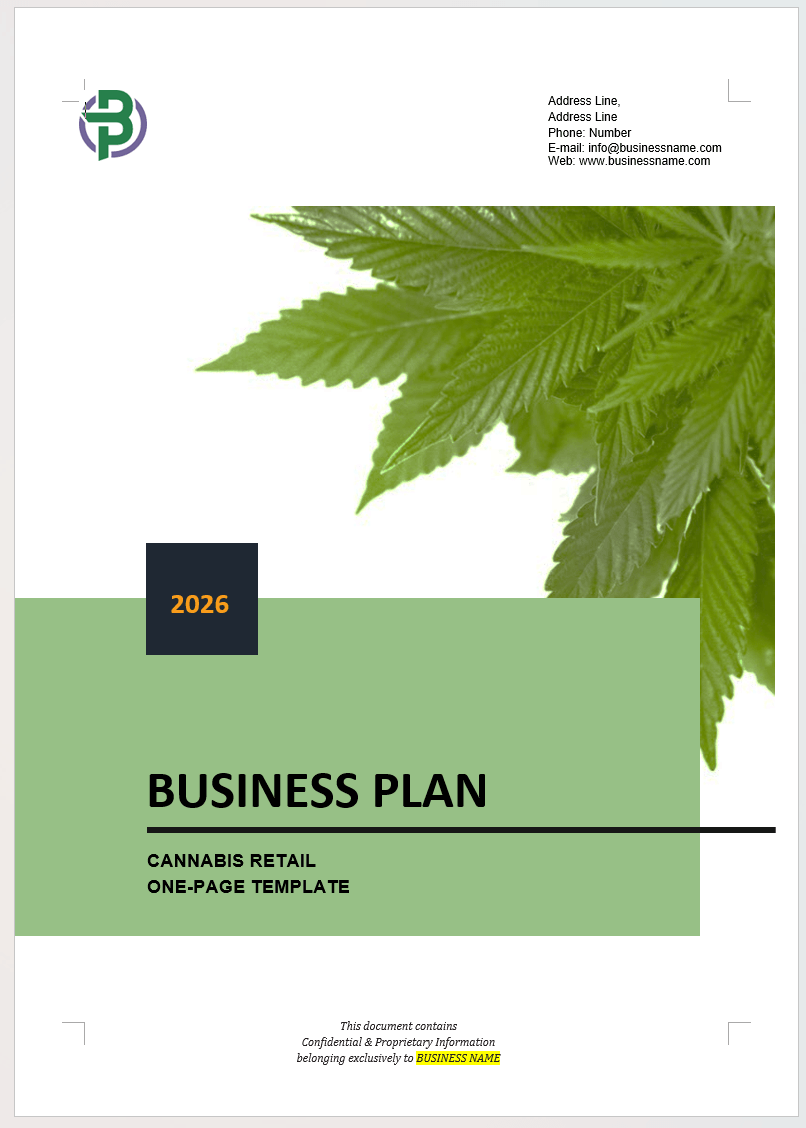
One-Page Cannabis Business Plan Template
Price range: $25.00 through $200.00