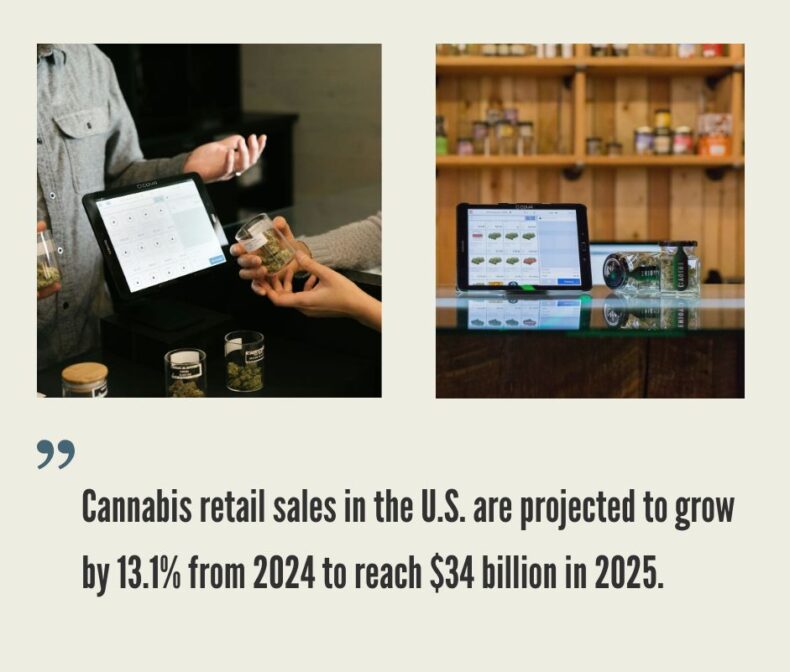
As the number of countries and U.S. states with legal access to cannabis grows, so does the number of cannabis dispensaries. As of September 2025, 42 U.S. states have legalized medical cannabis and 24 states have legalized cannabis for recreational use. In 2024, retail cannabis sales in the U.S. were worth $30.1 billion and are projected to reach $34 billion in 2025 and $62.4 billion by 2030 according to Whitney Economics.
Over the years the industry has matured and evolved to become more innovative and consumer-centric, aiming to be not just a retail store where patients or adult users purchase cannabis, but rather a destination with a pleasant shopping experience that helps customers find the perfect solution for their needs and preferences.
According to data from the first half of 2025, there are over 12,000 cannabis dispensaries in the United States. States with the largest number of dispensaries were Oklahoma (1,587), California (1,196), and New Mexico (1,094). Meanwhile, in Canada, there are currently 4,403 licensed dispensaries with 41% of them located in Ontario, another 24% in British Columbia, and 16% in Alberta.
The interactive maps below show the dispensary numbers by state and province:
In Europe and the UK, there are generally no specific cannabis dispensary licenses. Patients can access medical cannabis through private clinics or pharmacies that offer medical cannabis after presenting a prescription. It is possible that when countries, such as Germany, launch a commercial adult-use market, there will be licensing requirements for retail stores selling cannabis in Europe too.
The global cannabis market is growing rapidly. In 2024, global cannabis sales were estimated at $38.7 billion – an 11% increase from 2023 – and by 2027 are forecasted to exceed $50 billion.
With the rising demand for cannabis, more patients and adult users will require convenient access to it- hence, the increasing need for more dispensaries. Below, we outline the steps for starting a cannabis dispensary business and becoming a player in the growing market.
Main steps in short:
- Research and Planning
- Apply for the Dispensary License
- Prepare for Operations
- Ongoing Compliance and Reporting
Research and Planning
Prior to planning to open a dispensary, it is necessary to study the local cannabis regulations and determine that you are eligible to apply for a cannabis dispensary license. Most U.S. states and Canadian provinces post a checklist on their official websites detailing how the application process works as well as the requirements. What you need to know:
- Legality of Medical Cannabis and/or Recreational Cannabis
- Types of Retail Licenses and Application Deadlines
- Social and Economic Equity Programs
- License Fees and Investment Requirements
- Facility Requirements (location and security)
- Management and Staffing Requirements
- Type of Permitted Products
- Permitted Services (delivery, on-site consumption, etc.)
For information on the cannabis laws and regulations in each U.S. state or Canadian province, please find the appropriate article on our website in the Cannabis Markets section by choosing the desired state in the sidebar under the Cannabis US subheading or typing it into the search bar.
Possible Dispensary Services to Offer
There are a couple of additional services that a dispensary can offer to appeal to more customers, either due to convenience or a more pleasant experience. One of the popular developments are consumption lounges. Consumption lounges are places where people can go to socialize and consume cannabis. Most states are just starting to embrace this type of business, adopting their own rules for social cannabis consumption.
In our digital world, many consumers value being able to order products online and have them delivered to their location without having to visit a store. Some states allow delivery as part of the activities that a licensed cannabis dispensary can perform while other states have created a separate add-on delivery license.
Another shopping feature is a “deli-style” retail experience which allows consumers to see and smell cannabis flower before they make the decision to purchase it. Very few states’ regulations allow for deli-style shopping experiences but where legal, a dispensary can benefit from introducing this feature as it allows a customer to assess a product’s quality, giving them greater purchasing confidence, as well as encourages them to potentially try a new product.
Competition among dispensaries is expected to intensify as the market expands. It is important for entrepreneurs to conduct thorough market research to identify gaps and opportunities, and to differentiate their dispensary through unique product offerings, branding, and customer experience.
When selecting a location for a cannabis dispensary, it is vital to adhere to the local regulations. Dispensaries must typically be situated in commercial or industrial zones and maintain certain distances from sensitive areas such as schools and parks. The required distance can vary, ranging from 200 to 1,000 feet.
Strict security measures, including surveillance and alarm systems, are necessary. Compliance with accessibility requirements, including ample parking and adherence to ADA standards, is also important.
In most jurisdictions, even for paperwork related to your application, you will need to provide an expected physical location for your store. This means you need to research the localities you are considering operating in, paying particular attention to local demographics and other obstacles that may exist at the local level.
Even if it is not mandated by law, a business plan is essential for securing funding and assisting an applicant in understanding how much money it will take to start a cannabis business and how much profit it could make. A well-structured business plan can make all the difference in helping you demonstrate your proposed cannabis business’ compliance with regulations and its operational viability.
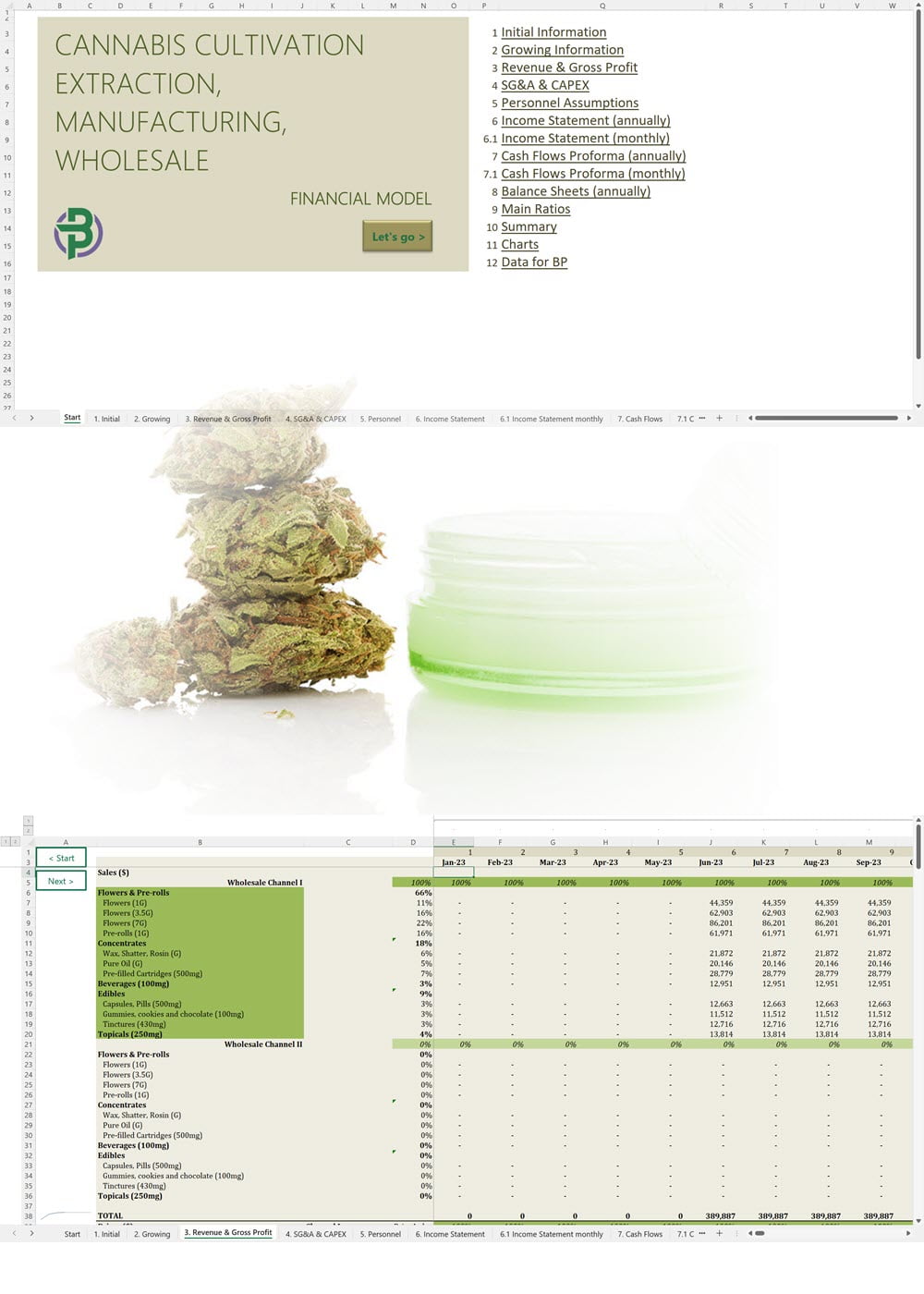
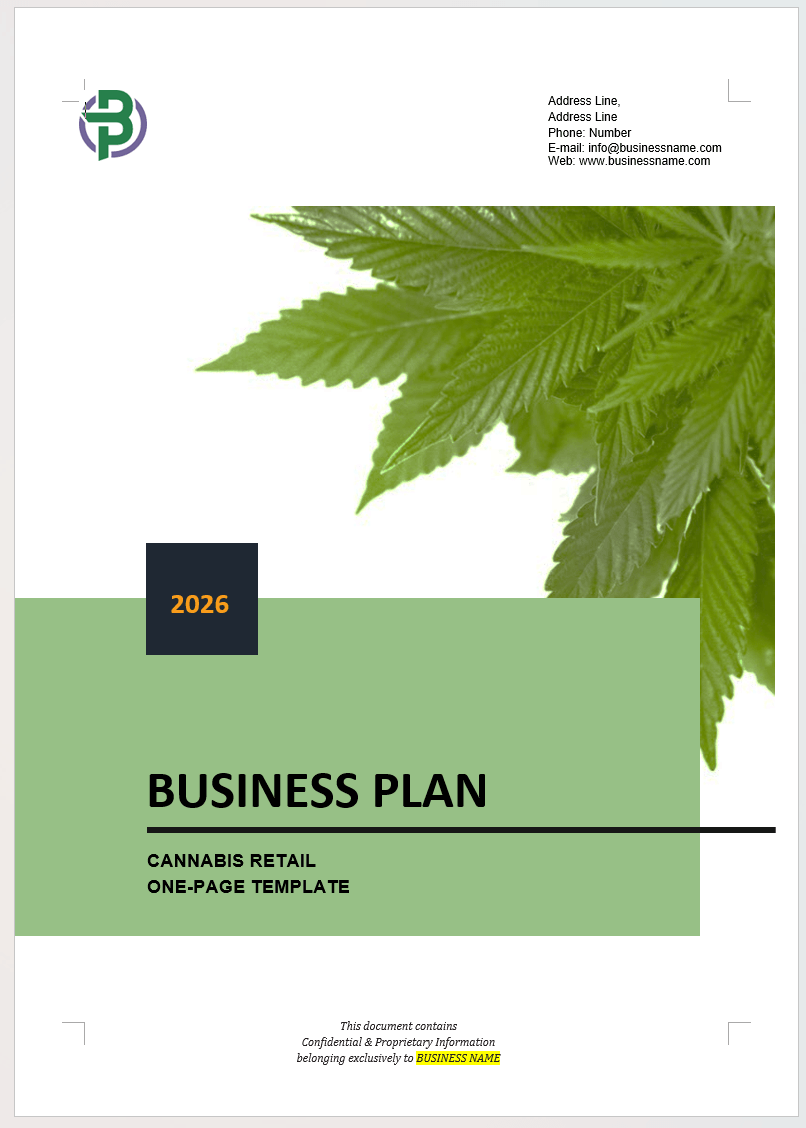
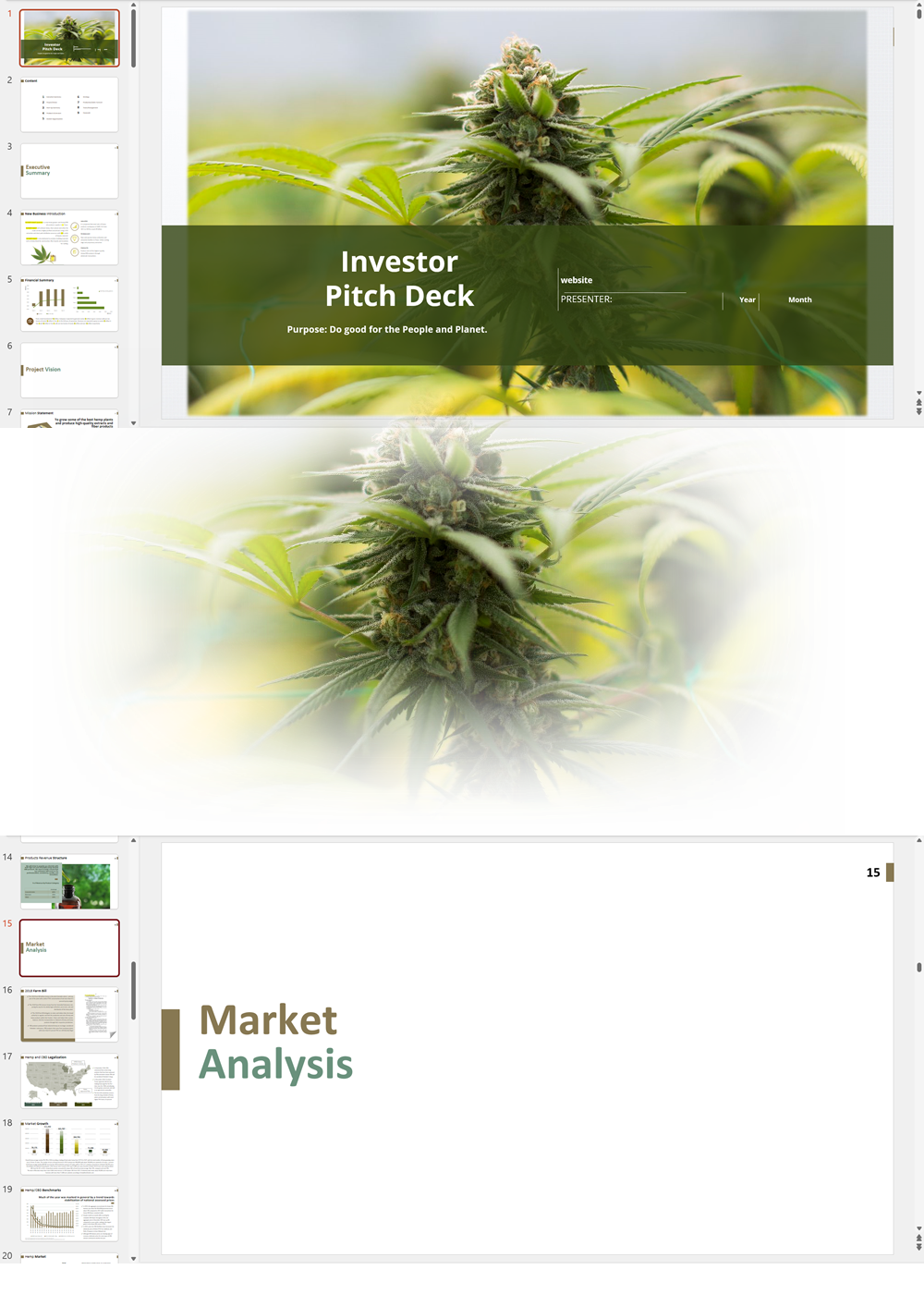
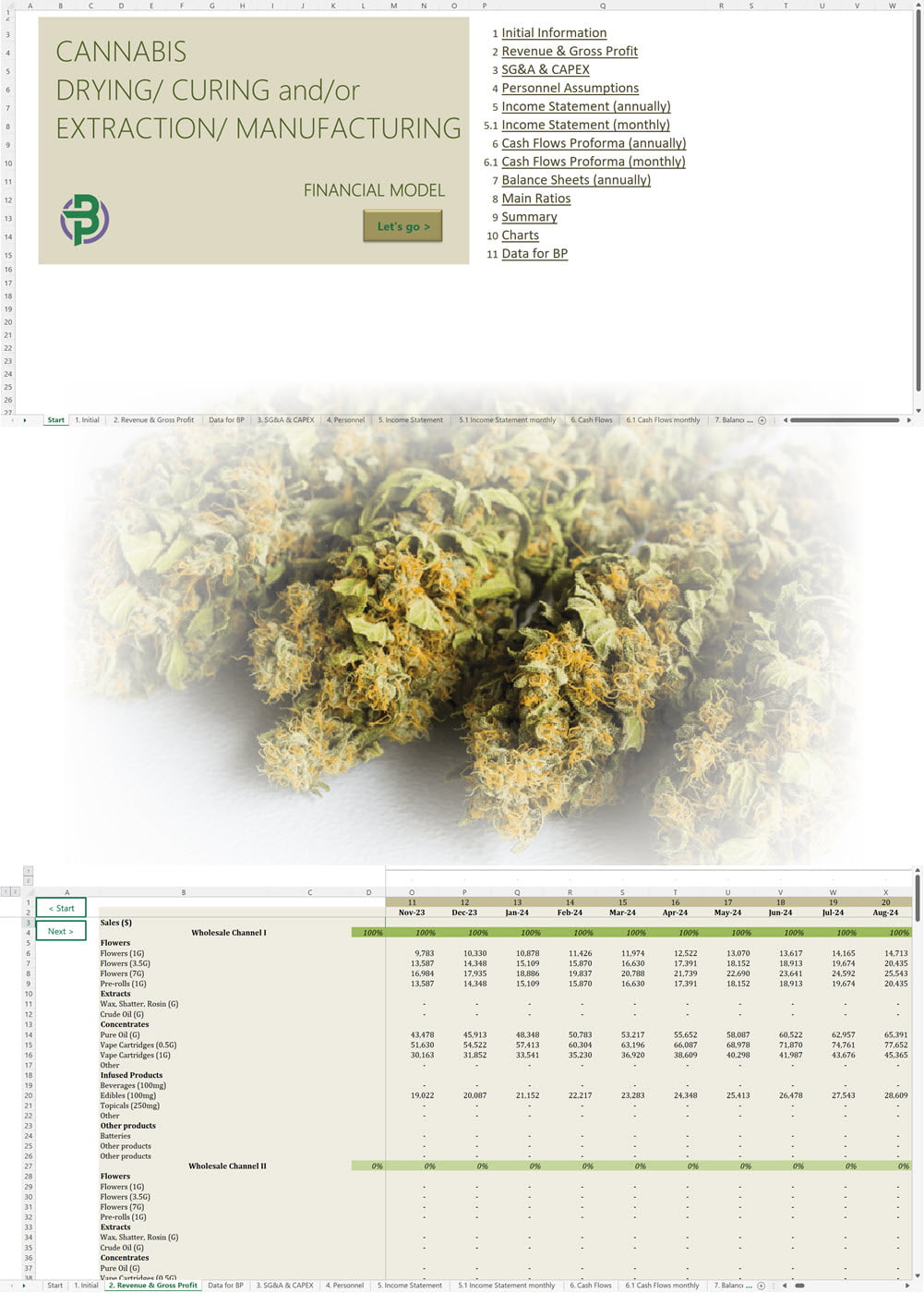
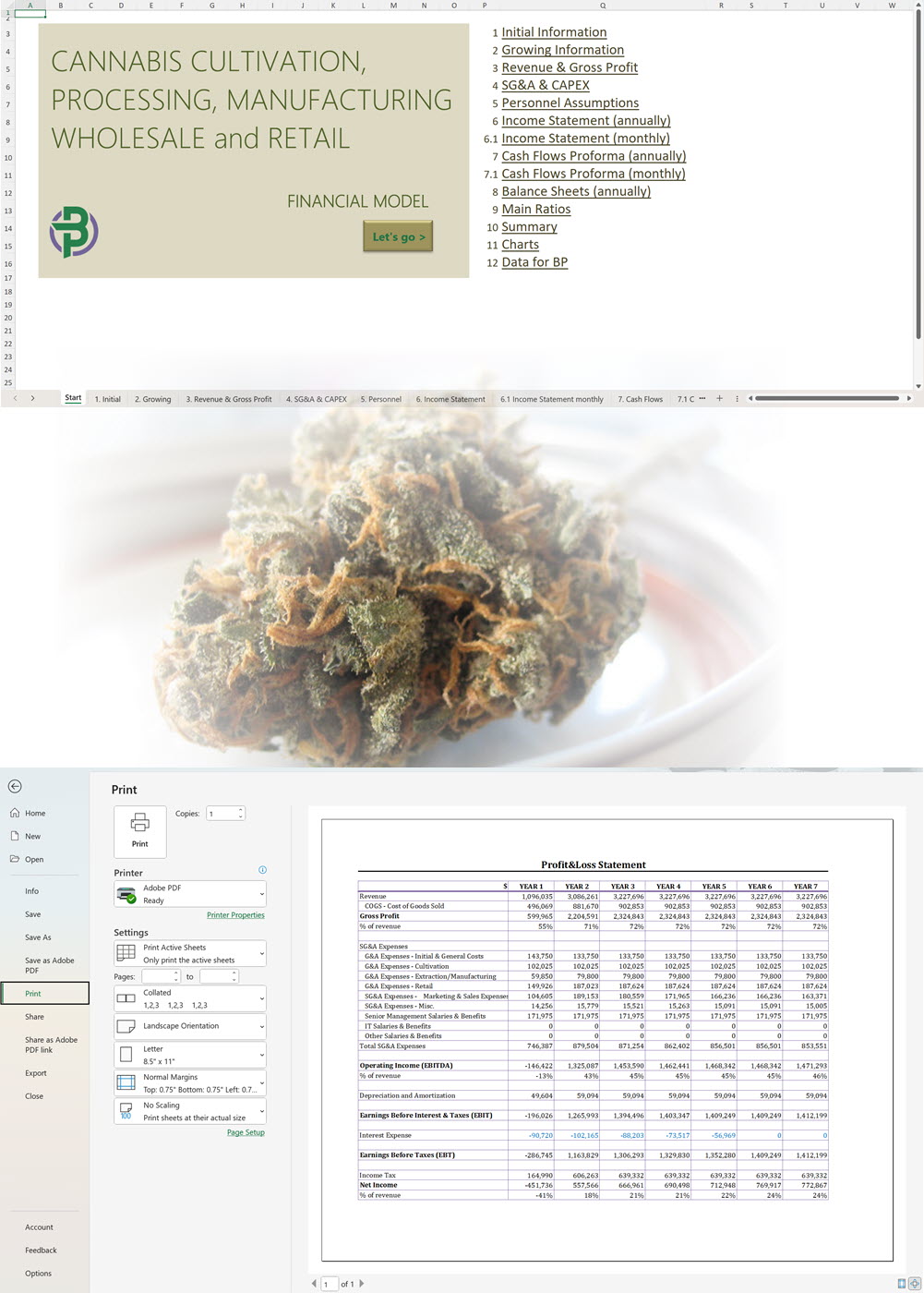
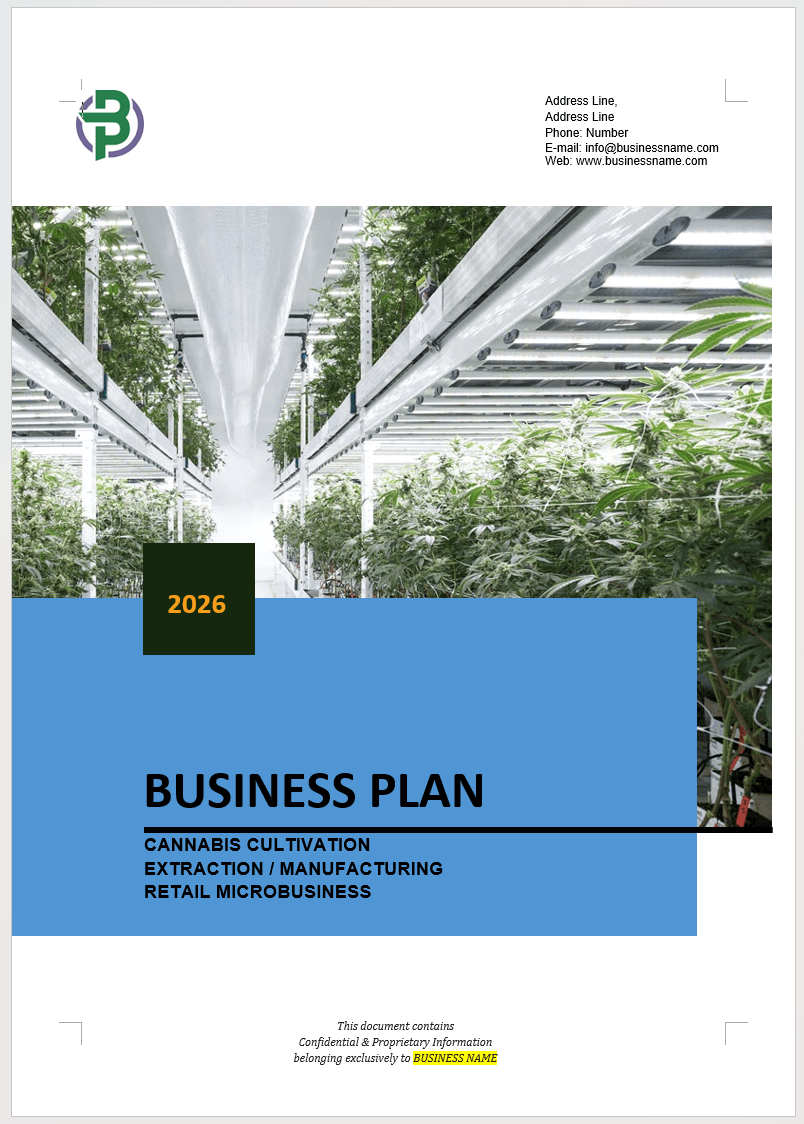
Our complete cannabis business plan template package is everything you need to create a professional business plan for a cannabis business with expert financials and projections. A complete cannabis business plan template package includes:
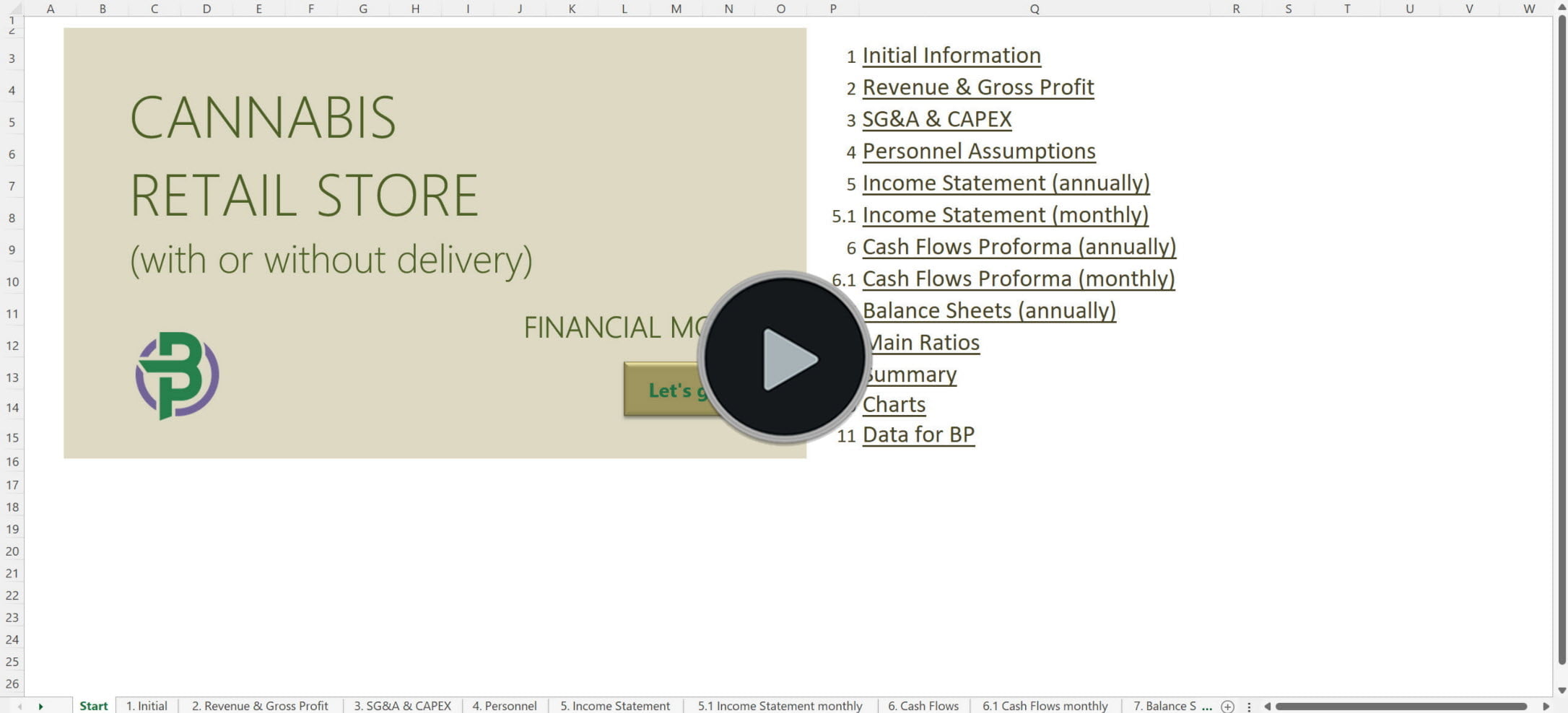
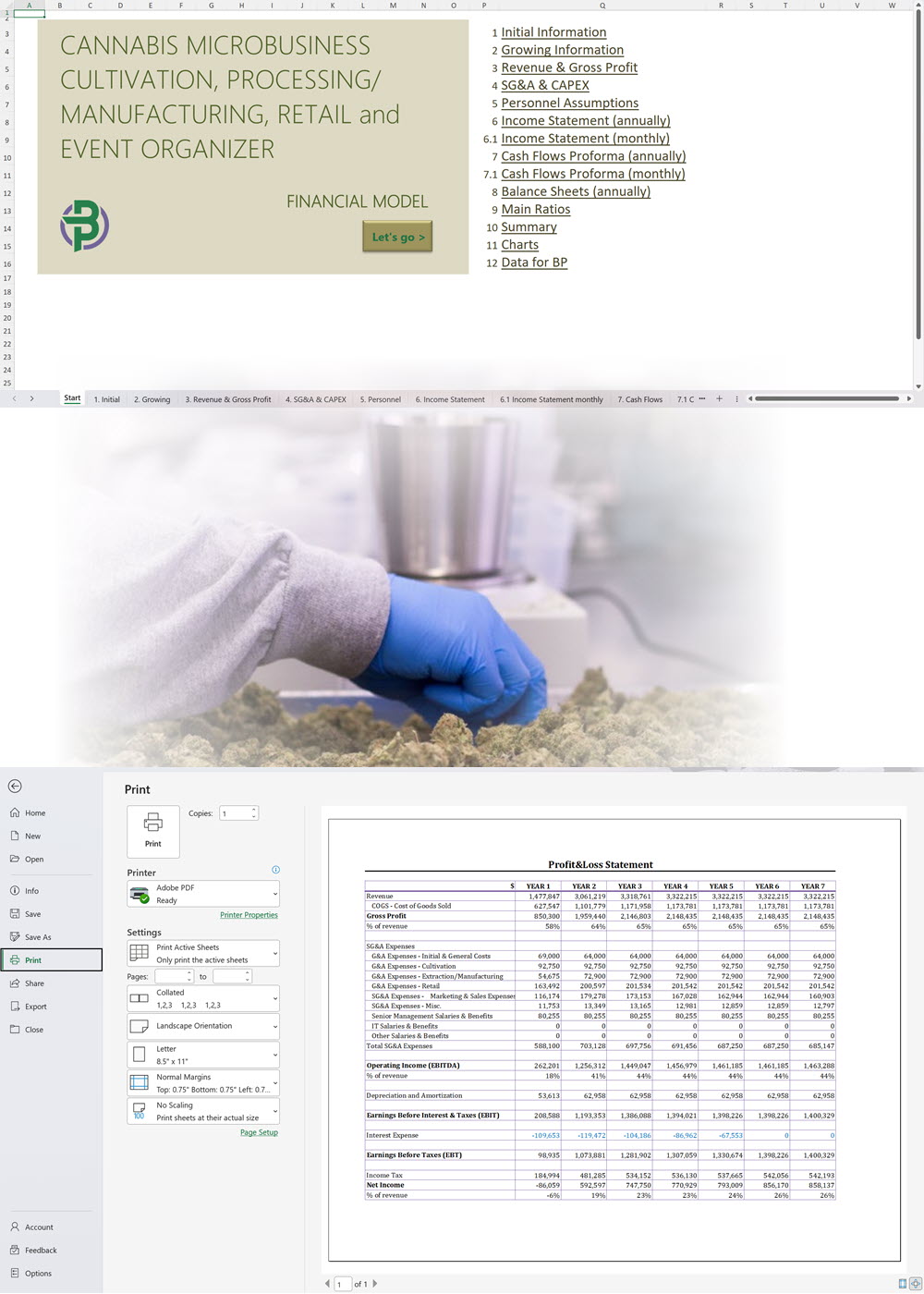
- Excel Financial Model: change variables and immediately see the impact, break down operational and capital costs, know how much it will take to get into the business and the potential profits.
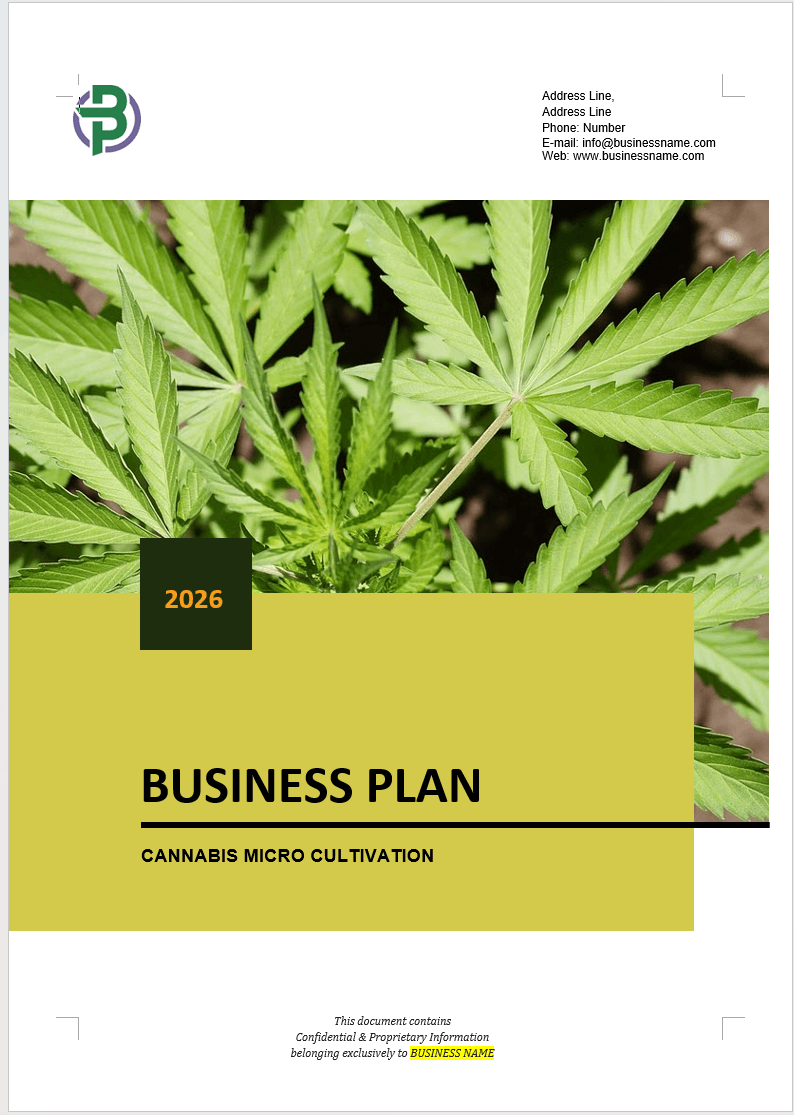
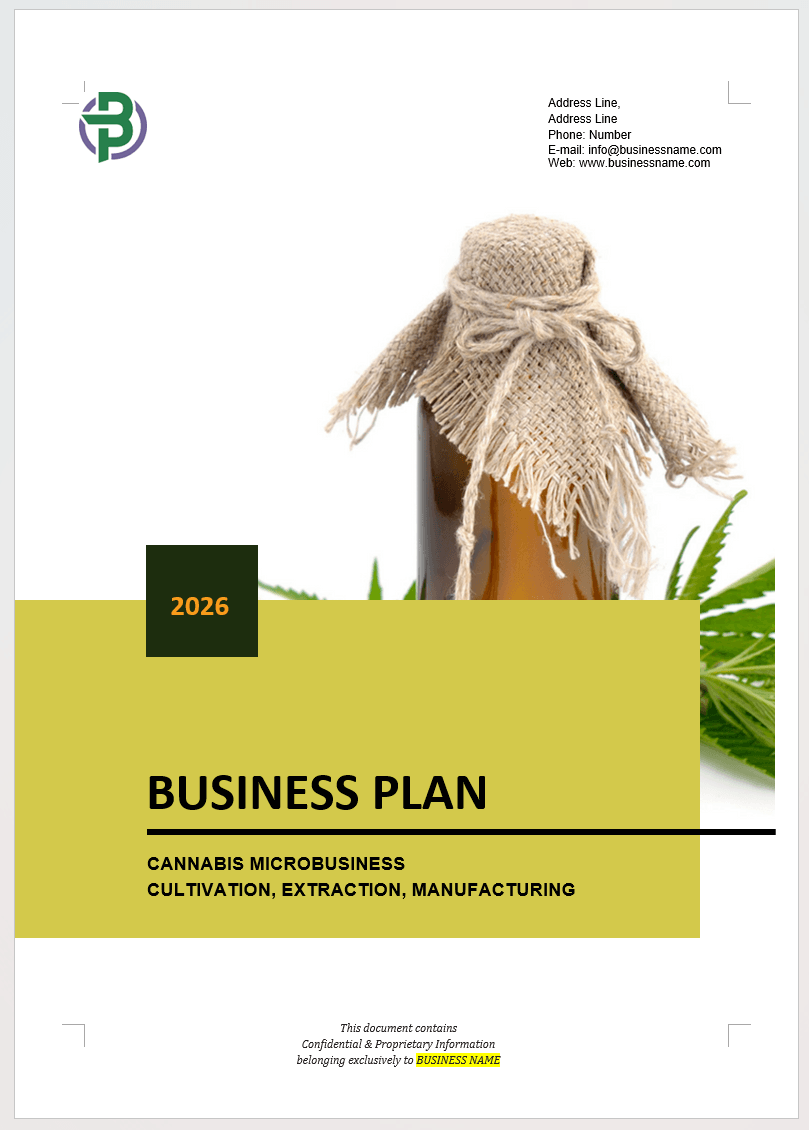
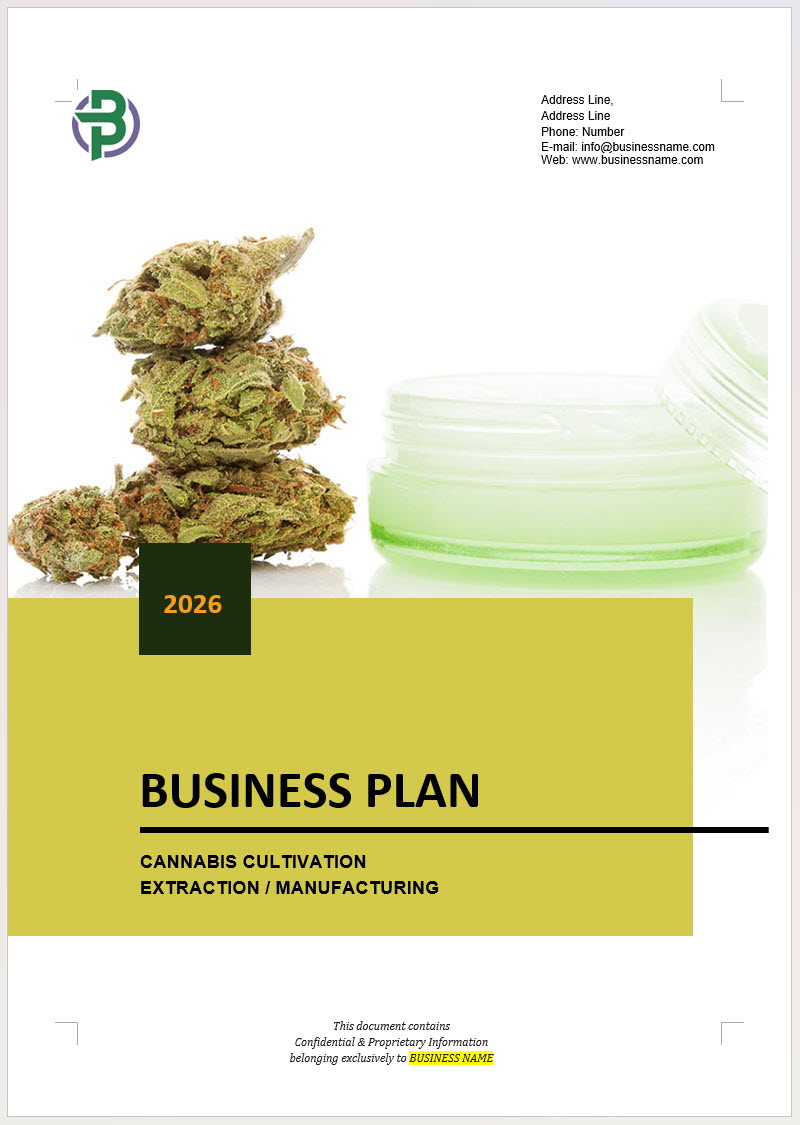
- Word Business Plan: value proposition, market analysis, marketing strategy, operating plan, organizational structure, financial plan and more.
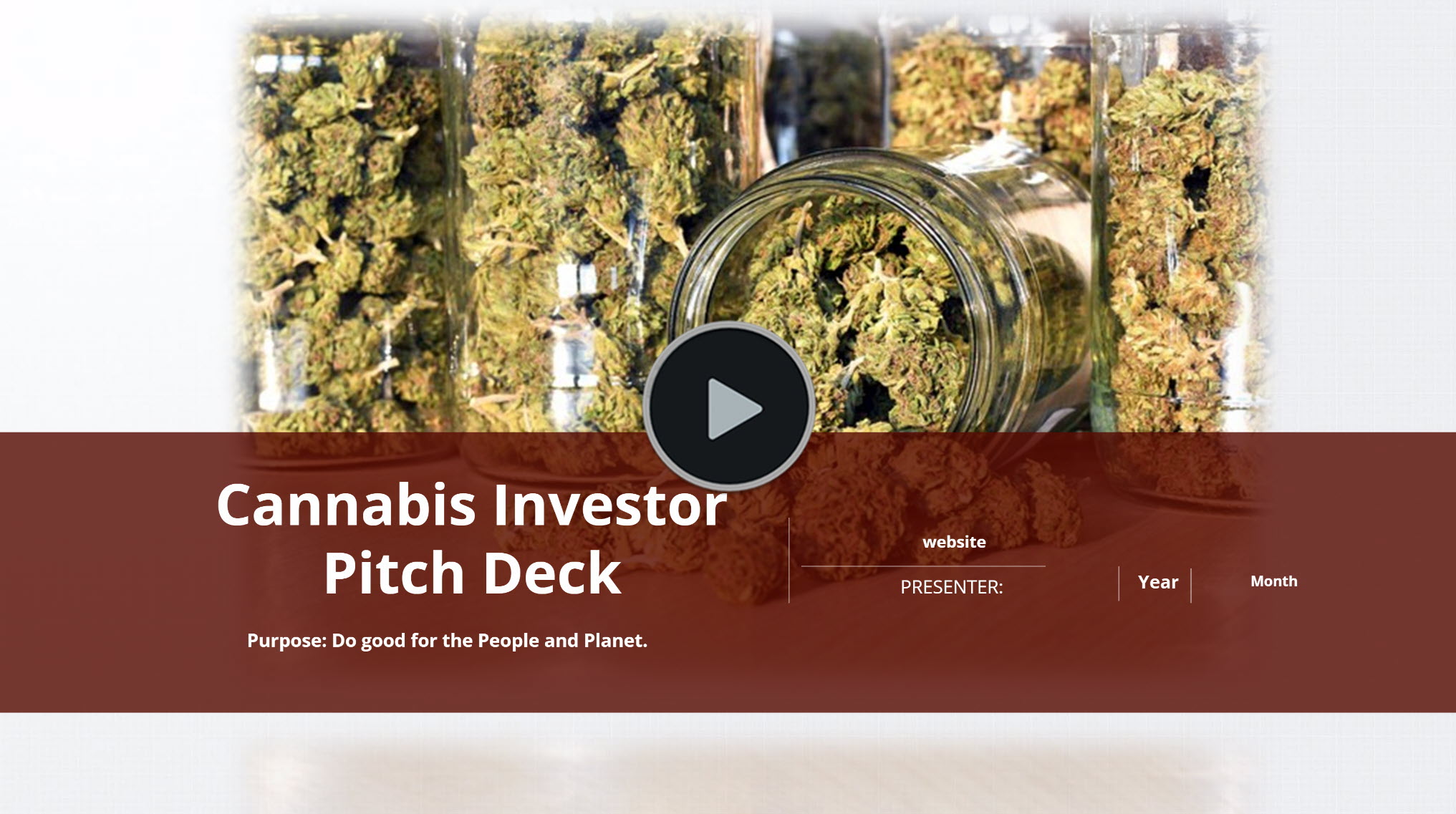
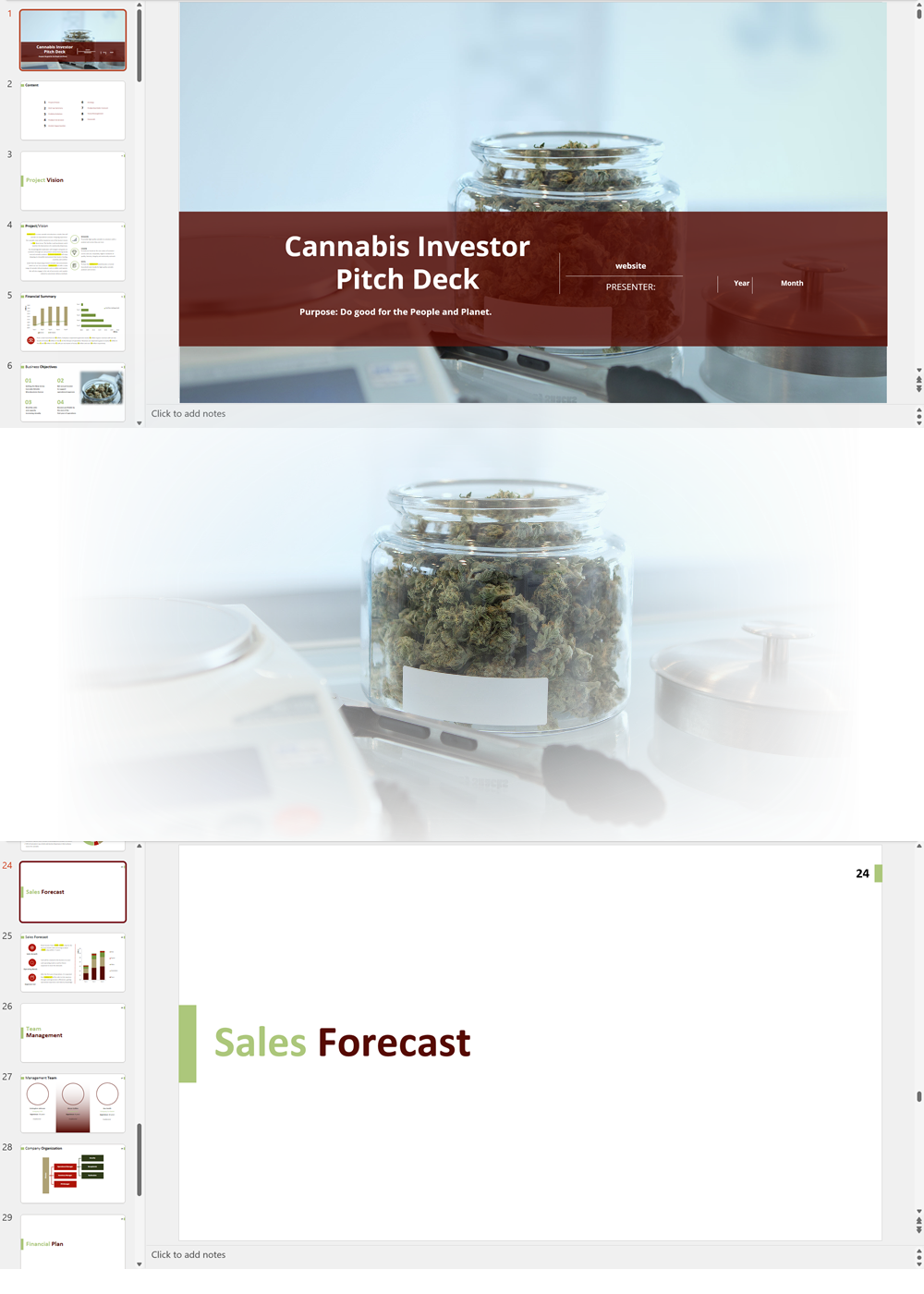
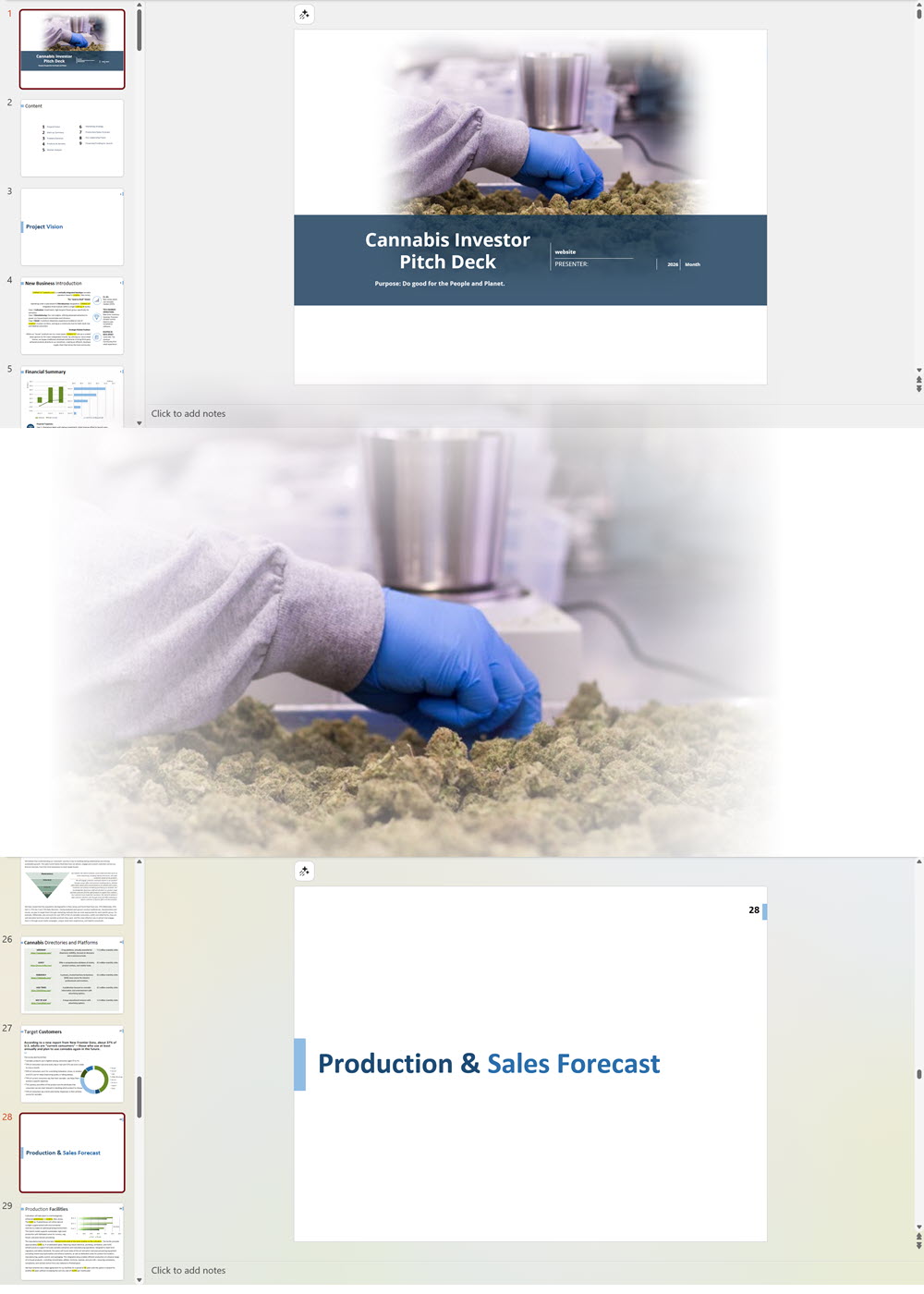
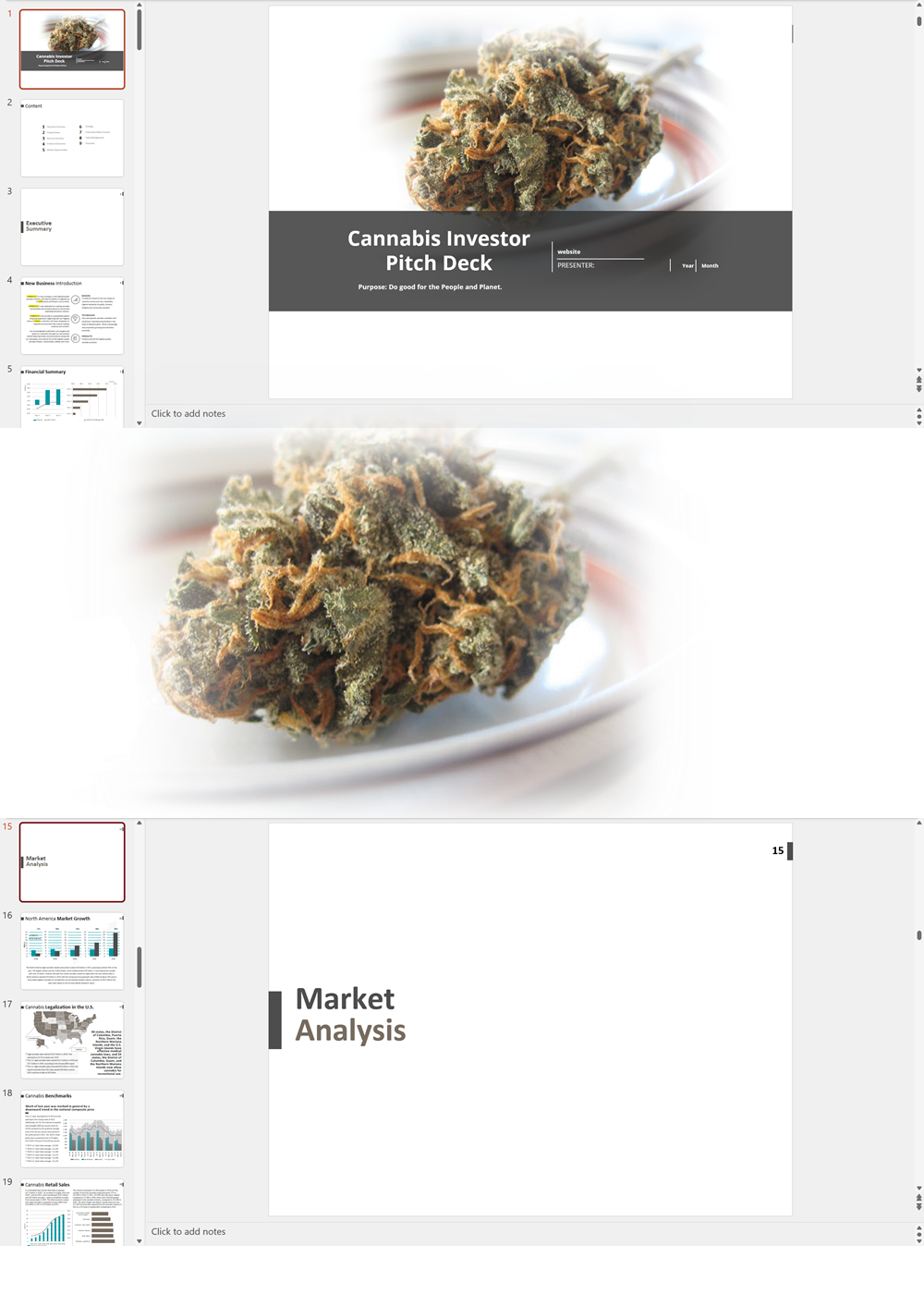
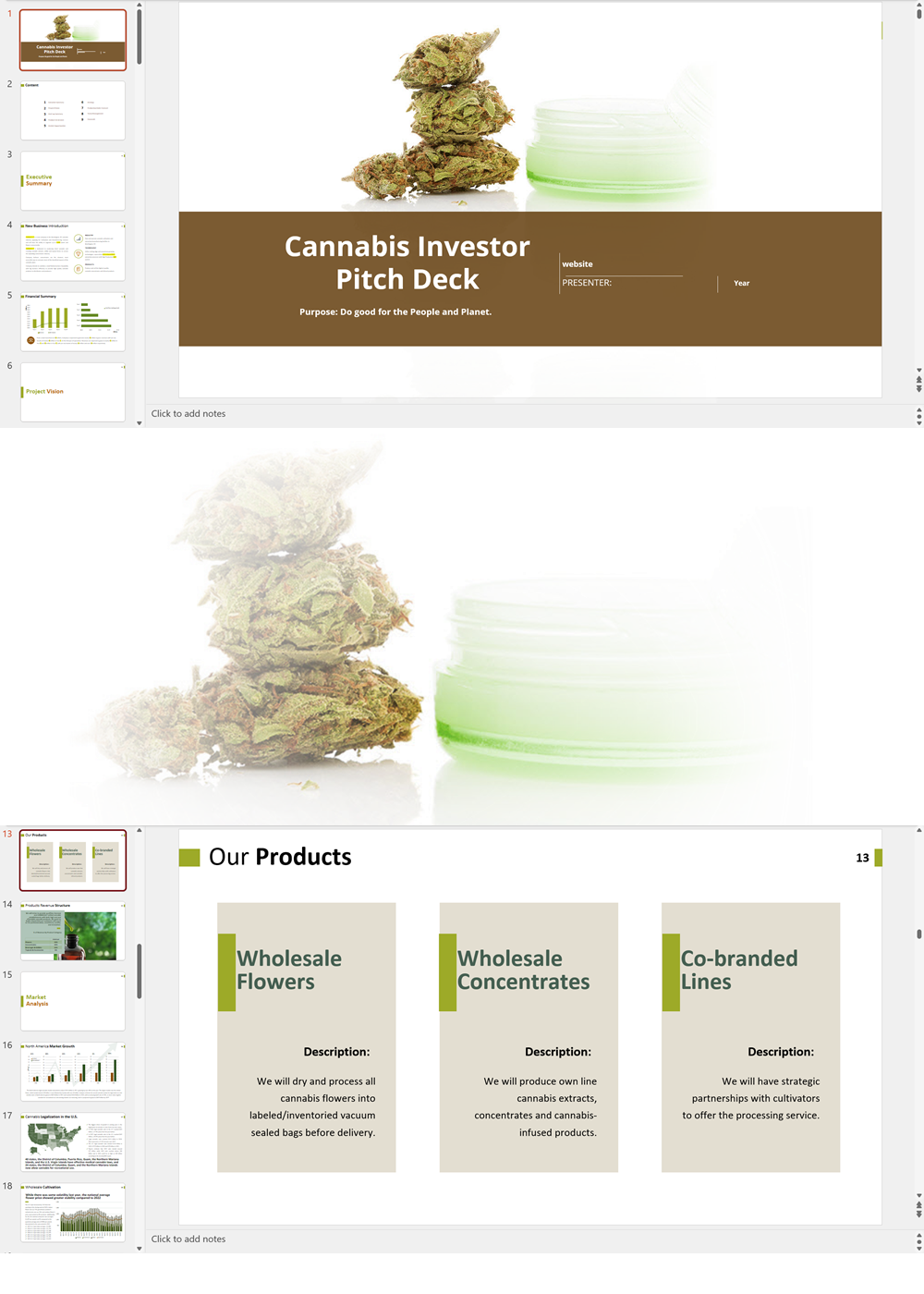
- PowerPoint Pitch Deck: provide a quick overview of your cannabis business plan.
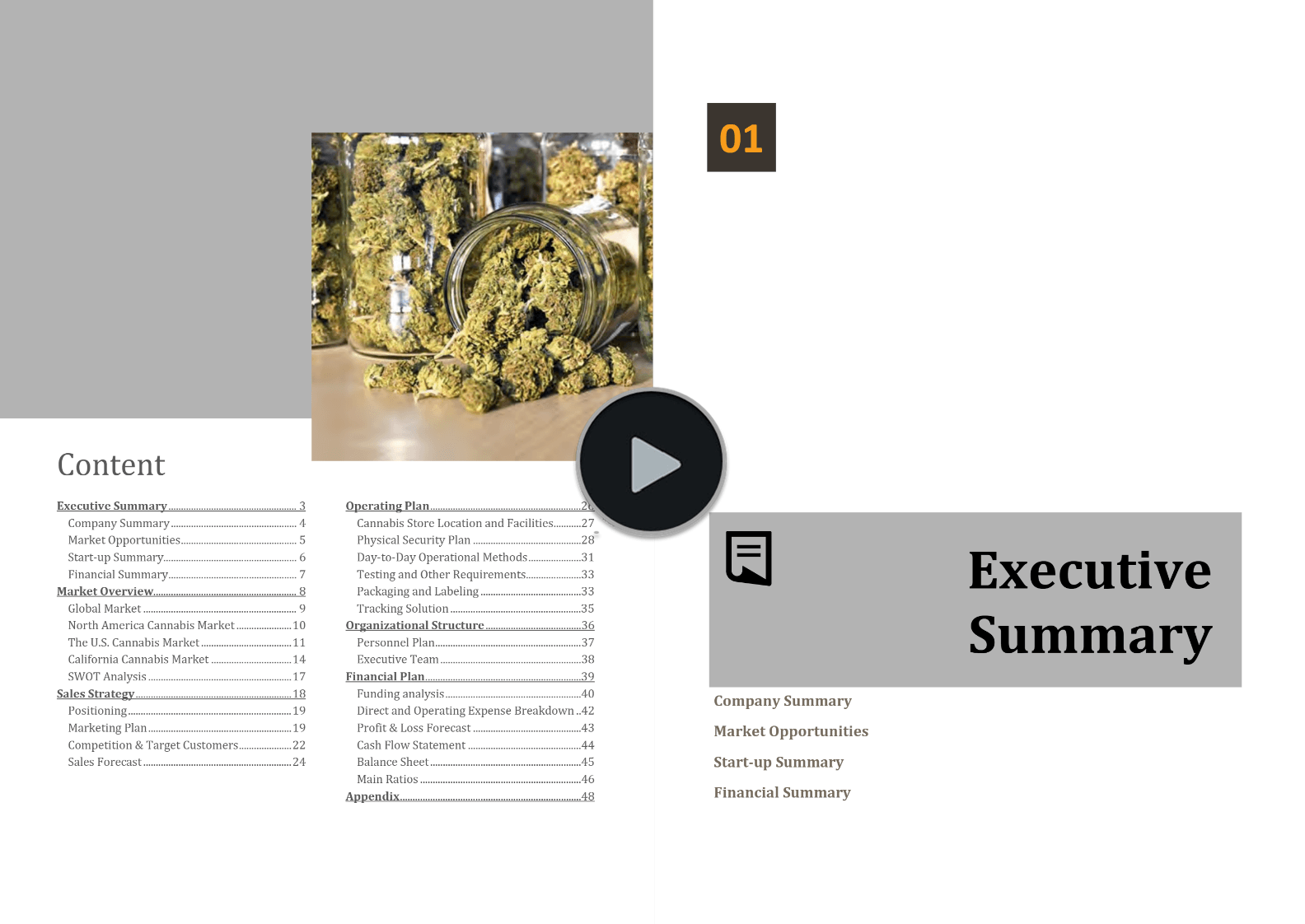
The business plan includes:
- Introduction to the business including an Executive Summary
- An overview of cannabis industry and target market
- Marketing strategy, Production and Sales forecast.
- Operating Plan
- Organizational Structure
- Financial Plan
- Appendix
'70% ready to go' business plan templates
Our cannabis retail financial models and cannabis retail business plan templates will help you estimate how much does it cost to open your own cannabis store, to build all revenue and cost line-items monthly over a flexible seven year period, and then sums the monthly results into quarters and years for an easy view into the various time periods.
Although opening a marijuana dispensary is similar to opening any other type of small business, it is much more expensive due to certain state regulations and financial barriers that must be overcome. Application and licensing fees are lower for social equity applicants and many states are providing financial help as well, but operational costs will still be significant for any kind of cannabis retail store.
The cost of opening a cannabis dispensary ranges from $250,000 to over $2 million. This includes approximately $210,000 per year in staffing, $100,000 annual rent, and pre-renovation costs of $50,000. The budget will vary based on the size of the dispensary, whether any additional services such as delivery or a consumption lounge are offered, and other aspects of the business.
One of the major challenges in the cannabis industry is finding funding. The ongoing regulatory and legal complications surrounding the industry – such as the federal prohibition in the US – make financial institutions hesitant to provide funding.
Despite these challenges, as the global acceptance of cannabis increases, access to financing for cannabis businesses is improving as well. There are now financial institutions who are willing to provide finance to cannabis businesses as well as grants and loans offered in some countries and US states intended to boost the cannabis industry.
While specific requirements may vary, the following types of insurance policies are typically necessary:
- General Liability Insurance: This policy provides coverage for third-party bodily injury, property damage, or personal injury claims that may occur on the premises of the dispensary.
- Product Liability Insurance: This policy protects against claims related to product defects, contamination, or adverse effects from the use of cannabis products.
- Property Insurance: This policy covers the dispensary’s physical assets, including the building, inventory, equipment, and fixtures, against risks such as fire, theft, vandalism, or natural disasters.
- Workers’ Compensation Insurance: This policy covers work-related injuries or illnesses sustained by employees.
Coverage Limits
Dispensary owners should aim to obtain adequate coverage limits to safeguard their assets and liabilities effectively. According to industry data and sources, typical coverage limits for each type of insurance are the following:
- General Liability Insurance: $1 million to $5 million
- Product Liability Insurance: $1 million to $10 million
- Property Insurance: $500,000 to $1 million
- Workers’ Compensation Insurance: at least $500,000 per occurrence
Costs Associated with Insurance
Determining the costs of insurance for a cannabis dispensary involves various factors and can vary significantly. According to industry data, insurance premiums can range from $5,000 to $50,000 annually, depending on factors such as the size of the operation, location, coverage limits, and number of employees. The specific risks associated with the cannabis industry, including product liability and security concerns, also influence insurance costs.
Dispensary owners should obtain quotes from several insurance providers with expertise in the cannabis industry to compare coverage and pricing, helping them secure comprehensive protection while keeping costs under control.
Your dispensary’s staff is one of the factors that will determine the success of your business. Personnel can be split into two categories: professional services and day-to-day staff.
Professional Services:
- Lawyer: Given the risks associated with the cannabis industry, it is essential to have a good lawyer. They can assist with both the licensing, application, and regulatory compliance processes as well as effectively defend your business in case of a lawsuit.
- Accountant: A good accountant will help you to pay your taxes on time and file all the necessary financial reports when they are due.
- Security Consultant: Most cannabis regulations include security and surveillance requirements which every dispensary has to comply with. Therefore, assistance from a security consultant in designing appropriate security systems for your dispensary will be beneficial.
Day-to-Day Staff:
- Budtenders: These are the employees that interact with customers so their professionalism plays a big role in customer satisfaction, positive word-of-mouth promotion, and building customer loyalty. They should be knowledgeable in the cannabis industry, understand the product range in your dispensary well, and be able to assist customers by answering their questions and giving product suggestions based on their needs and preferences.
- Inventory Manager: It is essential to monitor stock levels and ensure that popular products are always stocked. An inventory manager will be responsible for this, as well as inventory inspections and negotiations with suppliers.
- Store Manager: This person will hold the role of a leader, overseeing the day-to-day operations and ensuring that everything runs smoothly. In small businesses, the owner or one of the owners could occupy this position.
A dispensary security plan is not just about protecting inventory – it’s a legal requirement, a condition for licensing, and a core component of operational integrity. Every state has specific, detailed rules for cannabis facility security. While exact requirements vary by location, most cannabis security plans must include the following key elements:
- Physical Security Measures: perimeter security, secure storage, access control, alarm systems.
- Video Surveillance System: full coverage of all interior and exterior areas, high-resolution, at least 30-90 days of recording retention.
- Security Personnel: on-site guards, visitor logs, staff training on emergency procedures and theft prevention.
- Operational and Procedural Safeguards: chain of custody, cash management, delivery & transportation security, and incident reporting.
Apply for the Dispensary License
Now that you have prepared your business plan, secured funding, found a location for your dispensary, assembled your team, and finalized the security plan, you are most likely ready to apply for a cannabis dispensary license. In some states, inspection of facilities is part of the licensing process so you would need to prepare your dispensary facilities for an inspection by the relevant regulatory agency. The two examples below illustrate how different states have different licensing requirements.
To find out about the licensing process in the U.S. state or Canadian province where you wish to open your dispensary, visit the Markets section on our website and in the search bar enter “How to Start a Cannabis Business In [desired state/province]” or in the case of a U.S. state, you may choose the desired state in the sidebar under the Cannabis US subheading.
Prepare for Operations
Designing your cannabis retail experience includes how you build your brand and shape the customer experience. Think about whether you would like to have a waiting room where customers wait for a budtender to assist them or a free space where customers can walk around and see products for themselves, asking for help only if they need it.
It is wise to hire an architect and interior designer to assist you on the final design, aesthetics, and layout. Key things to consider are:
- Ordering process: Do customers order at the counter or can they fill their cart on their own?
- Check-In process: Is there a dedicated reception area or are customers’ IDs just checked at the door?
- Browsing: Are there digital screens showing menus, self-service kiosks, or physical products displayed on the shelves?
- Clientele: Are your target customers primarily cannabis connoisseurs who know what they are looking for or do they need assistance from budtenders?
- Experience: Do you wish to provide a slow, guided, and educational experience for your customers or one that is fast and efficient?
- Physical Space: In smaller dispensaries, it is more challenging to create multiple product displays so most inventory may need to be stored behind the counter.
Common dispensary models are:
- Traditional Counter: Customer or patient checks in, browses the product range, and order at the counter with the assistance of the budtender. Products are stored behind the counter.
- Open Retail: Customer or patient checks in and browses the product range, selecting products and completing their purchase at the sales counter. Budtenders are available to answer questions or recommend products.
- Roaming Budtenders: Customer or patient checks in and browses the product range with roaming budtenders filling their cart on a mobile tablet and sending the order information automatically to the inventory area. The customer then receives their product from the inventory area after their identity is verified.
- Self-Service Kiosk: Customer or patient checks in, browses the product range on the sales floor and adds items to their cart using a screen or tablet at a self-service kiosk station. The customer then receives their product from a central inventory area after their identity is verified.
These models can also be combined to accommodate to different kinds of customers. For instance, while customers who are new to cannabis are assisted by a budtender, customers who know what they are looking for can quickly complete their purchase using a self-service kiosk.
In addition to the design, a dispensary must also offer a seamless shopping experience and this is achieved through the right technology and hardware.
Point-of-Sale System
A cannabis point-of-sale (POS) system is the most important piece of technology in a dispensary. In addition to being part of the transaction process with customers, it also facilitates inventory management and regulatory compliance. Some of the key features a POS system should have is the ability to store customer profile data, track customer purchase limits, verify customer ID and age, and be integrated with the seed-to-sale tracking solution.
Seed-to-Sale Tracking Software
This is a legal requirement. The software tracks cannabis inventory from cultivation to sale in real time and reports data to regulatory agencies. The two main providers are Metrc and Biotrack. Some U.S. states have specified the seed-to-sale tracking software that local licensed cannabis businesses should use.
Website
A user-friendly website allows customers to see the product range offered in your dispensary, complete with pictures, certificates of analysis, and other useful information. This allows potential customers to see what your store offers and can prompt them to visit in-person if they find something that interests them. Alternatively, they may choose to place an order online and then pick it up in-store. Either way, a well-organized website with various product filters can help customers find what they need quickly and efficiently, suiting individuals with busy lifestyles.
Additionally, some U.S. states and countries allow home delivery of cannabis goods. This expands a dispensary’s reach to more customers who possibly live too far to conveniently visit in-person or who simply prefer to shop online. Just as with an in-store POS system, the payment process on your website should be seamless and secure.
Inventory Management System
An inventory management system allows to monitor inventory levels in real-time, providing insight into most popular items as well as when certain cannabis goods are approaching their restock levels. For compliance, your inventory management system should be able to integrate with the seed-to-sale tracking system.
Other
Software that is typically used by any business, not just a cannabis dispensary, include HR and payroll, accounting, and customer relationship management.
Hardware
Depending on your dispensary design, you may need to purchase self-service kiosks, screens to display digital menus, tablets that can be used by budtenders to fill a customer’s cart, scales, label printers, scanners, and other.
Some U.S. states allow vertical integration which means that businesses can control the whole cannabis supply chain from cultivation to retail. In other states, vertical integration is prohibited so the only way a cannabis dispensary can source products is through wholesale. When choosing a wholesaler, it is important to research their reputation and the product range they offer.
Meanwhile, in Canada, the wholesale and distribution of recreational cannabis is government-operated in all provinces except Saskatchewan – where retailers can buy cannabis directly from federally licensed producers or other retailers – and British Columbia where the producer retail store license allows federally licensed cannabis producers to sell cannabis products at a store located at their cultivation site.
Once you have sourced products for your dispensary, it is important to perform regular inventory audits. How frequently these audits are performed vary from one dispensary to another but experts recommend to perform them on a weekly basis.
Advertising rules vary in different locations so it is important to read local regulations when creating a marketing strategy for your dispensary. A cannabis company can advertise its business using both offline and online marketing methods. Some of the most effective advertising methods include optimizing your website for SEO, publishing informative and educational content on your website or social media accounts, and email and SMS campaigns.
Ongoing Compliance and Reporting
Licensed cannabis dispensaries are subject to a range of compliance and reporting requirements. Make sure to check the applicable cannabis regulations for information on record-keeping and reporting. Licensed dispensaries must typically maintain documentation of inventory records, security and surveillance records, advertising records, product alerts and recall procedures, dispensing of cannabis products, and other areas of the business. As it is mandatory for dispensaries to use a cannabis tracking system, information about their cannabis and cannabis product inventories and activities is reported automatically to the relevant official cannabis regulatory agency through the tracking system.
Should you have any questions, please do not hesitate to contact us.
CBD Products Retail/Online Store Business Plan Templates are available at hempcbdbusinessplans.com.
Our Templates
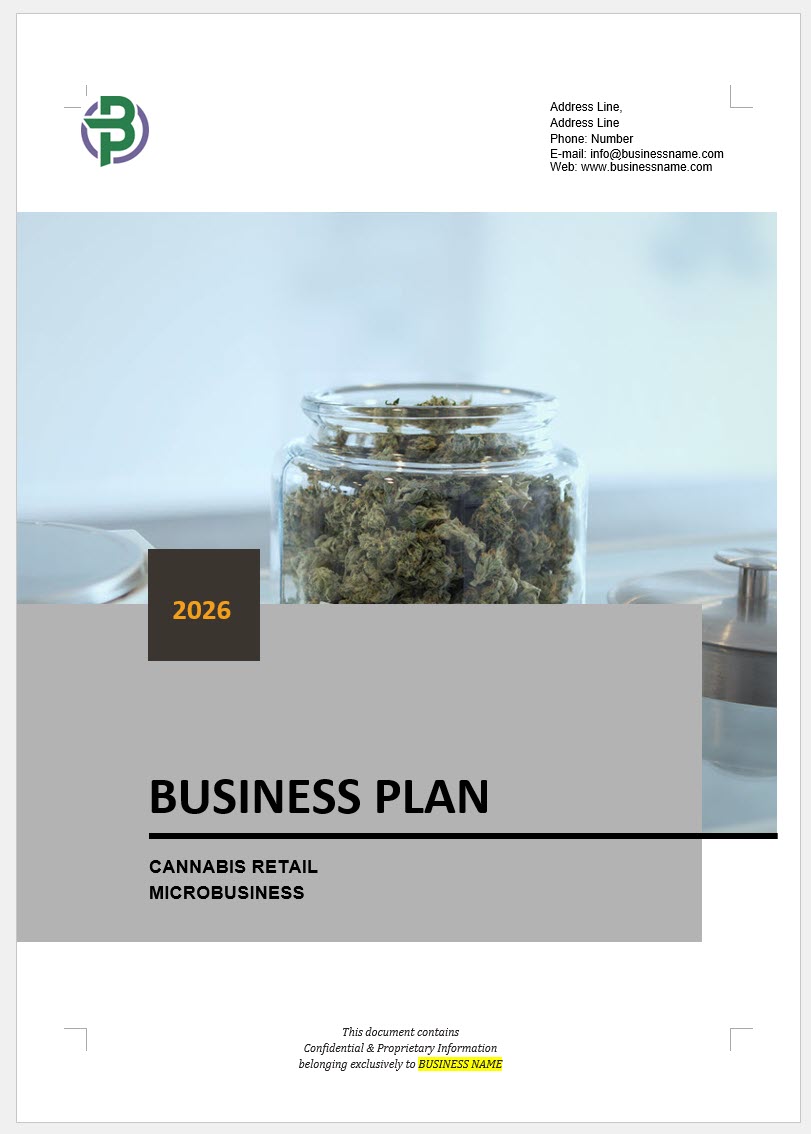
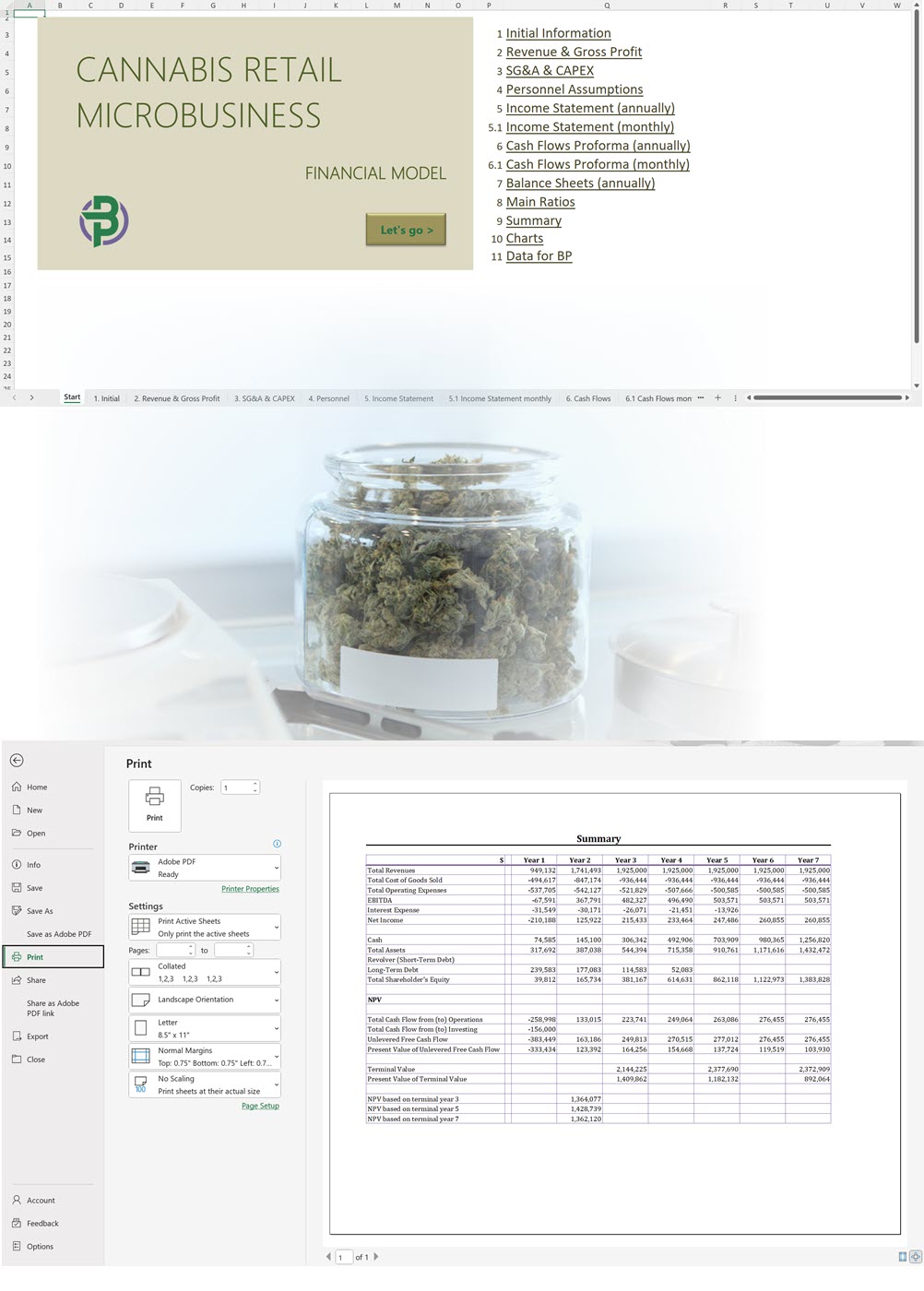
Cannabis Retail Microbusiness Business Plan Template
Price range: $75.00 through $275.00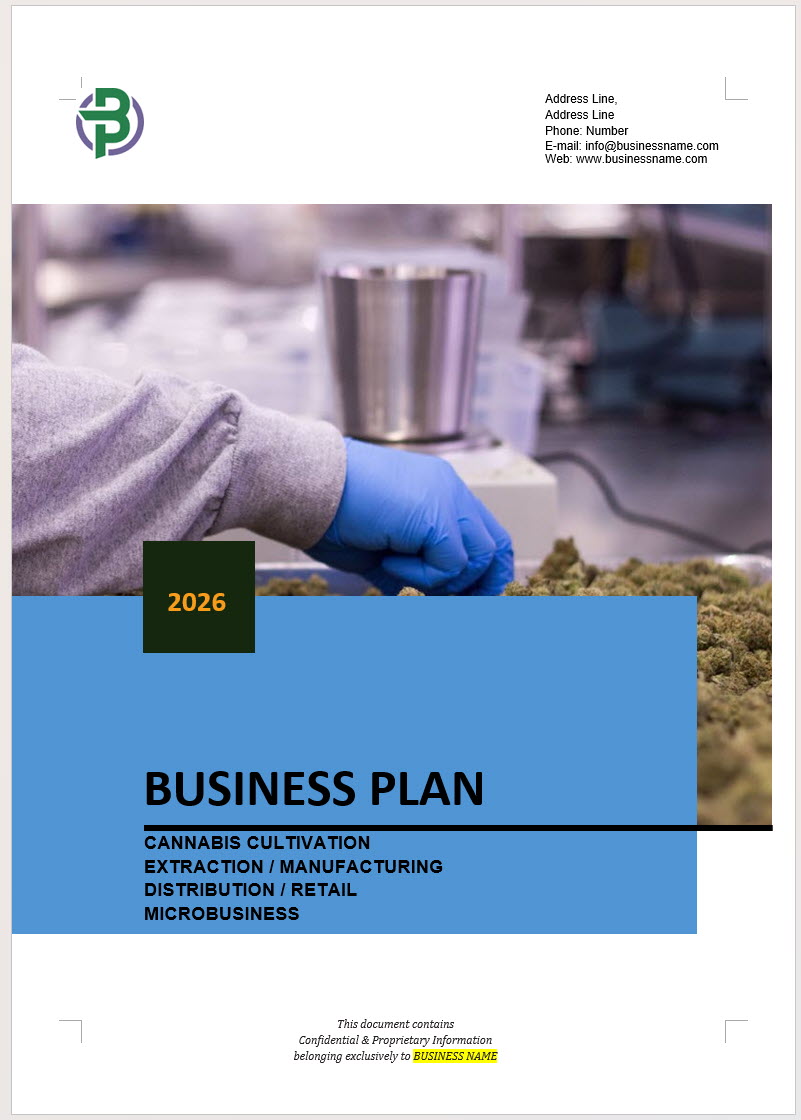
Cannabis Cultivation, Extraction, Manufacturing, Distribution, Retail and Microbusiness Business Plan Template
Price range: $75.00 through $500.00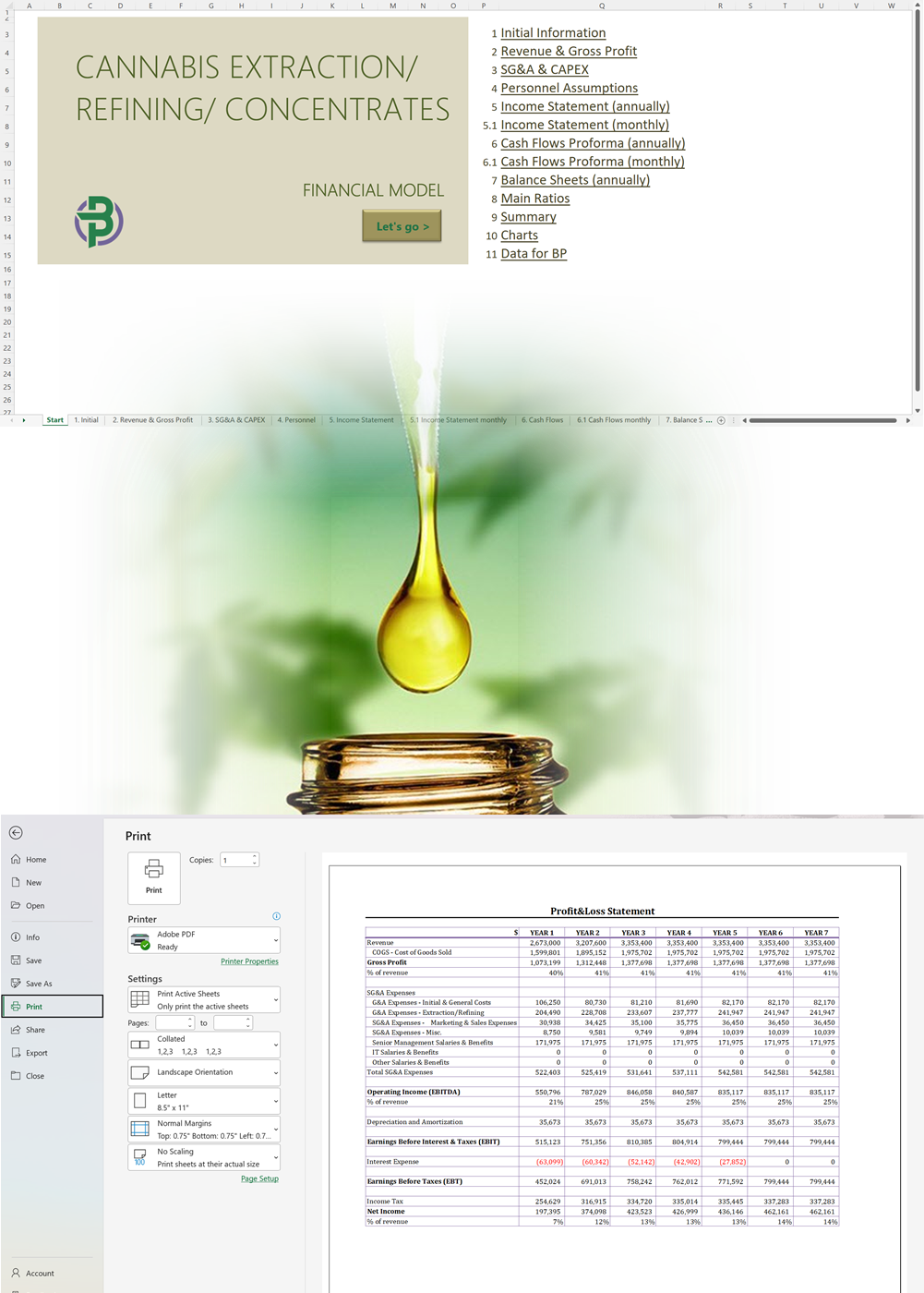

Cannabis Micro Cultivation Business Plan Template
Price range: $75.00 through $300.00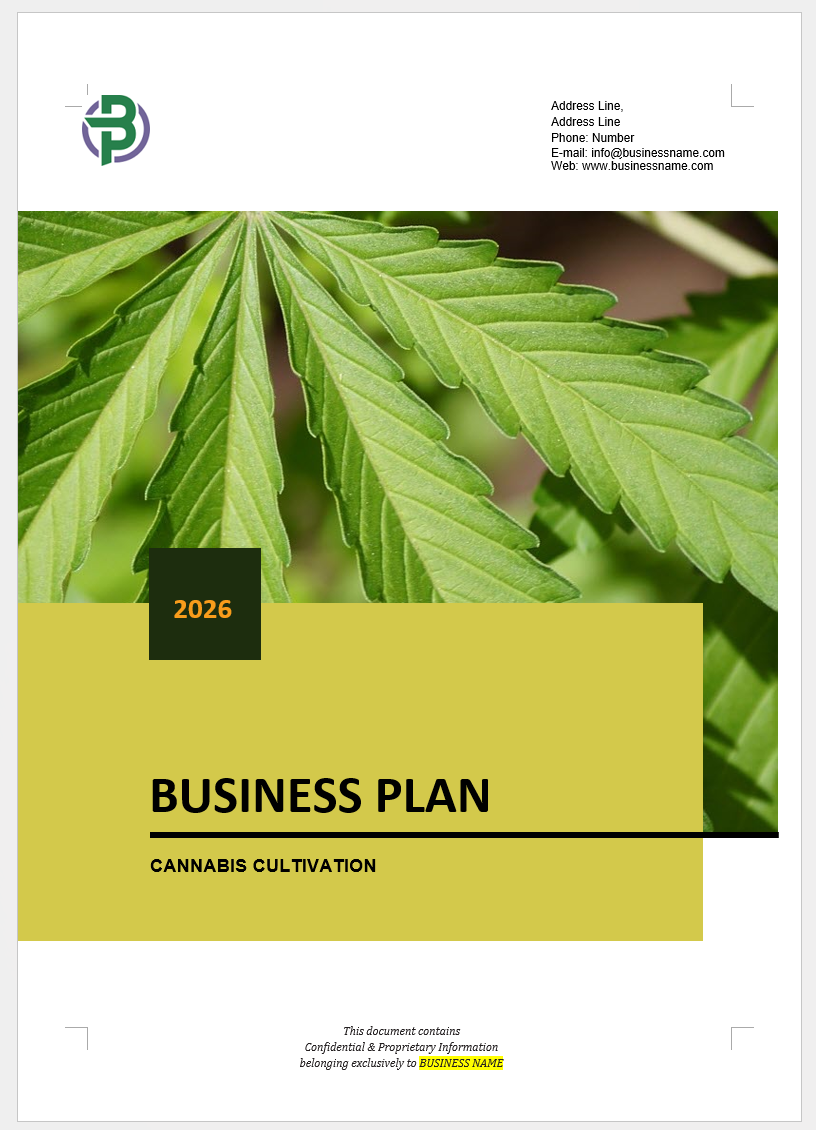
Cannabis Cultivation Business Plan Template
Price range: $75.00 through $350.00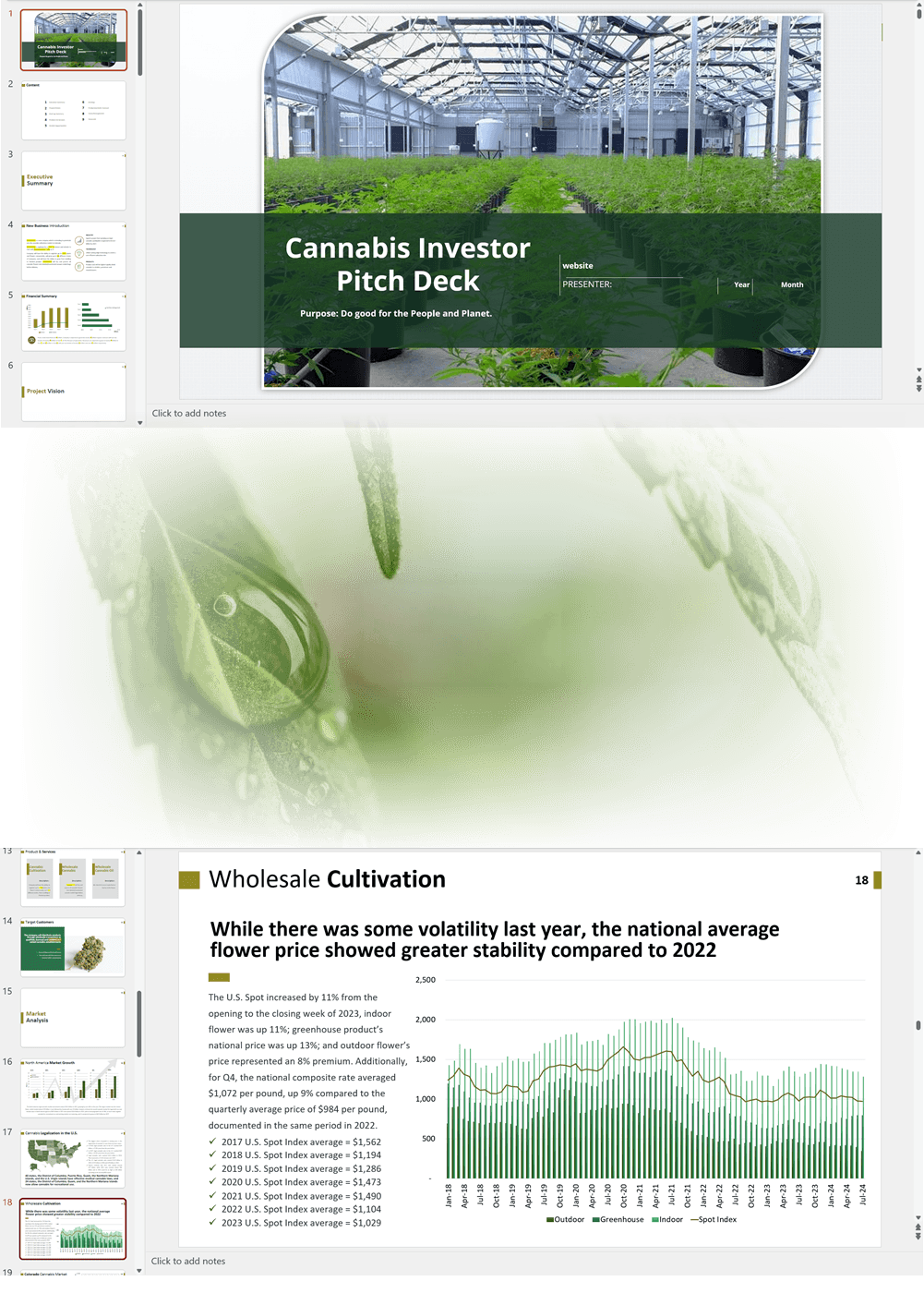
Cannabis Microbusiness Cultivation and Manufacturing Business Plan Template
Price range: $75.00 through $350.00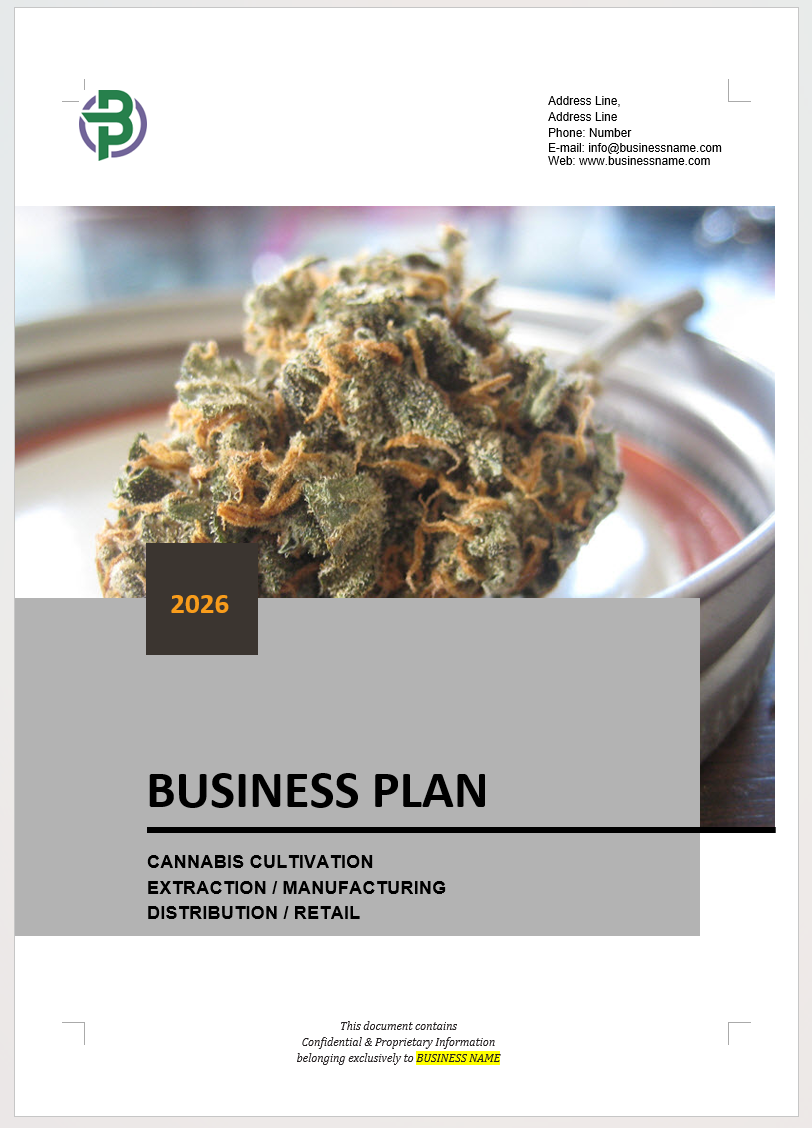
Vertically Integrated Cannabis Business Plan Template
Price range: $75.00 through $500.00


Cannabis Microbusiness Business Plan Template for Cultivation + Extraction + Manufacturing + Wholesale + Retail + Services
Price range: $75.00 through $500.00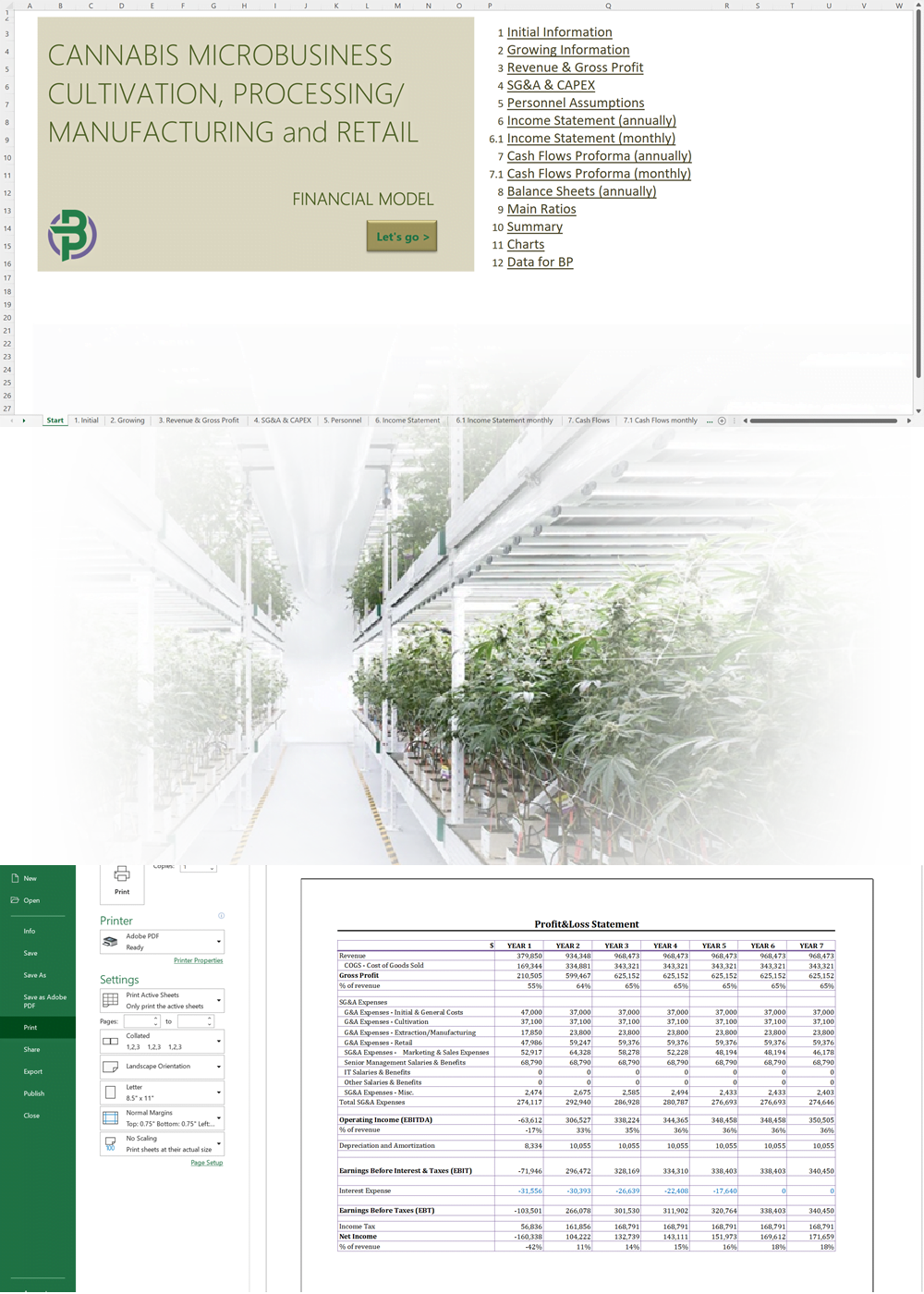

Cannabis Transportation Business Plan Template
Price range: $75.00 through $275.00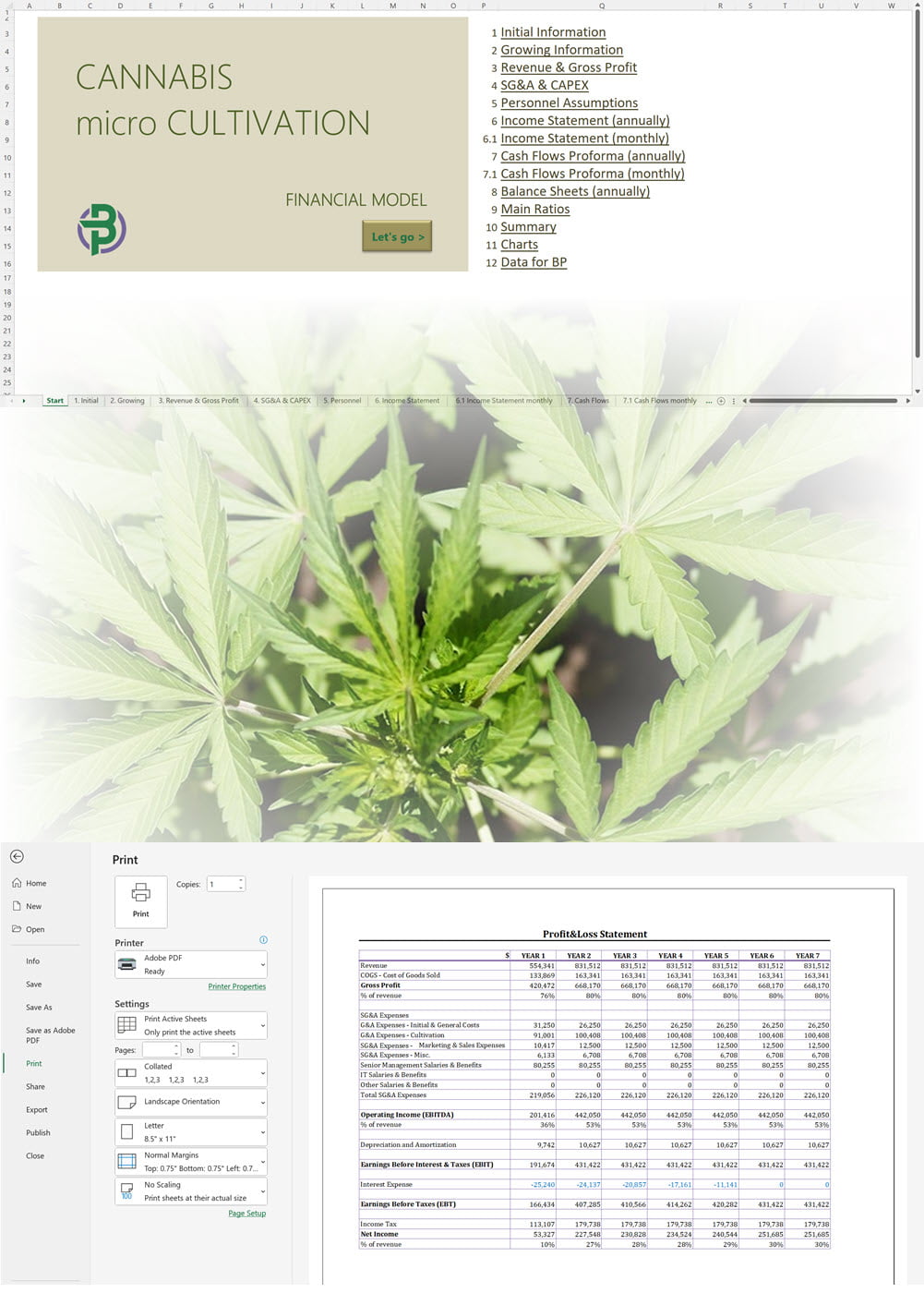

Cannabis Cultivation, Extraction and Manufacturing Business Plan Template
Price range: $75.00 through $450.00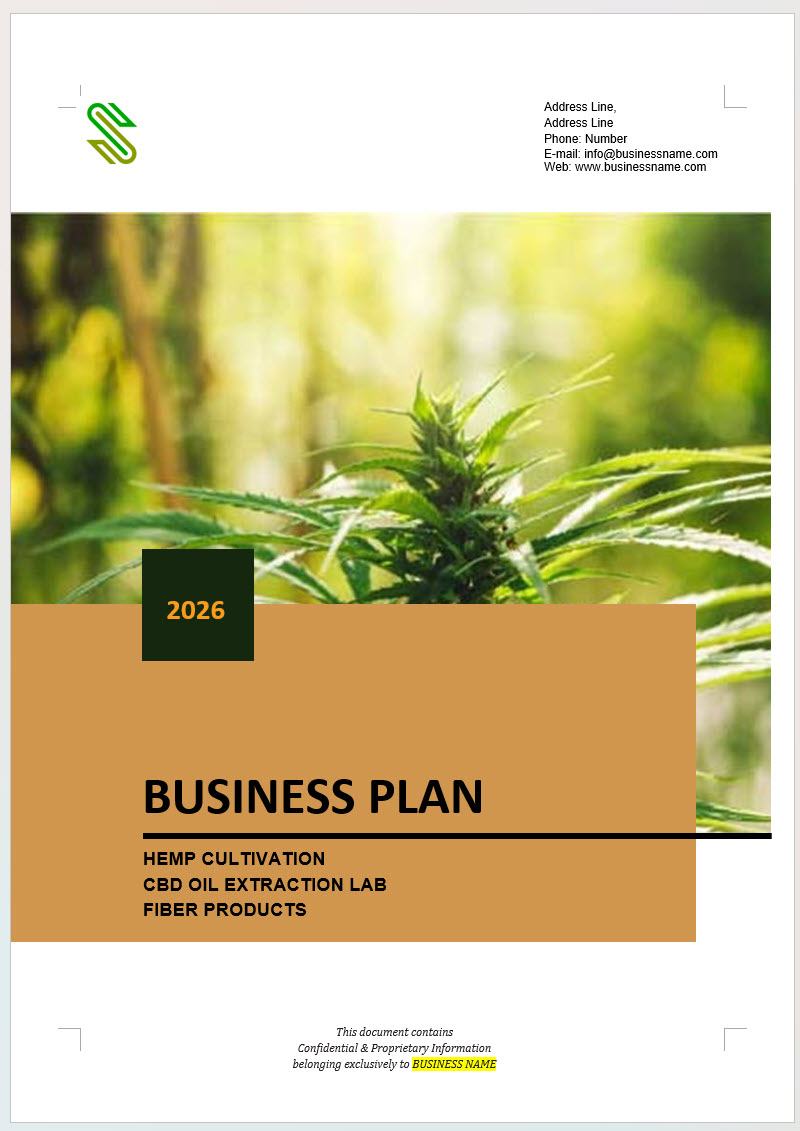
Hemp Cultivation and CBD Oil Extraction and/or Fiber Products Business Plan Template
Price range: $75.00 through $350.00